There is nothing quite as dramatic in the culinary world as pulling a towering, steam-filled German pancake recipe out of a blistering hot oven. Often called a Dutch Baby, this dish is the perfect marriage of a popover and a crepe, boasting massive, billowy edges that defy gravity and a soft, custard-like center that melts in your mouth. If you have been searching for a show-stopping breakfast that requires minimal effort but delivers maximum visual impact, you have found it.
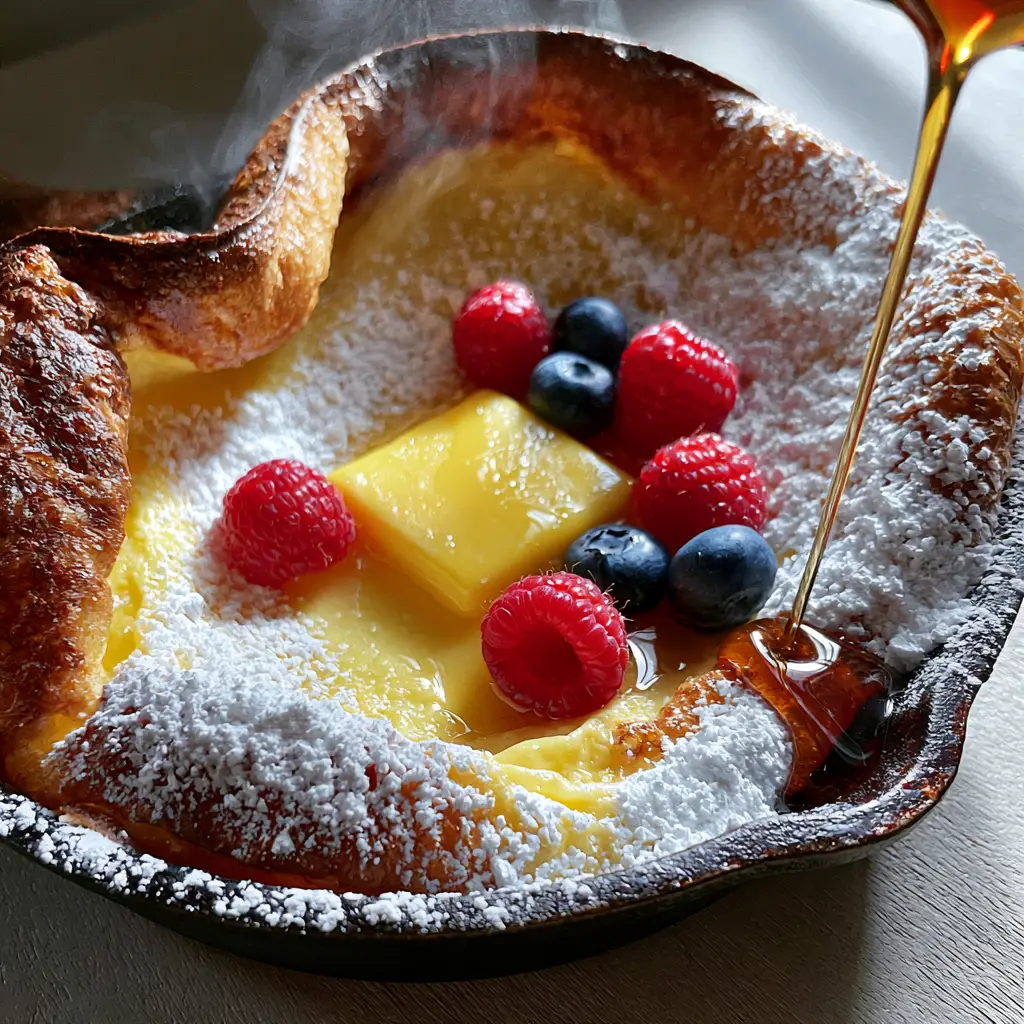
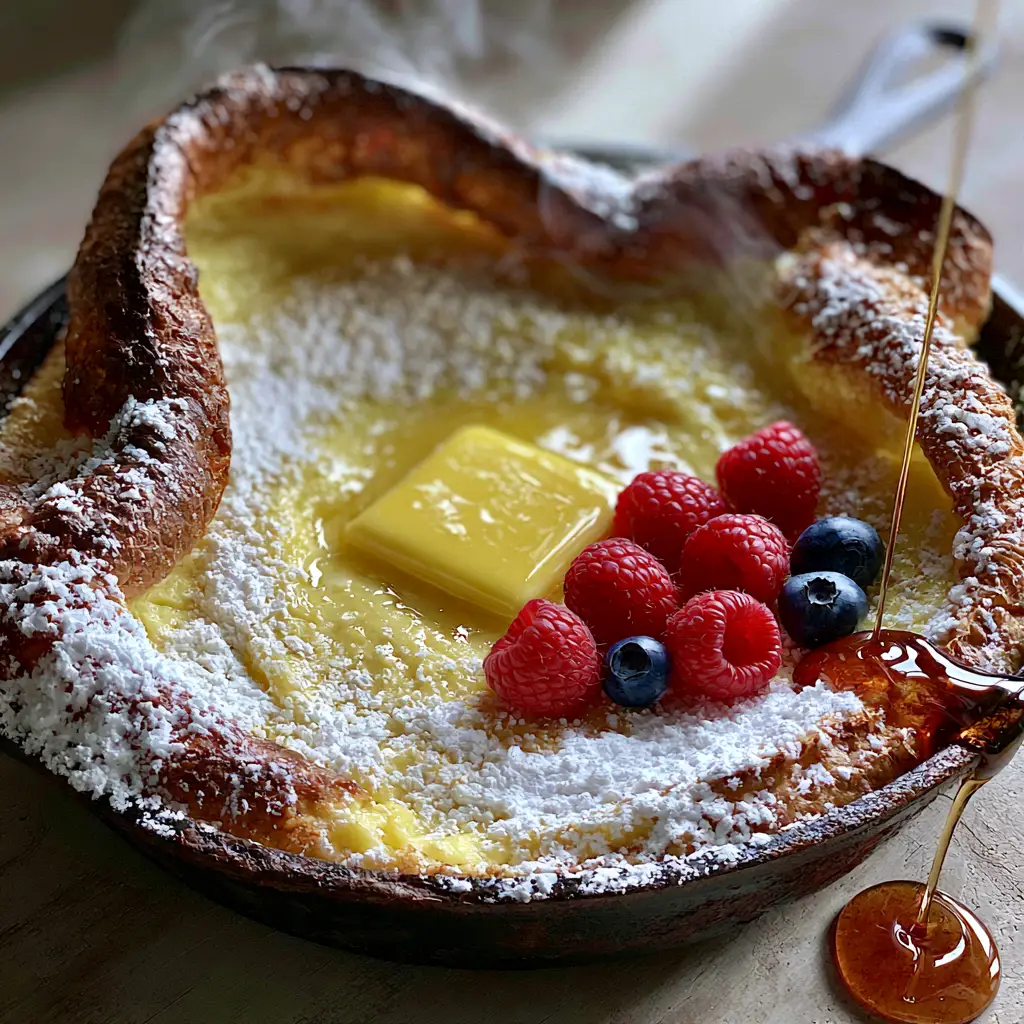
Our version captures the exact aesthetic of a rustic farmhouse morning. Imagine a deep black cast iron skillet cradling a golden-brown masterpiece, its edges crispy and shattered like fine pastry, while the center remains a vibrant, pale yellow. Topped with a heavy dusting of snowy powdered sugar and a glistening drizzle of amber maple syrup, this German pancake recipe is designed to be the centerpiece of your brunch table.
The Anatomy of a Perfect Oven-Puffed Pancake
- Dramatic Vertical Rise: Using the steam-leavening power of room-temperature eggs and a high-heat environment to create those iconic towering walls.
- The Custard Contrast: A delicate, soft yellow center that provides a creamy counterpoint to the crunchy, blistered golden-brown perimeter.
- Visual Finishing Touches: Specifically styled with 5 fresh red raspberries, 3 plump blueberries, and a melting pat of salted butter for the ultimate flavor balance.
- One-Pan Simplicity: From the stovetop sear to the oven bake, the entire process happens in a single seasoned cast iron skillet.
The Essential Elements for a Towering German Pancake
To achieve the specific textures seen in our German pancake recipe, you need ingredients that work in scientific harmony. Unlike traditional pancakes that rely on chemical leaveners like baking powder, this recipe relies entirely on steam and protein structure.
Large Eggs (4): These provide the structural integrity needed to hold the air as the pancake rises. Ensure they are at room temperature to achieve the maximum possible volume.
Whole Milk (1 cup / 240ml): The fat content in whole milk creates a richer, more tender custard center. It also provides the liquid necessary to generate the steam that pushes the batter up the sides of the skillet.
All-Purpose Flour (1 cup / 125g): This provides the gluten framework. For a lighter, more delicate crumb, you can experiment with different flour blends, but standard all-purpose is the gold standard for height.
Salted Butter (3 tbsp / 42g): Used both in the batter and for greasing the pan. The salt in the butter enhances the “blistered” flavor of the edges and creates that glossy pool in the center.
Granulated Sugar (2 tbsp / 25g): Just enough to encourage caramelization and help achieve those deep golden-brown edges. Too much sugar will weigh the batter down.
Vanilla Extract (1 tsp / 5ml): An “invisible” but essential aromatic that transforms the egg-forward batter into a dessert-like experience. For more variety, see our guide on flavor extracts.
Pro-Level Tools for the Best Results
You cannot achieve the specific “Visual Recipe Blueprint” without a 10-inch (25cm) Black Cast Iron Skillet. Cast iron retains heat better than any other material, ensuring the batter begins to set and climb the moment it hits the pan. A high-speed blender is also recommended to aerate the batter, ensuring there are no lumps and plenty of microscopic air bubbles to assist the rise.
Step-by-Step: Crafting the Golden-Brown Masterpiece
Step 1: The High-Heat Pre-Heat
Place your cast iron skillet into the oven and preheat to 425°F (220°C). This is the most critical step; the skillet must be screaming hot to create the immediate steam reaction required for high-rising puffy edges. If the pan is cold, you will end up with a flat, dense disc rather than a billowy cloud.
Step 2: Aerating the Batter
In a blender, combine the eggs, milk, flour, sugar, and vanilla. Pulse for 30 seconds until the mixture is completely smooth and slightly frothy. Let the batter rest for 5-10 minutes while the oven finishes preheating; this allows the flour to hydrate, resulting in a smoother custard center.
Step 3: The Sizzle and Pour
Carefully remove the hot skillet from the oven using a heavy-duty mitt. Drop 2 tablespoons (28g) of butter into the pan and swirl until it is melted and bubbling—it should smell slightly nutty. Immediately pour the batter into the center of the pan. You should hear a distinct sizzle as the edges begin to set instantly.
Step 4: The Dramatic Bake
Slide the skillet back into the oven and bake for 18-22 minutes. Do not open the oven door! Cold air will cause the steam to collapse, ruining the rise. Watch through the oven window as the edges climb high above the rim of the skillet and turn a deep, blistered golden brown.
Visual and Sensory Cues for Success
When the German pancake recipe is perfectly finished, you will see a massive, puffed-up rim that looks almost like a topographical map. The center should be a soft yellow, no longer “jiggly,” but still tender to the touch. You will hear the faint crackle of the crispy edges as they begin to settle slightly when removed from the heat. The steam rising from the skillet should carry notes of toasted butter and sweet vanilla.
Artistic Topping and Presentation
To match our visual blueprint, follow this specific order of operations. First, place a single large pat of salted butter in the center and let it create a glossy, melted pool. Next, use a fine-mesh sieve to provide a heavy dusting of white powdered sugar over the entire surface. Scatter 5 fresh red raspberries and 3 plump blueberries across the top. Finally, drizzle a thin, glistening stream of amber maple syrup over the edges, allowing it to catch in the nooks and crannies of the puffed batter.
Expert Tips for the Tallest Rise
- Room Temp Ingredients: Cold milk and eggs will shock the pan and result in a lower rise. Warm your eggs in a bowl of warm water for 5 minutes if you’re in a hurry.
- The Blender Secret: Blending at high speed incorporates air that aids the steam-leavening process.
- Don’t Peek: The German pancake recipe relies on a consistent internal oven temperature. Opening the door even once can cause the whole structure to fall prematurely.
- Cast Iron is King: While a stainless steel pan works, it won’t produce the same “blistered” texture that seasoned cast iron provides.
What to Serve with Your Dutch Baby
This dish is a powerhouse on its own, but it pairs beautifully with savory sides to balance the sweetness. Consider serving it alongside crispy bacon or a side of spicy breakfast sausage. If you are hosting a larger brunch, it complements a fresh shakshouka toast or even a light cucumber sandwich platter for a touch of freshness.
Storage, Reheating, and Freezing
This German pancake recipe is best enjoyed immediately while it is still steaming and at its maximum puff. However, if you have leftovers, they can be stored in an airtight container in the refrigerator for up to 2 days. To reheat, place the slice in a toaster oven at 350°F (175°C) for 5 minutes to regain some of the edge crispiness. Freezing is not recommended as the custard center will become rubbery upon thawing.
Frequently Asked Questions
Yes! You can blend the batter and store it in the fridge overnight. Just make sure to whisk it well before pouring into the hot skillet to ensure it is aerated.
You can use a stainless steel oven-safe frying pan or even a 9×13 baking dish, though the edges may not climb as high or get as blistered and crispy as they do in cast iron.
Yes, a 10-inch skillet is ideal for this amount of batter. Using a larger skillet will result in a thinner pancake with less dramatic rising edges.
It is completely normal for a German pancake to settle slightly as the steam escapes, but it should still maintain its towering, billowy edge structure. Avoid opening the oven door early to prevent a total collapse.
The most common reasons for a flat pancake are using cold ingredients (eggs and milk should be room temp) or a skillet that wasn’t properly preheated. The high heat is necessary to create the steam that pushes the batter up.
The Ultimate German Pancake Recipe
German pancake recipe: The Ultimate High-Rising Dutch Baby
Ingredients
Equipment
Method
- Place a 10-inch cast iron skillet in the oven and preheat to 425°F (220°C).
- Combine eggs, milk, flour, sugar, vanilla, and salt in a blender. Process until smooth and frothy, about 30 seconds.
- Carefully remove the hot skillet from the oven. Add 2 tablespoons of butter and swirl until melted and bubbling.
- Immediately pour the batter into the center of the skillet. Return to the oven and bake for 18-22 minutes until the edges are high, puffy, and golden-brown.
- Top with the remaining pat of butter, a heavy dusting of powdered sugar, 5 raspberries, 3 blueberries, and a drizzle of maple syrup.
Notes
Do not open the oven door during the first 15 minutes of baking.

Join the Feast!
We hope this German pancake recipe becomes a new weekend tradition in your home. The combination of the crispy, blistered edges and the soft, buttery center is truly a culinary experience like no other. If you enjoyed this recipe, please leave a comment below and let us know how high your pancake rose!
Don’t forget to follow us on Pinterest for more breakfast inspiration and share your photos of this dish with us. For more sweet morning treats, check out our homemade waffles recipe or our elegant savory crepes.