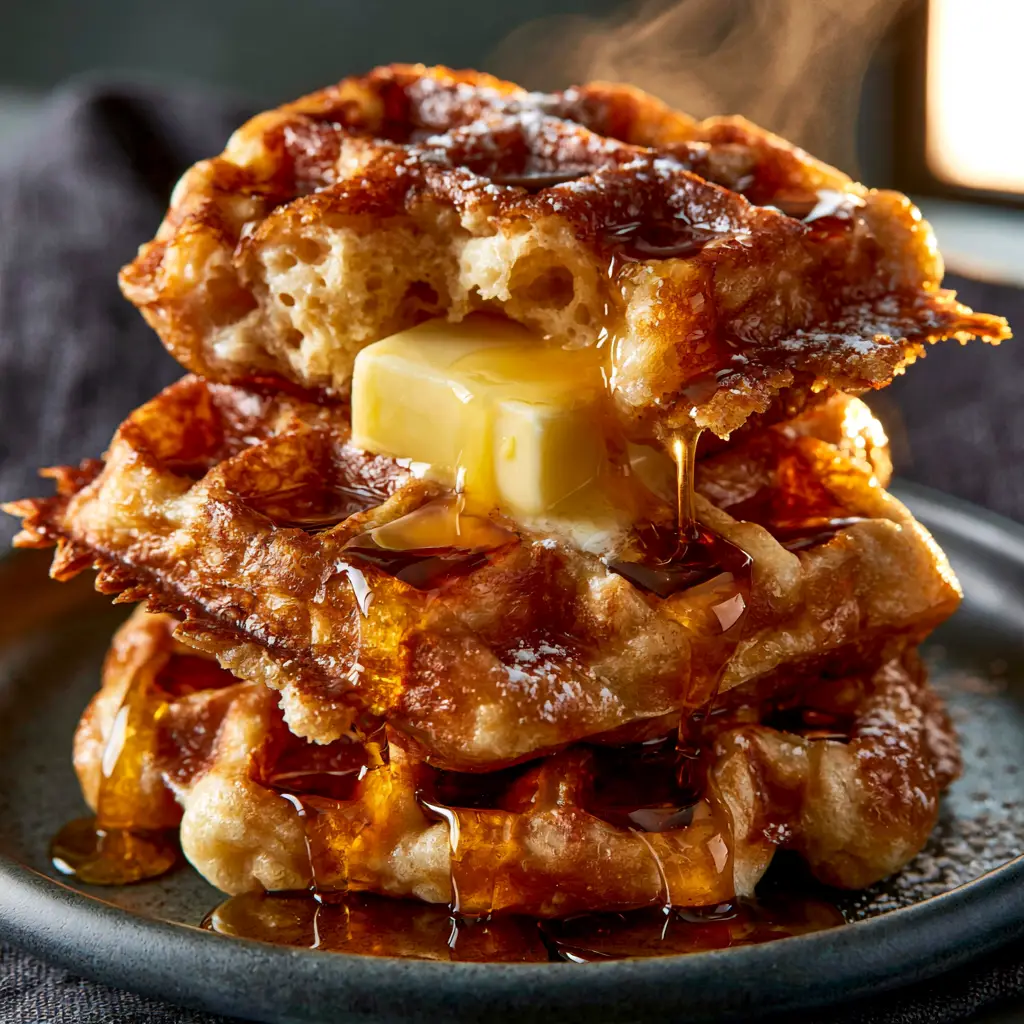
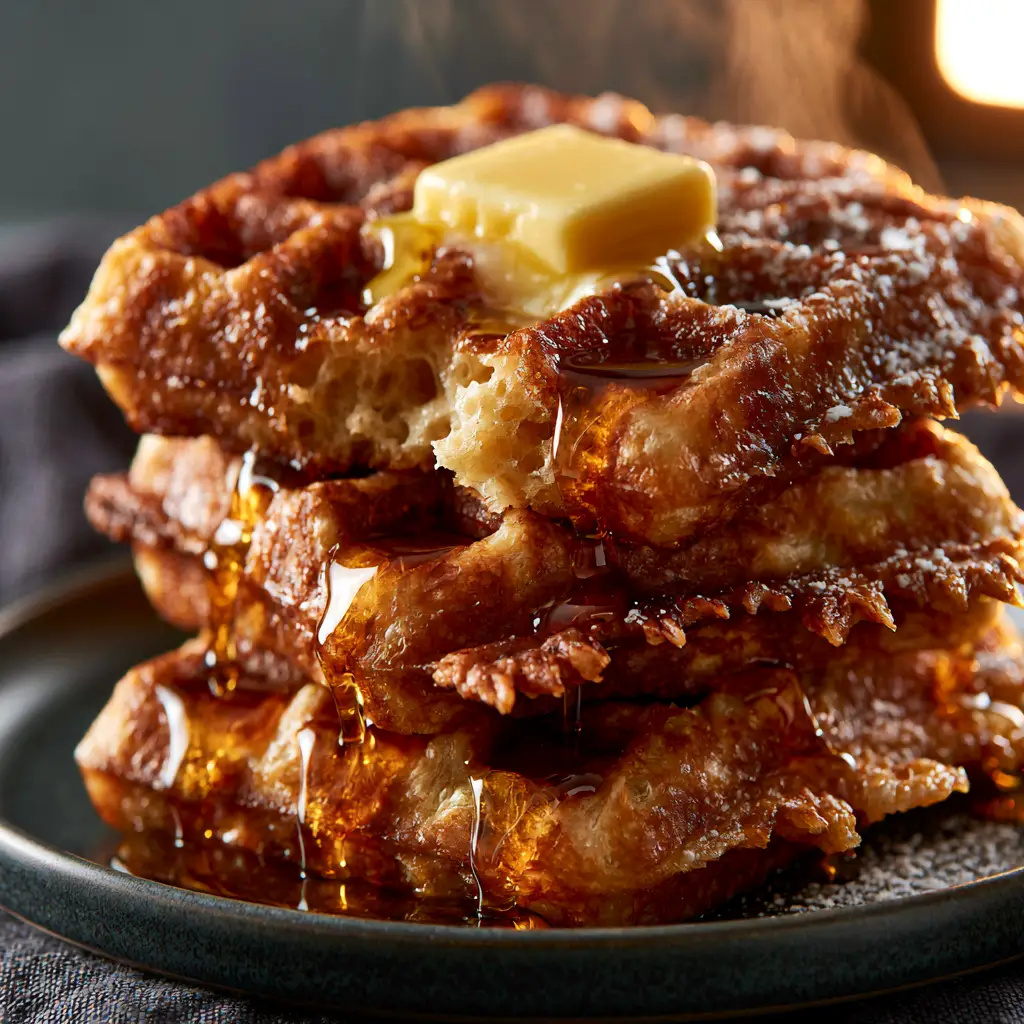
There is a specific, almost architectural beauty in a perfect stack of three thick Belgian waffles resting on a dark, matte ceramic plate. The way the soft, warm natural side-light catches the steam rising from the deep square pockets is enough to stop any home cook in their tracks. When you cut into that top layer, you should see a soft, aerated fluffiness that contrasts sharply with a rich golden-brown exterior and those coveted crispy, jagged edges.
Creating this masterpiece requires more than just luck; it requires a precision-engineered waffle mix recipe that balances hydration, leavening, and fat. This isn’t your standard thin breakfast fare; this is a culinary experience defined by glistening, translucent amber maple syrup overflowing and pooling at the base of a towering stack. Topped with a thick square pat of salted yellow butter melting into golden rivulets, these waffles are the gold standard of morning indulgence.
Why This Waffle Mix Recipe Redefines the Breakfast Experience
- Architectural Integrity: The deep square pockets are designed to hold maximum syrup capacity without becoming soggy.
- Sensory Contrast: A shatter-crisp exterior gives way to a cloud-like, aerated interior thanks to professional folding techniques.
- Caramelized Edges: Higher sugar-to-fat ratios ensure those jagged, crispy edges that provide a satisfying crunch in every bite.
- Visual Excellence: Specifically formulated to achieve that deep amber hue that looks stunning under a fine dusting of powdered sugar.
The Chemistry of Ingredients: Foundations of the Waffle Mix Recipe
To achieve the visual and textural results seen in high-end culinary photography, we must look at the function of each component. This waffle mix recipe relies on a specific ratio of dry to wet ingredients to ensure the batter is thick enough to hold its shape but light enough to rise aggressively.
All-Purpose Flour (375g / 3 cups): This provides the structural protein (gluten) necessary to hold the deep square pockets together. Too much protein would make the waffles tough, but this amount is the “Goldilocks” zone for Belgian-style results.
Cornstarch (60g / 1/2 cup): The secret to “shatter-crisp” edges. Cornstarch interferes with gluten development just enough to ensure the exterior becomes brittle and golden-brown rather than chewy.
Granulated Sugar (50g / 1/4 cup): Beyond sweetness, sugar is responsible for the Maillard reaction. This is what creates the rich golden-brown exterior and those caramelized jagged edges described in our visual blueprint.
Baking Powder (15g / 1 tbsp) and Baking Soda (2g / 1/2 tsp): This dual-leavening approach ensures a massive rise. The baking soda specifically aids in browning, giving you that dark ceramic plate-worthy color.
Salted Butter (115g / 1/2 cup), Melted: Fat is a heat conductor. By using melted butter, we ensure the heat from the iron penetrates deep into the batter, creating that “soft, aerated fluffiness” inside.
Buttermilk (480ml / 2 cups): The acidity in buttermilk reacts with the baking soda to create micro-bubbles. This is essential for the “towering stack” height we are aiming for.
Large Eggs (2), Separated: We will use the yolks for richness and whip the whites to stiff peaks. This is the professional secret to waffles that feel like air but look like stone-carved monuments.
Essential Gear for Achieving Belgian Texture
You cannot achieve “deep, square pockets” with a standard thin waffle iron. For this waffle mix recipe, a dedicated Belgian Waffle Maker with deep grids is non-negotiable. The extra surface area of the deep pockets allows for more syrup-trapping capacity and more space for steam to escape, which prevents sogginess.
Additionally, a dark ceramic plate is recommended for serving. The thermal mass of ceramic helps keep the bottom waffle warm, preventing it from losing its crispness to condensation while the stack is being assembled. Finally, a fine-mesh sieve is required for that “sparse dusting of powdered sugar” that adds the final touch of elegance.
Precision Steps: Mastering the Pour and the Rise
Preparing the Aerated Base
Begin by sifting your dry ingredients—flour, cornstarch, sugar, leavening agents, and salt—into a large bowl. In a separate container, whisk the buttermilk, melted butter, and egg yolks until emulsified. The goal here is to keep the fats suspended so they can coat the flour particles evenly.
The Secret Whipping Technique
Place your egg whites in a clean glass bowl and whisk until they reach soft, glossy peaks. This “hidden” ingredient is what creates the interior fluffiness visible in a “small bite taken from the top.” Gently fold these into your main batter using a spatula; do not overmix, or you will deflate the very air you just worked to incorporate.
Executing the Perfect Sear
Preheat your iron until it is screaming hot—most irons have a light cue, but wait an extra minute for the heat to saturate the plates. Pour the batter starting from the center and let it flow naturally to the edges. As the lid closes, look for the steam; when the steam stops rising, the waffle has reached its peak crispy, golden-brown state.
Expert Tips for Success: Avoiding Sogginess
- The Cooling Rack Trick: Never stack waffles directly on a plate immediately after cooking. Place them on a wire rack for 30 seconds to let residual steam escape, preserving those crispy jagged edges.
- Butter Temperature: Ensure your melted butter is warm, not hot. If it’s too hot, it will scramble the egg yolks in your wet mix, ruining the texture of the waffle mix recipe.
- Syrup Warmth: Always warm your amber maple syrup. Cold syrup will immediately congeal the melting square of salted butter, preventing those beautiful golden rivulets from forming.
- Don’t Peek: Lifting the lid too early can tear the waffle in half before the structure has set. Wait for the steam cue!
Morning Feast Pairings: Beyond the Stack
While this stack of three is a meal in itself, you can expand your breakfast spread to include other textures. If you’re hosting a brunch, consider serving these alongside cloud-like pancakes for guests who prefer a softer bite. For those who enjoy a savory contrast to the amber maple syrup, savory breakfast burritos provide a spicy kick that cuts through the sweetness.
If you find yourself with leftover batter, you can actually use a variation of this technique for classic homemade waffles or even experiment with toppings like those found in shakshouka toast for a fusion experience. For more inspiration on topping your stack, check out our guide on creative pancake ideas.
Storage, Reheating, and Preservation Tactics
This waffle mix recipe makes excellent leftovers. To store, let the waffles cool completely on a wire rack. Place them in a single layer on a baking sheet and freeze for one hour before transferring them to a heavy-duty freezer bag. This prevents them from sticking together.
To reheat and restore that “crispy, jagged edge” texture, avoid the microwave at all costs. Instead, use a toaster or a 350°F (175°C) oven for 5-8 minutes. This dry heat recrisps the exterior while keeping the aerated fluffiness intact inside.
Frequently Asked Questions
You can mix the dry and wet ingredients separately in advance. However, do not combine them or fold in the whipped egg whites until you are ready to cook, or the leavening agents will lose their power.
While similar, this batter contains more fat and sugar to encourage caramelization and a crispy exterior. It can be used for pancakes, but they will be much richer and crispier than a standard pancake.
Deep pockets are a result of using a Belgian-style waffle iron. A standard iron is too shallow to produce the thick, aerated structure required for this recipe.
To restore the jagged, crispy edges, reheat frozen waffles in a toaster or an oven at 350°F (175°C). Avoid the microwave as it makes the crust chewy and tough.
Lack of crispiness is usually due to low heat or trapped steam. Ensure your iron is fully preheated and never stack hot waffles directly on a plate; use a wire rack to let steam escape first.
The Final Waffle Mix Recipe Card
Prepare yourself for the ultimate breakfast. This recipe yields approximately 6-8 large Belgian waffles, perfect for creating that towering stack of three. Ensure your salted butter is at room temperature before placing it on the hot stack to encourage that perfect melt.
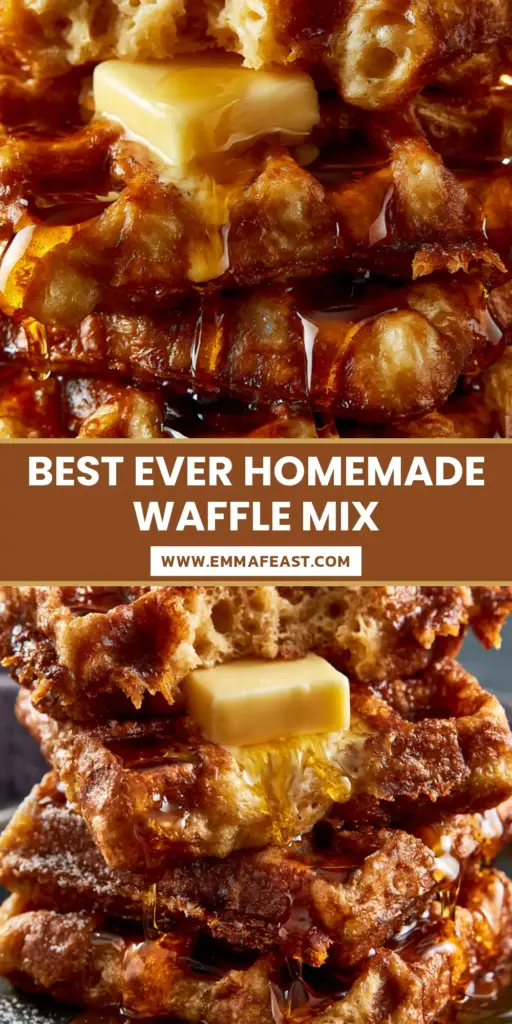
Waffle Mix Recipe: The Ultimate Guide to Crispy, Golden-Brown Belgian Waffles
Ingredients
Equipment
Method
- Whisk flour, cornstarch, sugar, baking powder, baking soda, and salt in a large bowl.
- In a separate bowl, whisk buttermilk, melted butter, and egg yolks until smooth.
- In a clean bowl, beat egg whites until soft, glossy peaks form.
- Stir the wet mixture into the dry, then gently fold in the whipped egg whites until just combined.
- Pour batter into a preheated Belgian waffle iron. Cook until steam stops rising and the exterior is golden-brown.
- Stack three waffles on a dark ceramic plate. Top with a square of salted butter, amber maple syrup, and a dusting of powdered sugar.
Notes
Use warmed syrup to maintain the melting butter texture.
Closing & Call to Action: Share Your Morning Masterpiece
Achieving the perfect golden-brown waffle is a rite of passage for every home cook. Whether you’re mesmerized by the melting butter or the way the syrup pools on the dark ceramic plate, we want to see your results! If you enjoyed this waffle mix recipe, please leave a comment below and share your photos with us. Don’t forget to save this recipe to your breakfast boards on Pinterest so you never lose the secret to those crispy, jagged edges.