There is nothing quite as evocative in Cantonese cuisine as the sight of succulent, crimson-hued Chinese barbecue pork hanging in a shop window. Known as Char Siu, this dish is the gold standard of roasted meats, balancing a complex sweet-and-savory profile with a texture that is both tender and crisp.
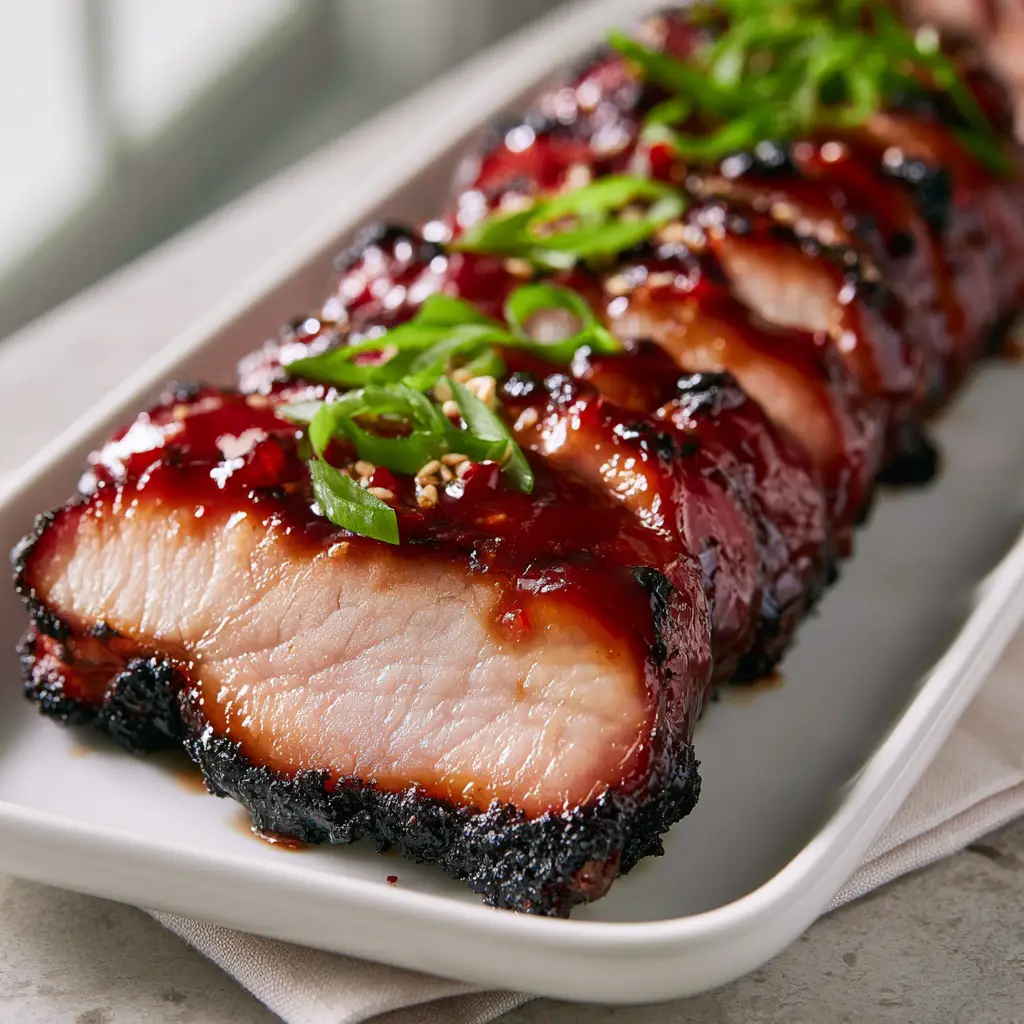
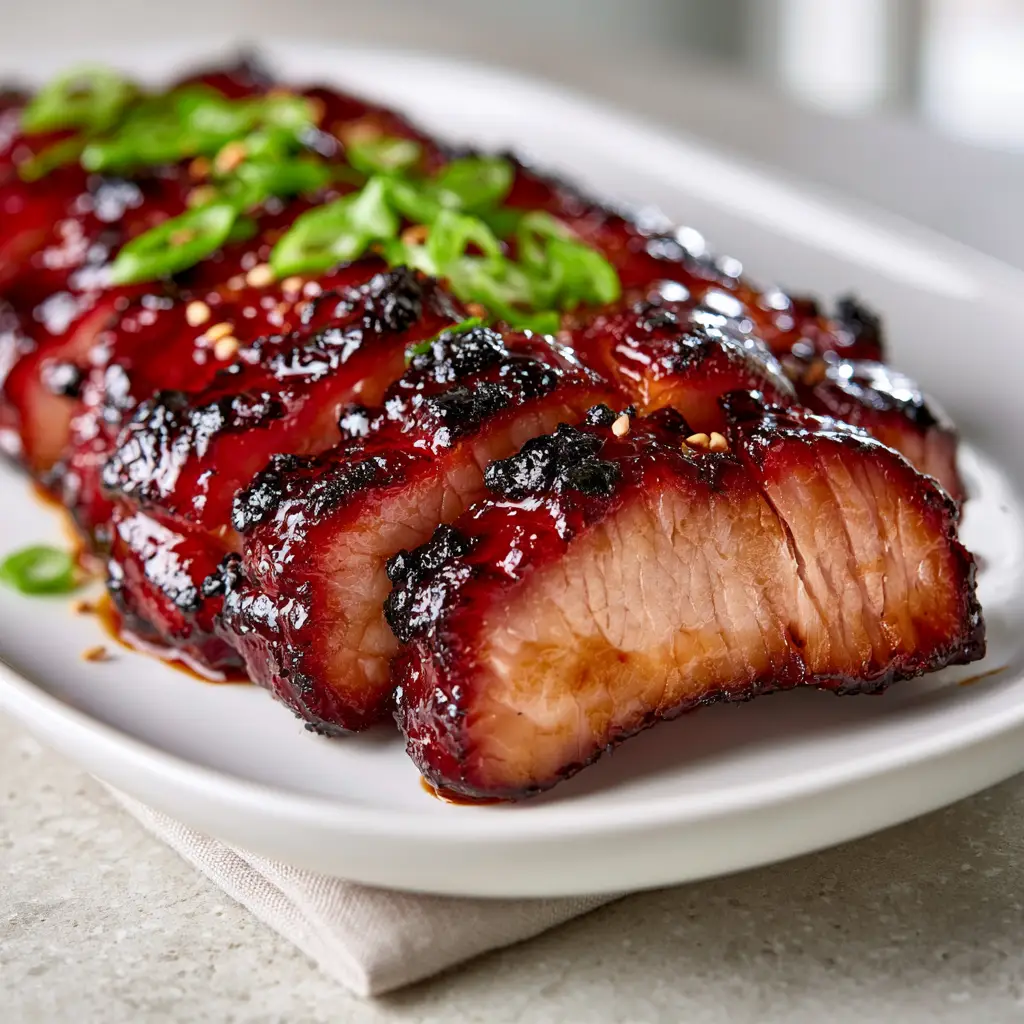
When you recreate this Chinese barbecue pork at home, you aren’t just cooking dinner; you are mastering the art of the glaze. This recipe produces thick, succulent medallions that boast a juicy, pale pink interior, providing a stunning visual contrast against a glowing ruby-red honey glaze that glistens under the light.
Every bite delivers the perfect ratio of rendered fat and lean meat, finished with those essential charred caramelized edges. Topped with a scattering of vibrant green scallions and toasted white sesame seeds, this dish is a masterpiece of texture and flavor that rivals any high-end barbecue house in Hong Kong.
The Anatomy of Authentic Cantonese Char Siu
- The Perfect Cut: By using pork shoulder (pork butt), we ensure a high enough fat content to keep the meat “juicy and pink” even after a long roast.
- A Multi-Dimensional Glaze: Our thick honey-soy-hoisin mixture creates a viscous, reflective coating that clings to the meat rather than sliding off.
- The Signature Char: Controlled high heat at the end of the cooking process creates those iconic crispy blackened bits that define authentic Chinese barbecue pork.
- Symphony of Aromatics: The combination of five-spice powder and fermented red bean curd provides the deep “umami” base and natural ruby color.
Pantry Staples for a Glossy, Ruby-Red Marinade
Pork Shoulder (Pork Butt): 3 lbs (1.36kg). This cut is non-negotiable for achieving the succulent texture seen in the visual prompt; it contains the intramuscular fat needed for a moist interior.
Hoisin Sauce: 1/2 cup (120ml). This serves as the thick, savory-sweet anchor of our glaze, providing the “viscous” quality described in the culinary blueprint.
Honey: 1/3 cup (80ml). Honey provides the reflective, glowing sheen and helps the edges of the pork caramelize into that perfect blackened crust.
Soy Sauce (Light and Dark): 2 tbsp (30ml) each. Light soy adds salt and depth, while dark soy provides a rich, mahogany undertone to the ruby-red exterior.
Shaoxing Rice Wine: 2 tbsp (30ml). This traditional Chinese cooking wine cuts through the sweetness and tenderizes the meat fibers from within.
Fermented Red Bean Curd (Optional but Recommended): 1 cube (15g). This is the secret to the natural “ruby-red” color and a deep, fermented funky saltiness that defines high-end Chinese barbecue pork.
Chinese Five-Spice Powder: 1 tsp (2g). A potent blend of star anise, cloves, cinnamon, Sichuan pepper, and fennel seeds that provides the signature aroma.
Foundational Seasonings: 1 tsp (6g) Kosher salt and 1/2 tsp (1g) white pepper. These invisible ingredients are essential for seasoning the core of the pork shoulder before the glaze is applied.
Toasted Sesame Oil: 1 tbsp (15ml). Added for a nutty aromatic finish that complements the toasted sesame seed garnish.
Garnishes: 2 large green scallions (15g) and 1 tsp (3g) toasted white sesame seeds. These provide the “vibrant green” and “toasted white” visual pops required for the final presentation.
The Essential Gear for a Perfect Roast
To achieve the results seen in the handheld smartphone photo, you need more than just an oven. A roasting pan equipped with a wire rack is vital; this allows hot air to circulate 360 degrees around the pork, ensuring the edges char while the bottom doesn’t become soggy.
An instant-read meat thermometer is your best friend here. Because we are aiming for a “juicy pink interior meat,” we must pull the pork at exactly 155°F (68°C) to allow for carry-over cooking to reach a safe and tender 160°F (71°C).
Finally, a high-quality pastry brush is necessary. You will be applying multiple layers of the honey-soy-hoisin glaze throughout the process to build up that thick, reflective surface that catches the light.
A Step-by-Step Guide to the Ultimate Caramelized Crust
Phase 1: Preparing the Pork and the Long Soak
Begin by trimming your 3 lb (1.36kg) pork shoulder into long strips, roughly 2 inches thick and 6 inches long. This increased surface area is the secret to getting more of that charred glaze in every single bite.
In a large bowl, whisk together the hoisin, honey, soy sauces, Shaoxing wine, red bean curd, five-spice, salt, and white pepper. Reserve 1/4 cup (60ml) of this mixture for the final basting, then submerge the pork strips in the remaining marinade.
Seal the container and refrigerate for at least 12 hours, though 24 hours is ideal. This long marination ensures the flavors penetrate the meat fibers and the sugar begins to break down the proteins for a more tender result.
Phase 2: The Initial Roast and Rendering
Preheat your oven to 425°F (220°C). Line a roasting tray with aluminum foil for easy cleanup and place a wire cooling rack on top. This setup is crucial for the “caramelized edges” we are targeting.
Arrange the pork strips on the rack, leaving space between each piece. Roast for 20 minutes, then reduce the heat to 350°F (175°C). This initial blast of heat starts the Maillard reaction, sealing the juices inside the pale pink interior.
Phase 3: The Glazing and Charring Ritual
Remove the pork and brush generously with the reserved marinade. Flip the pieces and return to the oven for another 15 minutes. You should hear the fat beginning to sizzle and see the glaze becoming viscous and reflective.
For the final 5-10 minutes, turn on the broiler. Watch closely! You want to see the edges of the pork bubble and transform into crispy blackened char bits. This is the sensory cue that your Chinese barbecue pork is finished.
Phase 4: The Rest and Precision Slice
Transfer the charred pork to a cutting board and let it rest for 10 minutes. This is the most difficult step, but resting allows the juices to redistribute, ensuring the meat remains “succulent” when sliced.
Using a sharp knife, slice the pork against the grain into thick medallions, about 1/2 inch (1.25cm) thick. Arrange them on a minimalist white ceramic platter to let the ruby-red glaze truly pop against the neutral background.
Expert Tips for Success
- Monitor the Sugar: Because of the high honey content, the glaze can go from “caramelized” to “burnt” in seconds under the broiler. Stay by the oven for the last 5 minutes.
- The Red Factor: If you cannot find red bean curd, a teaspoon of beet powder or a few drops of red food coloring will achieve that glowing ruby-red hue without changing the flavor.
- Room Temperature: Take the marinated pork out of the fridge 30 minutes before roasting. This ensures it cooks evenly, preserving that juicy pink interior.
- Alternative Cuts: If you prefer a leaner result, pork tenderloin can be used, but reduce the cooking time significantly to avoid drying it out.
What to Serve With Chinese Barbecue Pork
This Char Siu is incredibly versatile. For a complete Cantonese feast, serve it over a bowl of fluffy rice to soak up any extra honey-soy glaze. The sweetness of the pork also pairs beautifully with a fresh vegetable stir-fry for a balanced dinner.
If you have leftovers, they are the secret ingredient to the best fried rice you’ve ever had, or you can even chop the pork finely and use it as a filling for fusion breakfast wraps.
Storage, Reheating & Freezing
Storage: Keep leftover Chinese barbecue pork in an airtight container in the refrigerator for up to 4 days. The glaze will thicken further when cold.
Reheating: To maintain the “juicy” texture, reheat slices in a pan over medium heat with a splash of water, or in a 300°F (150°C) oven covered with foil until warmed through.
Freezing: You can freeze the cooked pork for up to 3 months. Thaw overnight in the fridge before reheating to preserve the integrity of the meat fibers.
Frequently Asked Questions
Yes! This recipe is designed for the oven. Using a wire rack over a roasting pan allows for the air circulation needed to create those iconic charred, caramelized edges without a charcoal grill.
The key is the honey and hoisin ratio combined with multiple basting sessions. Applying the glaze in layers and finishing under the broiler creates that viscous, glowing surface.
You can substitute it with dry sherry or even a splash of mirin (though mirin is sweeter, so you may want to slightly reduce the honey in the marinade).
Pork shoulder (also known as pork butt) is the best choice because its high fat content ensures a juicy, succulent interior meat that doesn’t dry out during the high-heat roasting and charring process.
Traditionally, the ruby-red color comes from fermented red bean curd or dark soy sauce. In many modern restaurants, a small amount of red food coloring is used to achieve that vibrant, glowing hue.
The Ultimate Chinese Barbecue Pork Recipe
Prepare to impress your guests with this restaurant-quality Char Siu. The combination of the reflective glaze, the tender meat, and the smoky char makes this a recipe you will return to time and time again.
Chinese barbecue pork (Char Siu) with a Ruby Honey-Hoisin Glaze
Ingredients
Equipment
Method
- Whisk marinade ingredients together and submerge pork strips for 12-24 hours in the refrigerator.
- Roast at 425°F (220°C) for 20 minutes on a wire rack, then reduce heat to 350°F (175°C) and continue for 15 minutes.
- Baste with reserved honey-hoisin mixture and broil for 5-10 minutes until edges are charred and blackened.
- Let meat rest for 10 minutes before slicing into medallions and garnishing with scallions and sesame seeds.
Notes
If the glaze isn't darkening, add an extra teaspoon of honey to the final basting liquid.
Closing & Call to Action
Mastering Chinese barbecue pork at home is a rewarding culinary journey that brings the flavors of a Cantonese roast house into your kitchen. We hope you enjoy the incredible contrast of the glowing ruby glaze against the succulent pork shoulder.
If you made this recipe, please leave a comment below and let us know how your caramelization turned out! Don’t forget to follow emma_feast on Pinterest for more visual recipe inspiration and share your photos with us.