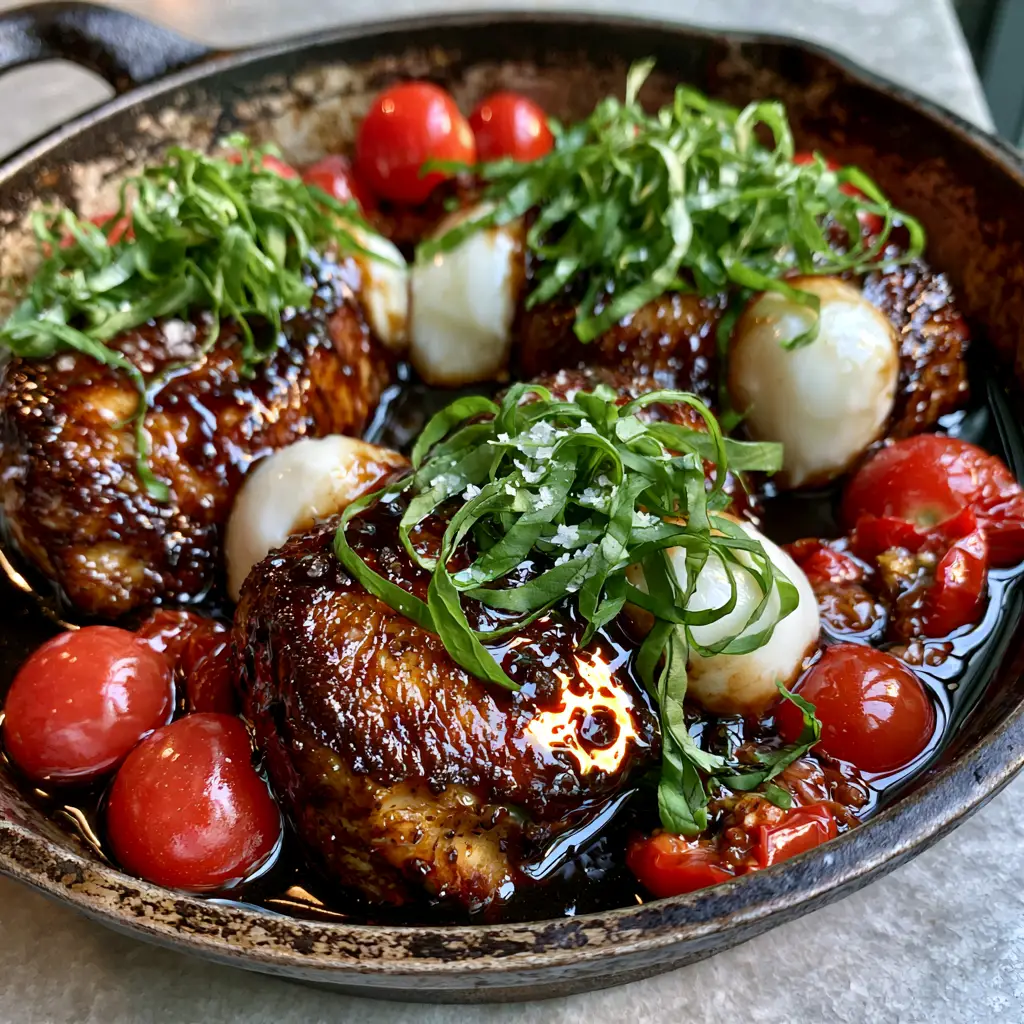
There is a specific kind of culinary magic that happens when high-quality balsamic vinegar meets a hot cast iron skillet. This one pan balsamic chicken isn’t just a meal; it is a visual and sensory masterpiece featuring succulent, golden-brown chicken breasts drenched in a dark, glossy, syrupy balsamic reduction.
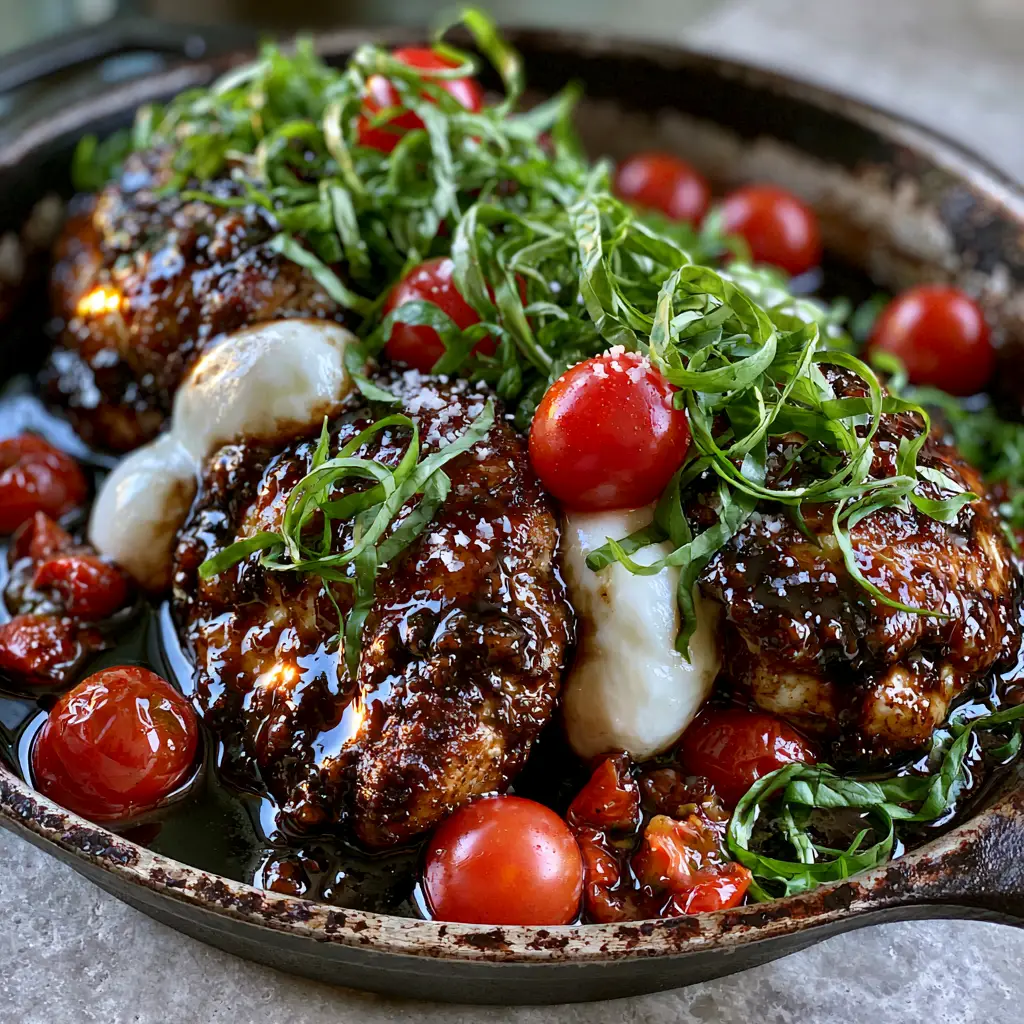
Imagine pulling a weathered black skillet from the stove, the sauce still bubbling and caramelizing against the heavy iron. Large pearls of fresh white mozzarella drape over the meat, while bright red cherry tomatoes burst with sweetness, releasing their juices into a sticky, savory glaze.
Whether you are looking for new summer dinner ideas or a sophisticated weeknight staple, this recipe delivers gourmet results with minimal cleanup. The final touch of vibrant green basil chiffonade and a dusting of coarse sea salt creates a dish that looks like it walked off the pages of a professional food magazine.
Why This Sticky Balsamic Skillet Chicken Works
- Textural Contrast: The recipe achieves a deep, pan-seared crust on the chicken while maintaining an incredibly juicy interior.
- Balanced Flavor Profile: The acidity of the balsamic vinegar is perfectly tempered by honey and the natural sweetness of blistered tomatoes.
- Visual Forensics: We use fresh mozzarella pearls specifically for their ability to hold their shape while softening into creamy, white pools of flavor.
- One-Pan Efficiency: By using a single skillet, we build layers of flavor—from the chicken fond to the tomato juices—directly into the final sauce.
The Essential Components for a Glossy Balsamic Glaze
To achieve the “shimmer” and “sticky” texture described in our visual blueprint, each ingredient serves a scientific purpose. Do not skip the searing process, as this is where the foundational flavor is born.
3 thick, plump chicken breasts (approx. 1.5 lbs / 680g): Choose even-sized breasts to ensure they cook at the same rate and provide that signature “plump” appearance.
1 tbsp (15ml) Extra Virgin Olive Oil: This provides the necessary shimmer and high smoke point for achieving a golden-brown sear without burning the meat.
1/2 cup (120ml) High-Quality Balsamic Vinegar: This is the base of our reduction; as the water evaporates, the sugars concentrate into a dark, syrupy glaze.
2 tbsp (30ml) Honey or Brown Sugar: Essential for achieving that “sticky and caramelized” look that pure vinegar alone cannot sustain.
1 pint (250g) Fresh Cherry Tomatoes: We want these to blister and slightly burst, adding a bright red pop of color and acidic juice to the dark sauce.
8 oz (225g) Fresh Mozzarella Pearls: These “large pearls” melt beautifully without disappearing into the sauce, providing a stark white contrast against the dark glaze.
1/2 cup (15g) Fresh Basil Leaves: Cut into a fine chiffonade (thin ribbons), this adds the final vibrant green aromatic layer.
Coarse Sea Salt and Cracked Black Pepper: Used for seasoning the meat and as a final “light dusting” to enhance the visual texture and flavor profile.
Tools for Professional Skillet Searing
To replicate the weathered, rustic look of our blueprint, a 12-inch (30cm) black cast iron skillet is highly recommended. The heavy bottom retains heat better than stainless steel, which is crucial for the Maillard reaction that creates a golden-brown crust.
You will also need a sharp chef’s knife for your basil chiffonade and a pair of tongs to flip the chicken without piercing the meat and losing those precious juices. A meat thermometer is your best friend here to ensure the thickest part of the chicken reaches 165°F (74°C).
How to Master One Pan Balsamic Chicken Step-by-Step
Achieving the Perfect Golden-Brown Sear
Pat the chicken breasts dry with paper towels; moisture is the enemy of a good sear. Season both sides generously with cracked black pepper and a portion of the coarse sea salt.
Heat the olive oil in your cast iron skillet over medium-high heat until it shimmers. Place the chicken in the pan and leave it undisturbed for 5-6 minutes until a deep golden-brown crust forms and the meat releases easily from the surface.
Blistering the Tomatoes and Building the Fond
Flip the chicken and immediately scatter the cherry tomatoes into the empty spaces of the skillet. As the chicken finishes cooking, the tomatoes will begin to sizzle and “blister.”
Watch for the tomato skins to slightly burst, releasing their juices to deglaze the bottom of the pan. Once the chicken reaches an internal temperature of 160°F (71°C), remove the meat temporarily to a plate to prevent overcooking while we finish the sauce.
Reducing the Balsamic to a Sticky Glaze
Pour the balsamic vinegar and honey into the hot skillet with the tomatoes. Use a wooden spoon to scrape up the brown bits (the fond) from the bottom of the weathered skillet.
Simmer the liquid for 3-5 minutes. You are looking for a visual cue: the sauce should thicken until it is syrupy enough to coat the back of a spoon and looks dark and glossy.
The Final Melt and Garnish
Nestle the chicken breasts back into the syrupy reduction. Place the mozzarella pearls over the top of each breast, allowing the residual heat to drape the white cheese over the meat.
Remove from heat. Top the dish with a heavy garnish of fresh basil ribbons and a final dusting of sea salt, just like the balsamic chicken photo that inspired this recipe.
Chef’s Tips for a Visual Masterpiece
- Room Temperature Meat: Take your chicken out of the fridge 15 minutes before cooking to ensure even heat distribution.
- Don’t Crowd the Pan: If your skillet is small, sear the chicken in batches to avoid steaming the meat instead of browning it.
- The Chiffonade Technique: Stack basil leaves, roll them like a cigar, and slice thinly to get those professional “thin ribbons” seen in the prompt.
- Glaze Consistency: If the sauce gets too thick, add a splash of chicken broth or water to loosen it back to a “glossy highlight” state.
Pairing and Serving Suggestions
This dish is incredibly versatile and fits perfectly within a Mediterranean-inspired menu. The syrupy sauce is liquid gold, so you will want something to soak it up.
Serve this over a bed of lemon-infused pasta or alongside crusty artisan bread. For a lower-carb option, a simple arugula salad with a lemon vinaigrette complements the richness of the melted mozzarella and balsamic reduction beautifully.
Storage and Reheating Advice
This dish is best served immediately while the mozzarella is soft and the basil is vibrant. However, leftovers can be stored in an airtight container for up to 3 days in the refrigerator.
To reheat, place the chicken and sauce back into a skillet over low heat with a tablespoon of water. Cover with a lid to trap steam, which will help remelt the cheese without drying out the chicken.
Frequently Asked Questions
Absolutely. Chicken thighs are more forgiving and stay juicy. Increase the sear time by 2-3 minutes per side to ensure the skin gets crispy and the meat is fully cooked.
For the visual ‘basil chiffonade’ and vibrant flavor, fresh is highly recommended. If you must use dried, add it to the balsamic glaze while it reduces, but the final dish will lack the bright green garnish.
The key is the reduction time and the addition of a sweetener like honey. Simmer the sauce until the water evaporates and the sugars concentrate; it should look like thick maple syrup.
The pan was likely too hot when you added them. To keep the ‘pearl’ shape seen in the photos, add the cheese at the very end and remove from heat immediately so they only soften.
You can use a heavy-bottomed stainless steel or non-stick pan. However, cast iron is preferred for that specific weathered look and superior heat retention for a deep sear.
The Ultimate One Pan Balsamic Chicken Recipe
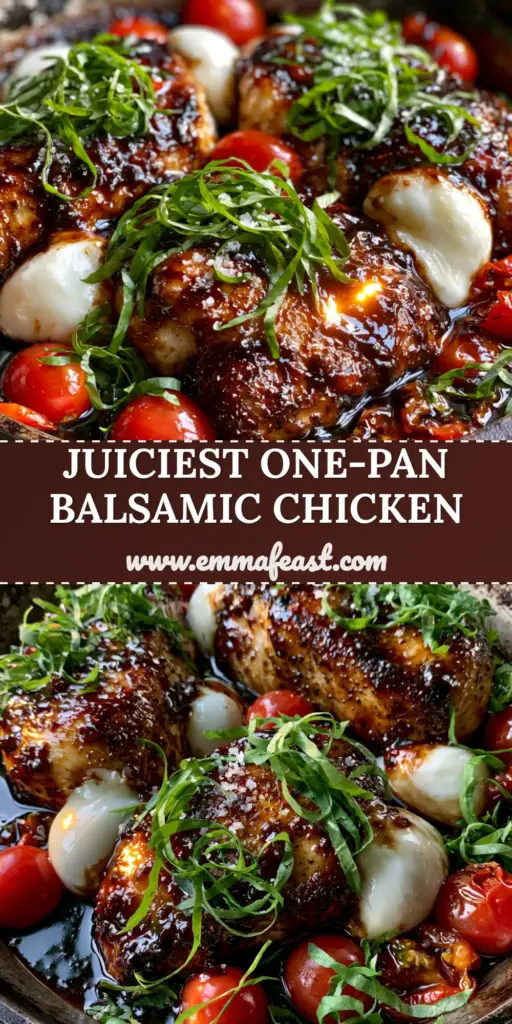
One Pan Balsamic Chicken with Blistered Tomatoes and Melted Mozzarella
Ingredients
Equipment
Method
- Pat the chicken breasts dry and season both sides with sea salt and cracked black pepper.
- Heat olive oil in a cast iron skillet over medium-high heat. Sear chicken for 5-6 minutes per side until deep golden-brown.
- Add cherry tomatoes to the skillet during the last 4 minutes of chicken cooking time until they blister and slightly burst.
- Remove chicken. Add balsamic vinegar and honey to the skillet. Simmer for 3-5 minutes until the sauce is dark, glossy, and syrupy.
- Return chicken to the pan. Top with mozzarella pearls and allow them to drape over the meat until partially melted.
- Remove from heat. Garnish heavily with basil ribbons and a dusting of sea salt before serving directly from the skillet.
Notes
Ensure the balsamic sauce reduces enough to look 'sticky'—it should coat a spoon easily.
Bringing the Skillet to the Table
This one pan balsamic chicken is a testament to how simple ingredients, when treated with the right culinary techniques, can create a five-star dining experience. The contrast of the dark, sticky glaze against the bright tomatoes and white mozzarella makes it a visual centerpiece for any dinner table.
If you enjoyed the deep flavors of this balsamic reduction, be sure to explore our other flavor-packed meals. We would love to see your recreations! Please leave a comment below and share your photos with us on Pinterest.