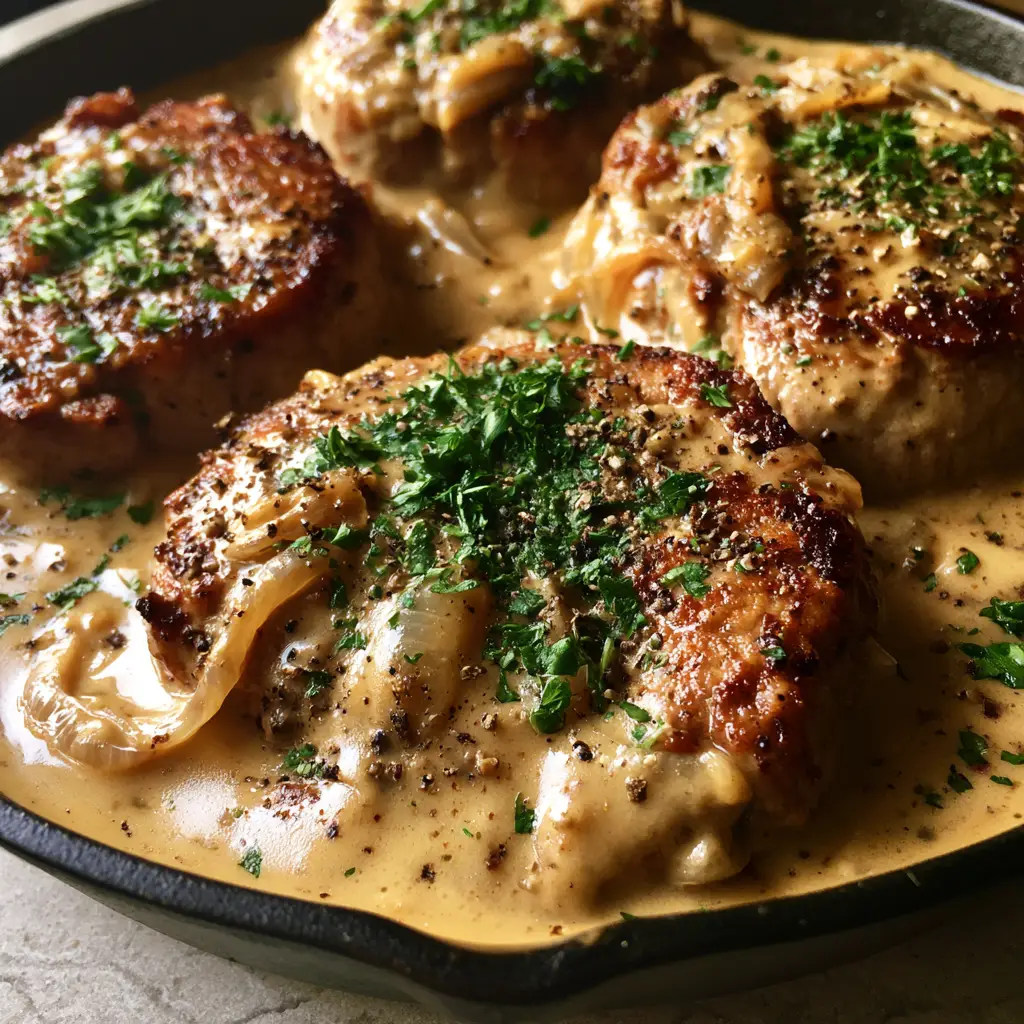
There is something fundamentally comforting about a plate of perfectly seared pork medallions with onion gravy. Imagine thick-cut tenderloin, pan-seared until a deep, golden-brown crust forms, nestled in a pool of velvety, light-tan sauce. This isn’t just a weekday dinner; it is a masterclass in texture and flavor that brings the rustic charm of a gastropub right to your light grey stone countertop.
Achieving that specific glossy sheen and rich, creamy consistency requires more than just heat; it requires an understanding of the Maillard reaction and the patience to caramelize onions until they are translucent slivers of sweetness. Whether you are looking for new high protein dinners or a centerpiece for a cozy Sunday meal, this dish delivers on every sensory promise.
In this guide, we will break down the culinary forensics of achieving a handheld-smartphone-photo-worthy result. From the vibrant green of the freshly chopped parsley to the bite of coarse cracked black pepper, every element is designed for maximum visual and palatal impact.
Why This Pan-Seared Masterpiece Works
- Textural Contrast: The hard sear on the pork provides a satisfying crust that stands up against the thick, velvety onion gravy.
- Depth of Flavor: By deglazing the cast iron skillet, we incorporate the “fond”—those flavorful brown bits—directly into the light tan sauce.
- Visual Vibrancy: The dusting of fresh parsley and coarse pepper adds a pop of color and a rustic aesthetic that looks unedited and hyper-realistic.
- Caramelized Excellence: The onions aren’t just cooked; they are transformed into translucent, sweet slivers that melt into the cream-based gravy.
The Ultimate Pantry List for Pan-Seared Perfection
Pork Tenderloin: You will need 1.5 lbs (680g) of high-quality tenderloin. We slice these into thick-cut medallions to ensure the center stays juicy while the exterior develops that iconic golden crust.
Yellow Onions: Two large yellow onions (about 500g) provide the base for our gravy. When sliced thin and cooked slowly, they become the translucent slivers seen in the visual blueprint.
Heavy Cream: 1/2 cup (120ml) of heavy cream is the secret to achieving a “light tan” color and a “glossy sheen.” It softens the bite of the beef stock and creates a velvety mouthfeel.
Beef Stock: 1.5 cups (360ml) of high-quality stock adds the savory backbone. It interacts with the pork juices to create a rich, brown base before the cream is added.
Unsalted Butter: 3 tbsp (45g) of butter is used for the roux and for finishing the sauce. This adds the fat necessary for that “thick, velvety” consistency mentioned in the prompt.
All-Purpose Flour: 2 tbsp (30g) of flour acts as the thickening agent. It must be cooked out slightly with the butter to avoid a raw taste.
Fresh Parsley: A generous handful of flat-leaf parsley, finely chopped. This provides the “vibrant green” contrast against the warm tones of the meat and sauce.
Coarse Black Pepper: Use a peppermill set to a coarse grind. This isn’t just for heat; it provides a visual “dusting” that defines the rustic food blog aesthetic.
Invisible Essentials: You will also need 2 tbsp (30ml) of neutral high-smoke-point oil (like avocado oil) for the initial sear, and 1 tsp (5g) of kosher salt to season the meat, similar to the profile of a classic salt and pepper pork.
Essential Tools for the Professional Home Cook
A 12-inch rustic cast iron skillet is non-negotiable for this recipe. Cast iron retains heat better than stainless steel, which is critical for achieving the “perfect golden-brown crust” on the medallions without overcooking the interior.
A sharp Chef’s Knife is required to create uniform onion slivers. Consistency in your cuts ensures that the onions caramelize at the same rate, resulting in that translucent, velvety appearance in the final gravy.
A Flat-Edged Wooden Spoon or a whisk is necessary for deglazing. You need to scrape the bottom of the skillet to release the fond, which is the secret ingredient for a light tan gravy that tastes like it spent hours simmering.
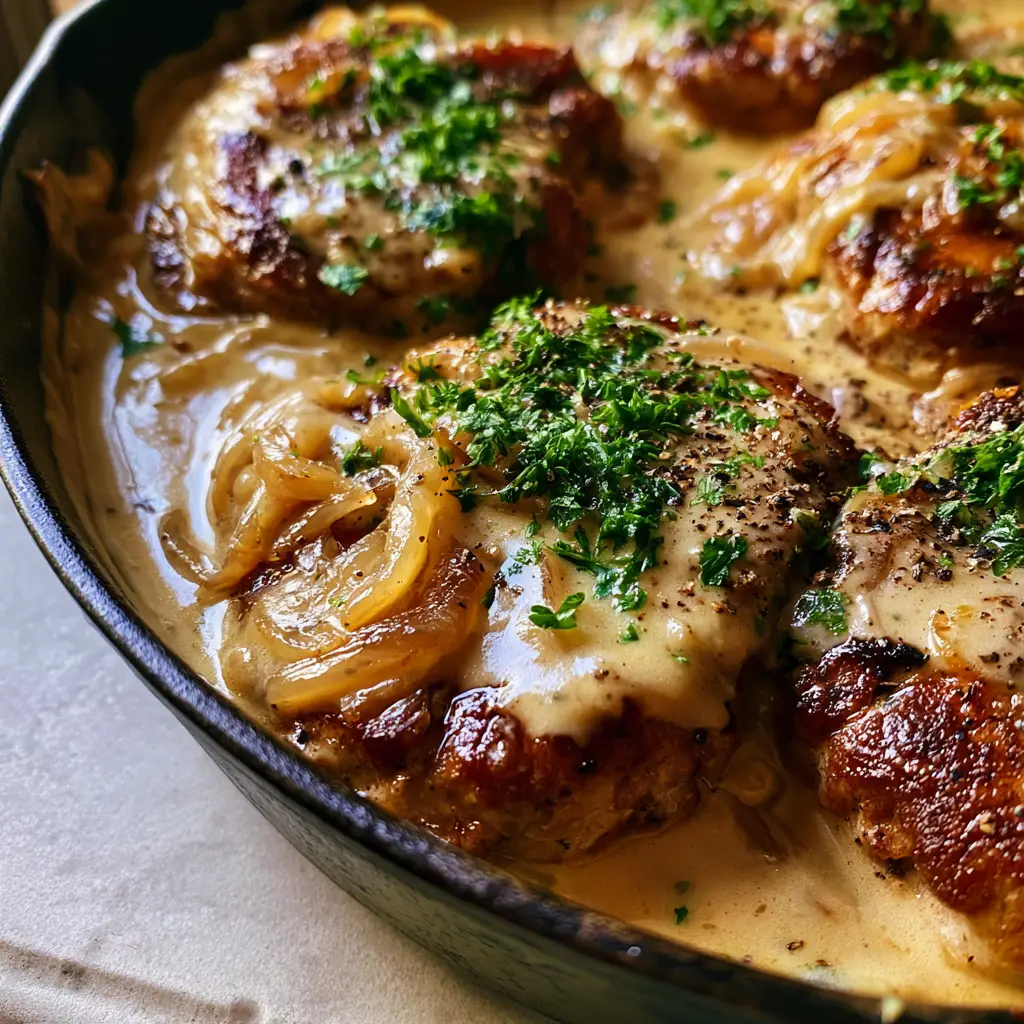
The Blueprint for a Perfect Golden-Brown Crust
Prepping the Medallions
Start by trimming any silver skin from the pork tenderloin. Slice the meat into 1.5-inch (4cm) thick medallions, then gently press them with the palm of your hand to even them out.
Pat the meat extremely dry with paper towels. Any moisture on the surface will create steam, preventing the formation of the golden crust we are looking for.
Executing the Forensic Sear
Heat your cast iron skillet over medium-high heat with the neutral oil until it just begins to shimmer. Place the medallions in the skillet, ensuring they do not touch.
Do not move the meat for at least 3 minutes. You are looking for a visual cue: the edges of the pork should look opaque and a deep brown ring should be visible where the meat meets the pan. Flip once and sear the other side for 2 minutes, then remove the pork to a plate.
Crafting the Thick Velvety Onion Gravy
Caramelizing the Translucent Slivers
Lower the heat to medium and add a tablespoon of butter to the pork drippings. Toss in your onion slivers and a pinch of salt.
Cook the onions, stirring occasionally, for about 10-12 minutes. You aren’t looking for dark French onion soup style here; you want them translucent and soft, with just a hint of golden color around the edges.
The Secret to a Light Tan Sheen
Sprinkle the flour over the onions and cook for 1 minute to remove the floury taste. Slowly whisk in the beef stock, scraping the bottom of the skillet to incorporate the seared pork bits.
Once the stock has thickened, pour in the heavy cream. This is the moment the sauce transforms into a “light tan” velvety gravy with a “glossy sheen.” Simmer until the sauce coats the back of a spoon.
Expert Tips for Success
- Temperature Control: If the skillet gets too hot during the onion phase, add a splash of water to slow down the browning. We want “translucent,” not “burnt.”
- Resting the Meat: Always let the pork medallions rest for 5 minutes before placing them back into the gravy. This keeps the juices inside the meat rather than thinning out your velvety sauce.
- The Parsley Finish: Only chop the parsley right before serving. This ensures the “vibrant green” color stays bright and doesn’t wilt into the heat of the gravy.
- Fresh Pepper Hack: Use a coarse grind for the black pepper. The large cracks provide a burst of floral heat that cuts through the richness of the cream and butter.
Creative Pairings and Serving Suggestions
This dish is remarkably versatile. For a classic approach, serve the pork medallions with onion gravy over a bed of buttery mashed potatoes. The gravy is thick enough to act as a sauce for both the meat and the starch.
If you are planning a themed event, these medallions are sophisticated enough to be included in baby shower food ideas as a hearty main course. Alternatively, if you enjoy the flavor profile of seared meat and savory sauce, you might also love a traditional pepper steak.
Storage, Reheating, and Make-Ahead Advice
Store any leftovers in an airtight container for up to 3 days in the refrigerator. The gravy will thicken significantly as it cools due to the butter and cream content.
To reheat, place the medallions and gravy back into a skillet over low heat. Add a tablespoon (15ml) of water or stock to loosen the sauce and restore that glossy sheen. Avoid the microwave if possible, as it can make the pork rubbery.
Frequently Asked Questions
Yes, but ensure you use thick-cut, boneless chops and slice them into medallion-sized pieces to maintain the cooking times and visual aesthetic described.
While not strictly mandatory, cast iron is highly recommended to achieve the ‘golden-brown crust’ seen in the photos, as it provides superior heat retention compared to thin pans.
The key is to sear them quickly over high heat to get a crust, then remove them immediately. They will finish cooking through the residual heat once returned to the warm gravy.
The velvety texture is achieved through a roux (butter and flour) combined with heavy cream, finished by whisking in a final knob of cold butter at the end for a glossy sheen.
This color comes from the combination of deglazing the brown bits (fond) and adding heavy cream. If it’s too dark, you may have caramelized the onions too far; if too white, you need more beef stock reduction.
The Master Recipe for Pork Medallions with Onion Gravy

Pork Medallions with Onion Gravy: The Ultimate Cast Iron Skillet Guide
Ingredients
Equipment
Method
- Pat pork medallions extremely dry and season with salt and pepper.
- Heat oil in cast iron skillet. Sear pork for 3 minutes per side until a golden-brown crust forms. Remove and set aside.
- Add 1 tbsp butter and onions to the pan. Cook until translucent and soft (10-12 mins).
- Stir in flour for 1 minute. Slowly whisk in beef stock, scraping up the fond.
- Stir in heavy cream and remaining butter. Simmer until velvety and light tan.
- Return pork to the skillet, coating in the glossy gravy.
- Top with vibrant green parsley and coarse cracked black pepper before serving.
Notes
Ensure the cream is at room temperature to prevent the sauce from breaking.
Mastering the Art of the Skillet
Mastering pork medallions with onion gravy is a gateway to high-end home cooking. By following these visual and sensory cues—from the sound of the sear to the light tan hue of the cream—you’ve created a dish that is as beautiful as it is delicious. We invite you to share your results and tag us on social media.
Be sure to follow emma_feast_official on Pinterest for more hyper-realistic recipe inspiration and kitchen tips. If you loved this recipe, please leave a comment below and tell us how your crust turned out!