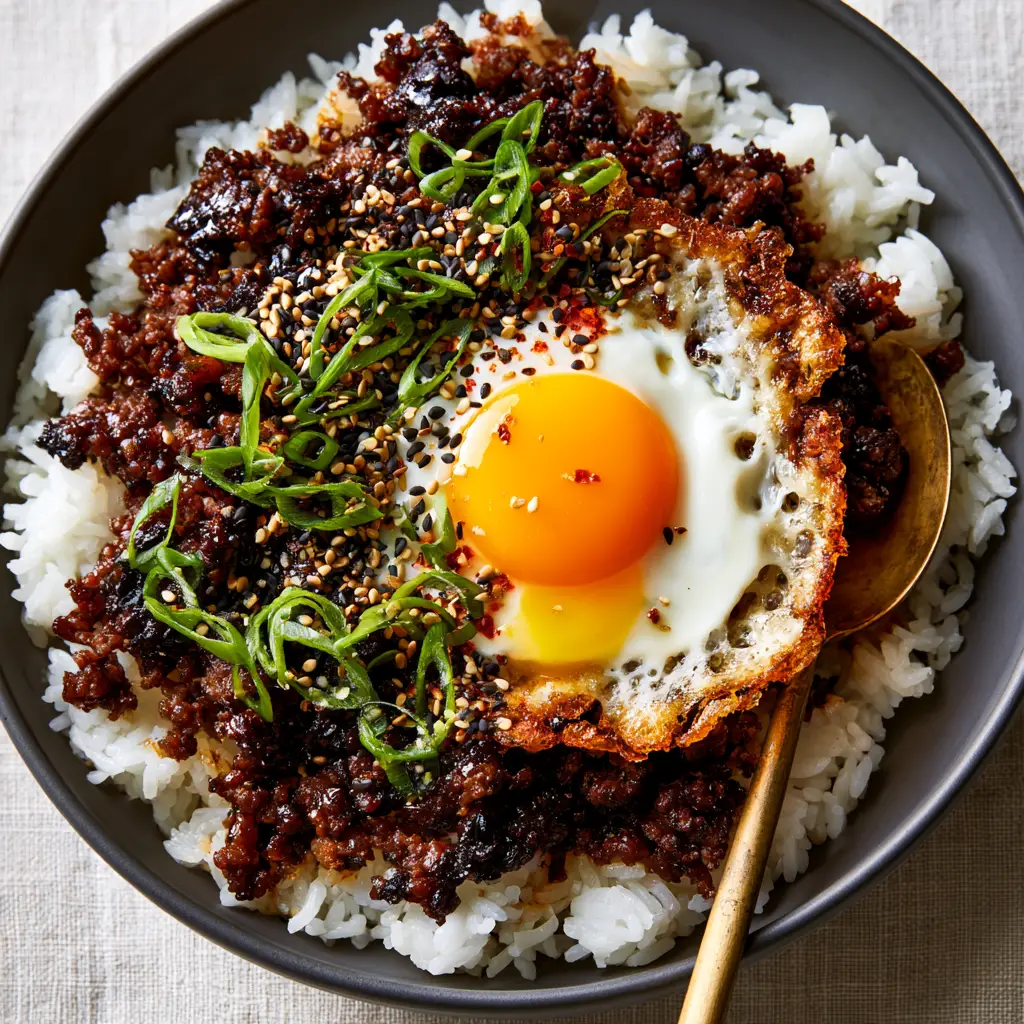
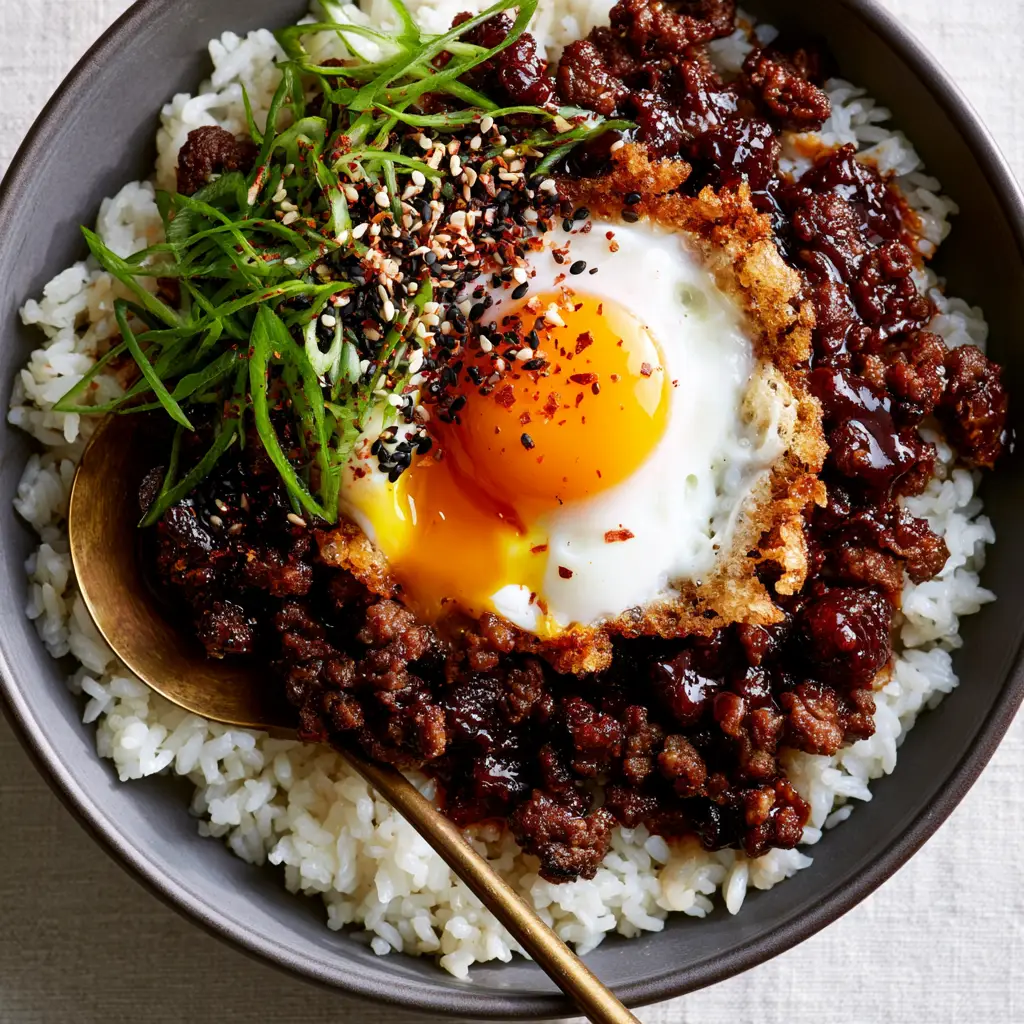
The Korean Bulgogi Beef Bowl is a symphony of textures and deep, umami-rich flavors that transforms simple ground beef into a gourmet experience. Imagine a matte charcoal ceramic bowl filled with fluffy, individual grains of jasmine rice, topped with beef crumbles seared to a shattering crispness on the edges. These crumbles are enrobed in a thick, glistening, dark mahogany bulgogi glaze that catches the light with every movement of your vintage brass spoon.
At the center of this masterpiece sits a perfect fried egg, its vibrant orange yolk ready to burst and mingle with the sauce, framed by lacy, golden-brown crispy edges. A heavy dusting of toasted black and white sesame seeds, bright green bias-cut scallions, and a pinch of fiery gochugaru flakes complete this visually stunning and palate-pleasing meal. This isn’t just a quick dinner; it is a restaurant-quality bowl designed for those who appreciate the forensic details of a perfectly executed sear.
Whether you are looking for new high-protein dinners or simply want to elevate your weeknight rotation, this Korean Bulgogi Beef Bowl delivers on every sensory promise. The aroma of toasted sesame oil and caramelized soy sauce will fill your kitchen, signaling the arrival of a meal that looks exactly like a high-end food photography spread.
Why You Will Crave This Specific Bulgogi Rice Bowl
- The Mahogany Glaze: Unlike thin, watery sauces, this glaze is reduced until it reaches a thick, syrupy consistency that clings to every beef crumble.
- Textural Contrast: The combination of soft, steamed jasmine rice and the “lacy” crispy edges of the high-heat fried egg provides an incredible mouthfeel.
- Visual Precision: From the sharp bias-cut scallions to the dual-tone sesame seeds, this dish is designed to be as beautiful as it is delicious.
- Maillard Perfection: By searing the ground beef undisturbed, we achieve those deeply caramelized, crispy edges that define the “Forensic Visual Accuracy” of this recipe.
The Anatomy of a Perfect Korean Bulgogi Beef Bowl
Creating this Korean Bulgogi Beef Bowl requires a balance of high-quality proteins and foundational “invisible” ingredients that facilitate the perfect chemical reactions in your pan. To achieve the deep mahogany color and the specific crispy textures described in our visual blueprint, we must use specific fats and sugars.
Lean Ground Beef (90/10 or 85/15): We need enough fat to help the beef sear and “fry” in its own juices, but not so much that the mahogany glaze becomes greasy. 1 lb (450g) of quality beef is the heart of this dish.
Steamed Jasmine Rice: Unlike sticky short-grain rice, jasmine provides individual, fluffy grains that act as the perfect canvas for the heavy glaze. 2 cups (370g) of dry rice will yield the perfect base.
The “Mahogany” Liquid Base: A mixture of low-sodium soy sauce, dark brown sugar, and toasted sesame oil. The dark brown sugar is crucial for the “glistening” look and the deep caramelization during the final glaze reduction.
Aromatics: Freshly grated ginger and minced garlic. These don’t just add flavor; they create the “sticky” bits that adhere to the meat crumbles. Use 1 tbsp (15g) of each for maximum impact.
The Lacy Egg Essentials: To get those “lacy, crispy golden-brown edges,” you need 2 tbsp (30ml) of a high-smoke point neutral oil like grapeseed or avocado oil. The egg must practically “shallow fry” to achieve the visual prompt’s texture.
The Finishing Garnishes: Toasted white and black sesame seeds provide a nutty crunch, while the bias-cut scallions offer a fresh, sharp bite. A pinch of gochugaru (Korean red chili flakes) adds that delicate red shimmer seen in the macro photography.
Essential Tools for Professional Results
To replicate the seared textures of this Korean Bulgogi Beef Bowl, you cannot use a thin, non-stick pan. You need a heavy-bottomed vessel that can hold and distribute heat evenly.
Cast Iron or Carbon Steel Skillet: This is non-negotiable for achieving the “caramelized and seared until crispy” beef crumbles. A 12-inch (30cm) skillet provides enough surface area so the beef sears rather than steams.
Vintage Brass or Heavy Stainless Spoon: For that “partially submerged” look and for effective basting of the egg yolks if you prefer a slightly set top while maintaining the orange runny center.
Microplane Grater: Essential for turning your ginger and garlic into a fine paste that integrates seamlessly into the thick mahogany sauce.
Step-By-Step Instructions for the Ultimate Beef Bowl
1. Preparing the Fluffy Jasmine Base
Rinse 1.5 cups (280g) of jasmine rice under cold water until the water runs clear. This removes excess starch, ensuring “individual grains” rather than a mushy mass. Combine with 1.75 cups (415ml) of water in a pot. Bring to a boil, then reduce to the lowest simmer, covered, for 15 minutes. Fluff with a fork and keep covered to steam until service.
2. Crafting the Concentrated Bulgogi Glaze
In a small bowl, whisk together 1/3 cup (80ml) soy sauce, 1/4 cup (50g) packed dark brown sugar, 1 tbsp (15ml) toasted sesame oil, and 1 tsp (2g) gochugaru. This high sugar-to-liquid ratio is what creates the “thick, glistening” finish. Set this aside to let the flavors meld while you prep the beef.
3. Achieving the Forensic Sear on the Beef
Heat your heavy skillet over medium-high heat until a drop of water flicked onto the surface dances and evaporates instantly. Add 1 tbsp (15ml) of neutral oil. Crumble 1 lb (450g) of ground beef into the pan in large chunks. Do not stir. Let the beef sit undisturbed for 3-4 minutes until a deep, dark brown crust forms on the bottom.
Once seared, break the beef into smaller crumbles with a wooden spoon. Add your minced garlic and ginger, sautéing for 60 seconds until fragrant. Pour in the bulgogi glaze. The sauce will bubble aggressively. Continue to cook for 2-3 minutes, tossing the beef, until the sauce reduces into a “thick mahogany glaze” that coats the meat like a lacquer.
4. Frying the Perfect Lacy-Edge Egg
In a separate small non-stick or well-seasoned cast iron skillet, heat 2 tbsp (30ml) of oil over medium-high heat. When the oil is shimmering, crack the eggs into the pan. The whites should immediately bubble and pop. Use a spoon to splash some hot oil over the whites but avoid the yolk. Cook until the edges are “lacy and crispy golden-brown,” but the yolk remains “bright, vibrant orange and runny.”
5. Precision Assembly and Garnishing
Divide the fluffy rice into matte charcoal bowls. Spoon a generous portion of the glazed beef over one side. Place the fried egg in the center. Now, apply the “Visual Recipe Blueprint” garnishes: a heavy sprinkle of dual-tone sesame seeds, the bias-cut scallions, and a final delicate pinch of red gochugaru flakes. Your Korean Bulgogi Beef Bowl is now ready for its close-up.
Expert Tips for Success
- Cold Beef, Hot Pan: Keeping the beef cold until the moment it hits the pan helps prevent the interior from overcooking before that beautiful exterior crust forms.
- The Sugar Factor: If your glaze isn’t thickening to that “mahogany” stage, increase the heat slightly. The sugar needs to reach a light caramel stage to achieve that glistening shine.
- Bias-Cut Scallions: To get the look from the prompt, cut your scallions at a very sharp 45-degree angle. This increases the surface area and creates the elegant “bright green” shards seen in professional photography.
- Rice Texture: If you find jasmine rice too floral, this recipe also works beautifully with the base used in pepper steak or other classic stir-fries.
Storage, Reheating, and Freezing
The Korean Bulgogi Beef Bowl is an excellent candidate for meal prep, provided you store the components correctly. Keep the glazed beef and rice in an airtight container for up to 4 days. When reheating, add a teaspoon of water to the rice to help it re-steam in the microwave. However, always fry the egg fresh. A reheated fried egg will lose its lacy edges and runny yolk, which are central to the dish’s appeal.
For freezing, the mahogany-glazed beef freezes perfectly for up to 3 months. Simply thaw overnight in the refrigerator and reheat in a skillet to revive the crispy edges before serving over fresh rice.
What to Serve with This Korean Beef Bowl
While this bowl is a complete meal, you can enhance the experience with complementary textures. Consider a side of quick-pickled cucumbers or a simple kimchi. If you are planning a larger spread, this beef bowl pairs excellently with teriyaki noodles or even as a high-protein alternative to traditional burger bowls. If you enjoy the flavor profile of seared meats, you might also love our pepper steak recipe, which utilizes a similar high-heat technique.
Frequently Asked Questions
Yes, though turkey is leaner. To maintain the visual accuracy of the glaze, you may need to add an extra tablespoon of oil to help the meat sear without drying out.
Use a generous amount of high-smoke point oil and ensure it is shimmering hot before adding the egg. The high heat flash-frys the edges of the egg white, creating that crispy, lacy texture.
Yes, gochugaru is a Korean chili powder that is smokier and slightly sweeter than standard crushed red pepper flakes. It provides the signature red shimmer without overwhelming heat.
The mahogany color comes from the Maillard reaction combined with the caramelization of dark brown sugar and soy sauce. Searing the beef undisturbed in a hot cast-iron skillet is essential.
Jasmine rice provides individual, fluffy grains that stay separate. This allows the mahogany bulgogi glaze to coat each grain rather than making the dish a sticky mass.
The Ultimate Korean Bulgogi Beef Bowl Recipe
Korean Bulgogi Beef Bowl with Crispy Mahogany Crumbles
Ingredients
Equipment
Method
- Combine rinsed jasmine rice and water in a pot. Bring to a boil, then simmer on low for 15 minutes. Let sit covered for 5 minutes before fluffing.
- Heat oil in a cast iron skillet. Add ground beef in chunks and sear undisturbed for 4 minutes to create crispy edges. Break up and add ginger and garlic.
- Whisk soy sauce, sugar, and sesame oil. Pour over beef and simmer until it becomes a thick, mahogany glaze.
- In a small pan with hot oil, fry eggs until edges are lacy and golden brown, keeping the yolk runny.
- Bowl rice, top with mahogany beef, place the egg, and garnish with sesame seeds, scallions, and gochugaru.
Notes
Ensure the oil is shimmering before adding the egg for lacy edges.
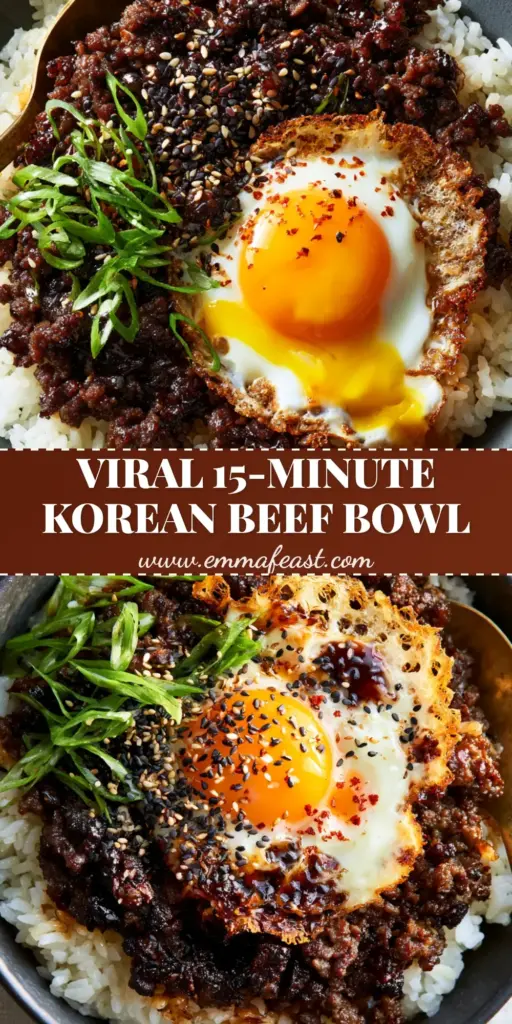
This Korean Bulgogi Beef Bowl is more than just a meal; it is a masterclass in flavor and texture. By focusing on the “invisible” culinary science—like the Maillard reaction on the beef and the high-heat frying of the egg—you create a dish that looks as though it stepped right out of a professional food shoot. The contrast of the dark mahogany glaze against the vibrant orange yolk and bright green scallions makes it a centerpiece for any dinner table.
If you enjoyed this recipe, please leave a comment below and let us know how your “lacy edges” turned out! Don’t forget to share your creations and follow us on Pinterest for more visually inspired culinary guides.