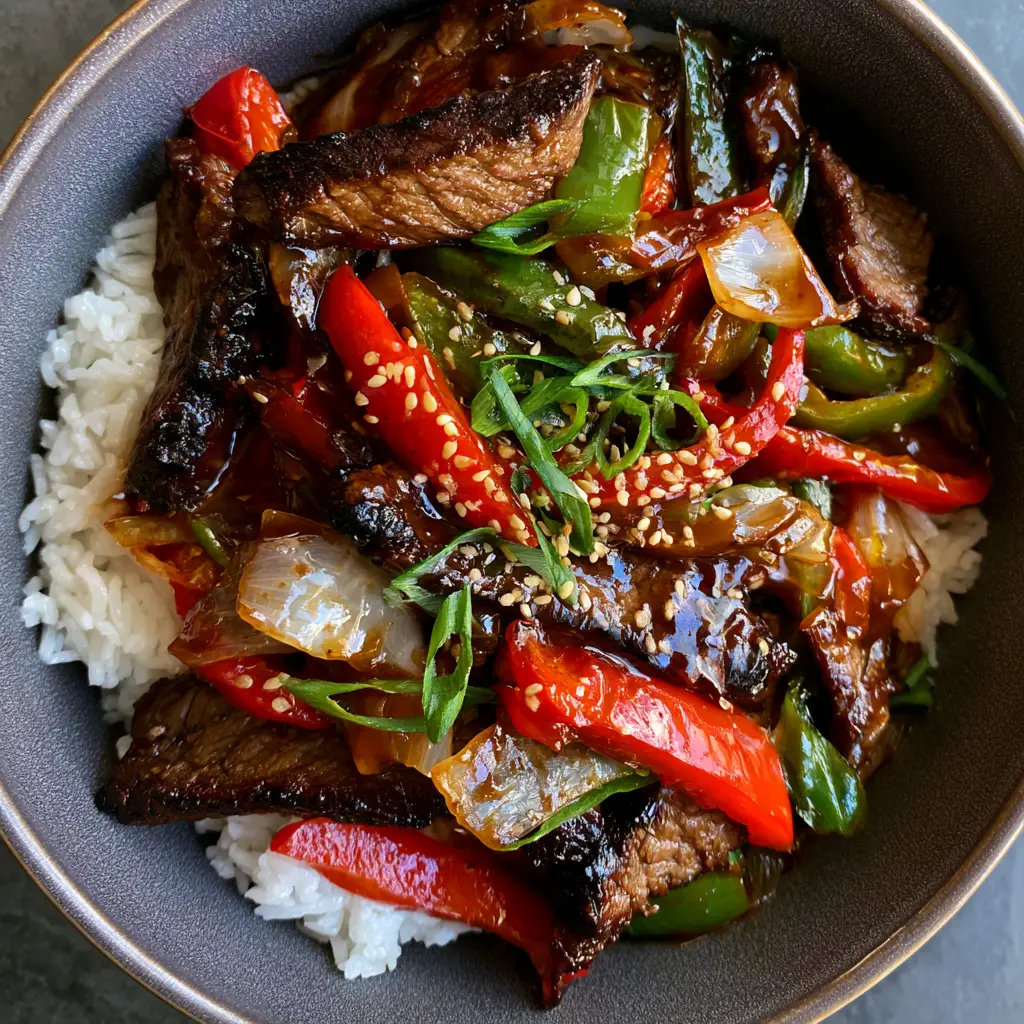
The perfect Pepper Steak is a masterclass in contrast, balancing the deep, savory notes of a rich umami glaze with the vibrant crunch of garden-fresh vegetables. When you look at a plate of this restaurant-quality dish, you aren’t just seeing dinner; you are seeing the result of high-heat precision and a carefully constructed sauce architecture.
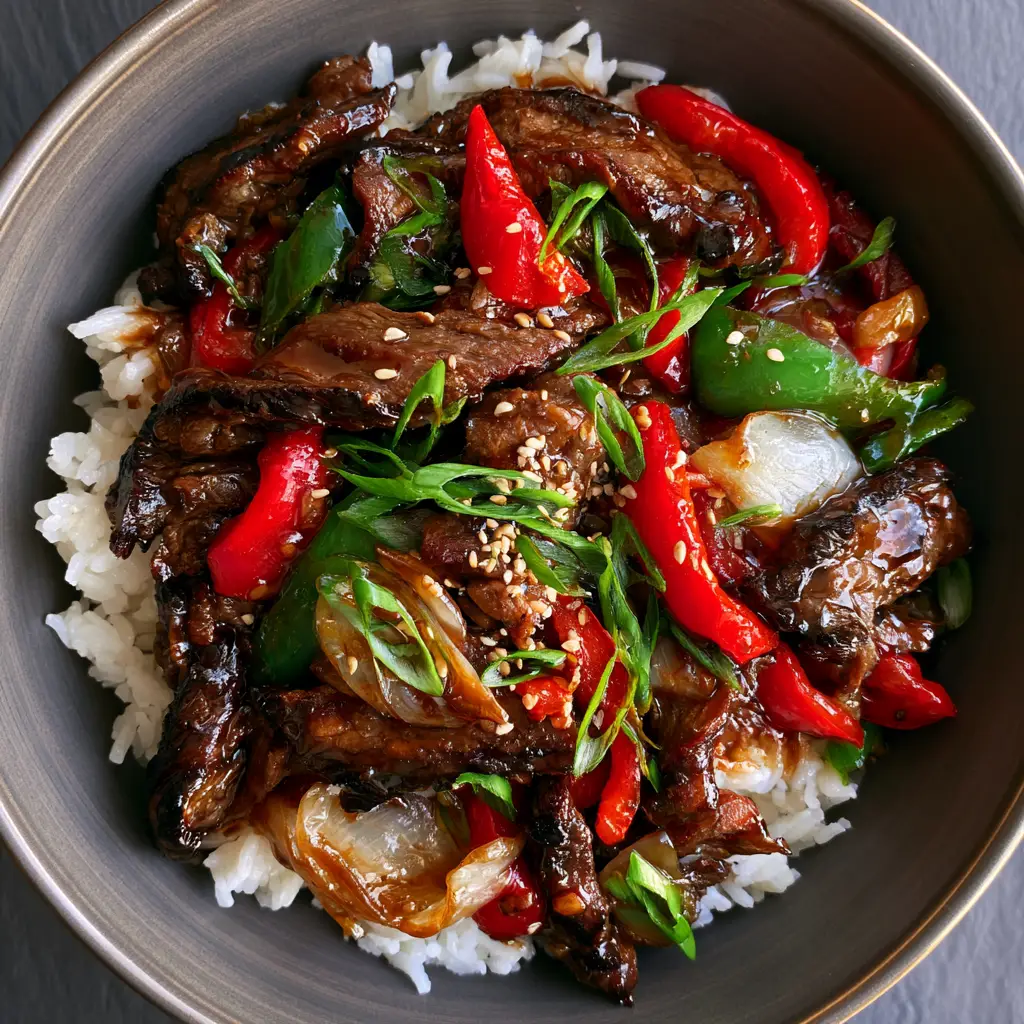
Imagine succulent strips of flank steak, each piece boasting caramelized dark brown edges that hint at a perfect sear. These are nestled against ruby red and emerald green bell peppers, their skins slightly blistered while remaining crisp-tender to the bite.
The entire dish is draped in a thick, mahogany-colored savory glaze that catches the light, pooled over a steaming mound of fluffy white jasmine rice. Every element, from the translucent charred onion petals to the meticulously scattered toasted sesame seeds, serves a purpose in this visual and culinary symphony.
The Anatomy of a Premium Pepper Steak: What Makes This Recipe Work
Achieving the specific visual and flavor profile of a high-end Pepper Steak requires attention to detail. This isn’t just a simple stir-fry; it is a calculated effort to create the “wok hay” (breath of the wok) even in a home kitchen.
- The Mahogany Glaze: A fusion of dark soy sauce and aromatic ginger creates a deep, glossy finish that clings to the beef without becoming watery.
- The Flank Steak Factor: Selected for its lean profile and intense beefy flavor, flank steak provides the perfect surface area for caramelization.
- Searing Precision: By using high-smoke point oils, we achieve those dark brown, crispy edges that provide a textural counterpoint to the tender meat.
- Aromatic Depth: Charred white onion wedges provide a sweetness that cuts through the savory sauce, while fresh scallions add a final pop of brightness.
- Textural Balance: The crunch of toasted sesame seeds and the bite of cracked black pepper round out the sensory experience.
Sourcing the Essentials: Every Ingredient Explained
To recreate the visual blueprint of this dish, each ingredient must be selected and prepared with intention. We are looking for high-quality proteins and the freshest produce to ensure the colors remain as vibrant as they appear in the pan.
Flank Steak: 1.5 lbs (680g). This cut is the star of the show; when sliced against the grain into thin strips, it stays tender while absorbing the mahogany glaze. If you are looking for more high-protein dinners, this lean cut is a nutritional powerhouse.
Red and Green Bell Peppers: 1 large each (approx. 150g each). These provide the “ruby” and “emerald” visual contrast mentioned in our blueprint. Slicing them into uniform strips ensures they cook evenly and maintain their structural integrity.
White Onion: 1 large (approx. 250g). Instead of a fine dice, we cut these into wedges or “petals.” This allows them to char on the edges while remaining translucent and sweet in the center.
Beef Broth: 1/2 cup (120ml). This forms the liquid base of our sauce, providing the savory foundation for our glaze.
Dark Soy Sauce: 1 tbsp (15ml). This is the secret to the mahogany color; it is thicker and less salty than regular soy sauce, providing a rich, dark hue. This is a staple in an authentic Chinese pepper steak recipe.
Regular Soy Sauce: 3 tbsp (45ml). This provides the primary salt component and the deep umami flavor we crave.
Cornstarch: 1 tbsp (8g). The thickening agent that transforms the sauce into a glossy glaze that “catches the light.”
Brown Sugar: 1 tbsp (12g). Essential for the caramelization process, helping the beef develop those sought-after dark edges.
Aromatics: 1 tbsp (15g) fresh ginger and 3 cloves of garlic. These provide the “smell” cues that signal a dish is ready to be served.
Cracked Black Pepper: 1 tsp (2g). Use a coarse grind to ensure the pepper is visible on the steak, as per our visual recipe blueprint.
Jasmine Rice: 2 cups (370g) dry. The floral aroma of jasmine rice provides the perfect neutral base for the intense flavors of the Pepper Steak.
The Essential Tools for High-Heat Searing
You cannot achieve the “caramelized dark brown edges” without the right equipment. To mimic a professional kitchen, you need tools that can handle and retain high heat without dropping in temperature when the steak hits the pan.
A heavy-bottomed cast iron skillet or a traditional carbon steel wok is your best friend here. These materials radiate heat intensely, allowing the moisture on the surface of the steak to evaporate instantly, leading to a superior sear.
You will also need a sharp chef’s knife for those precise cuts on the bell peppers and scallions. A steady high-angle perspective, much like the “overhead high-angle shot” mentioned in our prompt, is best achieved by prepping all your ingredients in advance (mise en place) so you can focus entirely on the stovetop action.
The Step-by-Step Path to Wok-Style Excellence
Preparing the Canvas
Begin by rinsing 2 cups (370g) of jasmine rice under cold water until the water runs clear. Combine with 3 cups (720ml) of water and a pinch of salt; bring to a boil, then cover and simmer for 15 minutes. This creates the “steaming fluffy white jasmine rice” that serves as our base.
Mastering the Mahogany Glaze
In a small bowl, whisk together the beef broth, dark soy sauce, regular soy sauce, cornstarch, and brown sugar. Ensure there are no lumps of cornstarch remaining. This mixture will look thin at first, but the heat will transform it into a thick, mahogany-colored savory glaze.
Searing the Flank Steak
Pat the steak strips completely dry with paper towels—moisture is the enemy of a good sear. Season generously with the cracked black pepper. Heat 2 tbsp (30ml) of high-heat oil in your skillet until it just begins to smoke.
Add the steak in a single layer, working in batches if necessary to avoid crowding. Leave it untouched for 2 minutes to develop those caramelized dark brown edges. Flip and cook for another 60 seconds, then remove the beef from the pan.
The Vegetable Flash-Fry
In the same pan, add the white onion petals and bell pepper strips. The onions should begin to show “slightly charred” edges within 2-3 minutes of high-heat tossing. The peppers should remain “vibrant and crisp-tender,” keeping their ruby and emerald colors intact.
The Final Fusion
Return the beef to the pan and pour the glaze over the top. Toss constantly for 1-2 minutes. You are looking for the “visual cue” of the sauce bubbling and thickening until it coats every ingredient in a glossy, light-catching sheen.
Expert Tips for Success
- Slice Against the Grain: Look for the long muscle fibers in the flank steak and cut perpendicular to them. This ensures the steak is “succulent” rather than chewy.
- The Power of Dark Soy: If you can’t find dark soy sauce, you can substitute with a mixture of regular soy and molasses, but the authentic mahogany color is best achieved with the real thing.
- Batch Cooking: If your pan is too small, the steak will steam instead of sear. Always cook the meat in two batches to maintain that high-angle, premium look.
- Cold Rice vs. Fresh: While this recipe calls for fresh jasmine rice, if you are making this as part of pepper steak and onions for meal prep, ensure the rice is completely cooled before storing.
How to Store and Reheat Your Pepper Steak
Pepper steak is a fantastic option for those seeking pepper steak recipe ideas that work for leftovers. Store any remaining portions in an airtight container in the refrigerator for up to 3 days.
When reheating, avoid the microwave if possible, as it can turn the bell peppers mushy. Instead, flash-fry the leftovers in a hot skillet for 2-3 minutes with a splash of water to loosen the mahogany glaze. This restores the “glossy” appearance and keeps the steak succulent.
Complementary Dishes and Pairings
While this Pepper Steak is a complete meal on its own, it pairs beautifully with other Asian-inspired dishes. Consider serving it alongside a Korean bulgogi beef bowl for a multi-cultural feast or starting the meal with ground turkey lettuce wraps for a light appetizer.
If you’re looking for a dessert to follow this savory meal, these bakery-style chocolate chip cookies offer the perfect sweet conclusion to a high-protein dinner.
Common Questions About Pepper Steak
Yes, sirloin strips or flat iron steak are excellent substitutes. Ensure you slice them very thinly against the grain to maintain tenderness during the quick sear.
Yes! Rinsing removes excess surface starch, which ensures the rice stays ‘steaming and fluffy’ rather than gummy or clumping together.
The key is high heat and short cook times. Flash-fry the peppers for only 2-3 minutes so they develop charred edges while remaining crisp-tender and vibrant.
As written, it contains soy sauce and beef broth which may contain gluten. To make it gluten-free, substitute the soy sauces with tamari and ensure your beef broth is certified gluten-free.
The secret is using Dark Soy Sauce. It is thicker and darker than regular soy sauce, providing that rich, glossy brown color without making the dish overly salty.
The Ultimate Pepper Steak with Jasmine Rice
Pepper Steak with a Glossy Mahogany Glaze and Charred Onions
Ingredients
Equipment
Method
- Rinse jasmine rice, combine with water and salt, and simmer covered for 15 minutes until fluffy.
- Mix broth, soy sauces, dark soy sauce, cornstarch, and brown sugar until smooth.
- Pat steak dry, season with black pepper, and sear in a smoking hot pan for 2 minutes per side until dark brown edges form.
- Flash-fry onions and peppers until edges are charred but colors remain vibrant.
- Combine everything with the glaze, tossing until thick, glossy, and mahogany-colored.
Notes
Use a high-smoke point oil like canola or grapeseed for the best sear.
Closing Thoughts and Your Turn to Cook!
This Pepper Steak recipe is designed to bring a premium, modern aesthetic to your home dining table. The combination of the deep mahogany glaze and the charred, vibrant vegetables creates a meal that is as visually stunning as it is delicious.
If you enjoyed this recipe, please leave a comment below and let us know how your sear turned out! Don’t forget to follow emma_feast_official on Pinterest for more culinary inspiration and share your creations using our hashtag.