There is a specific culinary magic that happens when thin ribbons of beef meet a screaming hot cast iron skillet. The result is Pepper steak and onions, a dish that defines the perfect balance between savory depth and vibrant, crisp-tender vegetables.
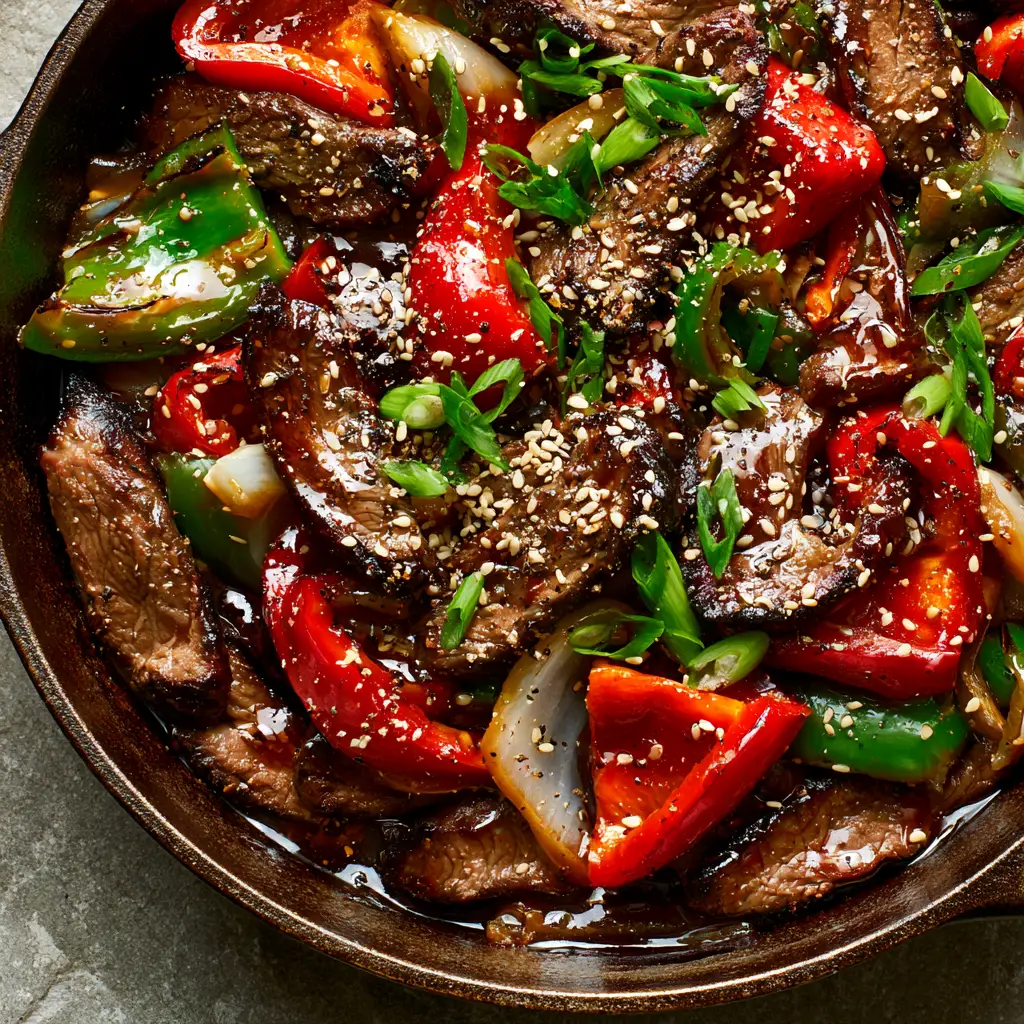
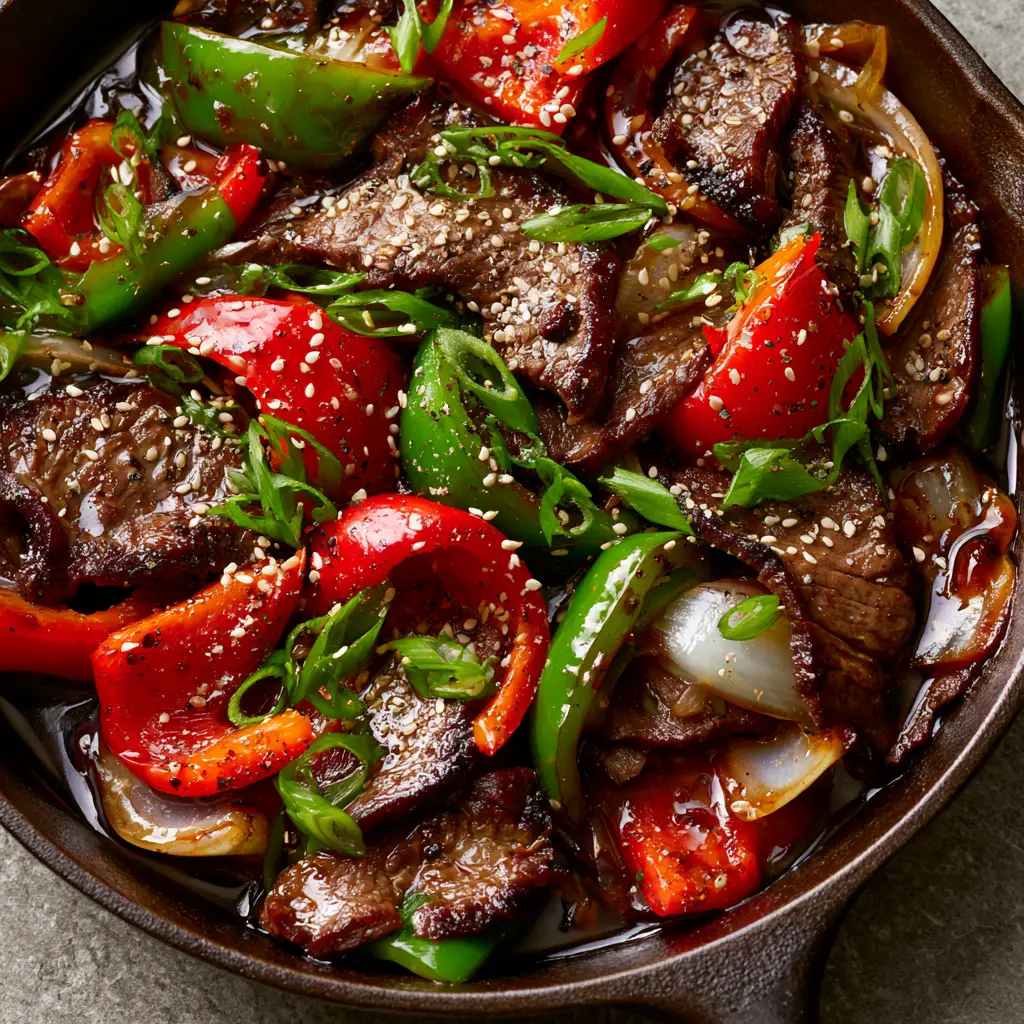
Imagine tender, thin-sliced flank steak with a silky, velveted texture and perfectly seared dark brown edges that provide a satisfying crunch. Every bite is draped in a thick, translucent, glossy dark soy and ginger glaze that catches the light like liquid mahogany.
This isn’t just a quick stir-fry; it is a masterclass in texture and visual contrast. From the blistered red bell pepper chunks to the charred green bell pepper wedges and softened translucent white onion petals, this recipe is designed to impress both the palate and the eye.
Why This Pepper Steak and Onions Recipe Actually Works
- The Velveted Texture: We utilize the traditional Chinese technique of “velveting” the beef, ensuring that the flank steak remains impossibly tender even under high heat.
- Visual Forensic Perfection: The recipe is engineered to produce the exact blistered char marks on the peppers and the glossy, reflective glaze seen in high-end restaurant photography.
- Umami Depth: By combining dark soy sauce with toasted ginger and coarse cracked black pepper, we build layers of flavor that far surpass standard takeout.
- Cast Iron Science: Using a seasoned cast iron skillet allows for the superior heat retention necessary to achieve those perfectly seared beef edges.
The Secret Architecture of a Perfect Stir Fry Sauce
The soul of Pepper steak and onions lies in its sauce, which must be thick enough to cling to the meat but translucent enough to remain glossy. We achieve this through a precise ratio of cornstarch to liquid, ensuring the sauce doesn’t become “muddy” or opaque.
Dark soy sauce provides the foundational color, while fresh ginger and garlic offer the aromatic high notes that cut through the richness of the beef. The addition of oyster sauce adds a hidden layer of salty complexity that rounds out the flavor profile.
Finally, the coarse cracked black pepper is not just a garnish; it is a primary flavor component. The heat from the pepper should be felt at the back of the throat, providing a warm contrast to the sweet notes of the bell peppers.
Foundational Ingredients for the Ultimate Skillet Stir Fry
Flank Steak: This lean cut is the gold standard for stir-fries because its long muscle fibers absorb marinades beautifully and slice into perfect thin ribbons. Always slice against the grain to ensure the meat is tender rather than chewy.
Cornstarch (Cornflour): This is the essential “velveting” agent that creates a protective barrier around the meat, locking in juices and providing that signature silky mouthfeel. It also serves as the thickening agent for our glossy dark glaze.
Red and Green Bell Peppers: These provide the vibrant color contrast and a natural sweetness that balances the savory sauce. We cut them into large chunks to ensure they can withstand high heat and develop those specific blistered char marks.
White Onions: We use white onions for their sharp bite and ability to become translucent and sweet when seared. Cutting them into “petals” or wedges allows them to cook at the same rate as the peppers.
Vegetable or Peanut Oil: You need an oil with a high smoke point to achieve the necessary sear without the oil breaking down. These neutral oils allow the flavors of the ginger, garlic, and beef to shine through.
Toasted White Sesame Seeds: These offer a nutty crunch and a visual “dusting” that elevates the presentation. They provide a tiny pop of texture that complements the softness of the velveted beef.
Fresh Green Onions (Scallions): The bright green color provides a final pop of freshness against the dark brown sauce. Using only the green parts ensures a mild, oniony finish that doesn’t overpower the dish.
Essential Tools for Professional Searing
To recreate the macro-shot quality of this dish, a well-seasoned cast iron skillet is non-negotiable. The thick metal holds onto heat, which is vital when you add cold vegetables and meat to the pan.
A high-quality chef’s knife is also required to get those paper-thin slices of flank steak. A dull knife will tear the meat fibers, resulting in a ragged appearance rather than the clean, professional edges we are looking for.
Lastly, ensure you have a pair of long-handled tongs or a wide spatula. You need to be able to move the ingredients quickly to prevent the garlic from burning while the peppers are still blistering.
Mastering the Technique: How to Make Pepper Steak and Onions
The Art of Velveting the Beef
Start by slicing your 1.5 lbs (680g) of flank steak against the grain into 1/8-inch (3mm) thick strips. In a medium bowl, whisk together 1 tbsp (8g) of cornstarch, 1 tbsp (15ml) of soy sauce, and 1 tsp (5ml) of toasted sesame oil.
Massage this mixture into the beef until every piece is coated in a thin, pale film. Let this sit for at least 20 minutes; this time allows the cornstarch to bind with the meat’s proteins, which is the secret to that silky texture.
Building the Glossy Dark Glaze
In a separate jar, combine 1/2 cup (120ml) beef broth, 3 tbsp (45ml) dark soy sauce, 1 tbsp (15g) brown sugar, and 1 tsp (5g) grated fresh ginger. Whisk in 2 tsp (5g) of cornstarch until no lumps remain.
This slurry will transform in the pan from a thin liquid into a thick, translucent coating. The dark soy sauce is critical here for achieving the deep mahogany color that reflects the light in the skillet.
The High-Heat Skillet Sear
Place your cast iron skillet over medium-high heat until a drop of water flicked onto the surface dances and evaporates instantly. Add 2 tbsp (30ml) of oil and swirl to coat the bottom of the pan.
Add the beef in a single layer, working in batches if necessary to avoid crowding. Leave the meat undisturbed for 60-90 seconds until you see the “perfectly seared dark brown edges” forming, then toss and remove the meat from the pan.
Blistering the Peppers and Petal Onions
In the same pan, add another tablespoon of oil and toss in the red and green bell pepper chunks and the white onion wedges. Do not stir constantly; let them sit against the hot iron until the skins show “slight blistered char marks.”
The goal is to soften the onions until they are “translucent white petals” while maintaining the structural integrity of the peppers. This should take about 3-4 minutes of high-heat exposure.
The Final Glaze and Garnish
Return the beef to the skillet and pour the sauce over the top. Stir constantly for 1-2 minutes as the sauce bubbles and thickens into a “thick, translucent, glossy dark soy and ginger glaze.”
Immediately remove from heat. Garnish with a precise dusting of toasted white sesame seeds, a handful of finely sliced bright green scallions, and a heavy-handed sprinkle of coarse cracked black pepper for that final forensic touch.
Expert Tips for a Flawless Finish
- Freeze to Slice: If your flank steak is too soft to slice thinly, pop it in the freezer for 20-30 minutes. This firms up the fat and muscle, allowing for professional-level precision.
- Don’t Overcrowd: If you add all the meat at once, the temperature of the skillet will drop. Instead of searing, the meat will steam, and you’ll lose those crisp, dark brown edges.
- The Ginger Crate: Use a microplane to grate your ginger directly into the sauce. This ensures the flavor is evenly distributed without any woody chunks in the final dish.
- Cracked Pepper Quality: Avoid pre-ground pepper. Use a pepper mill on the coarsest setting or crush whole peppercorns with the bottom of a heavy skillet to get those large, flavorful flecks.
Storing and Reheating Your Leftovers
This dish is best served immediately to preserve the crispness of the peppers, but it can be stored in an airtight container for up to 3 days. The flavors of the ginger and garlic will actually deepen overnight.
To reheat, avoid the microwave if possible, as it will make the velveted beef rubbery. Instead, toss the leftovers back into a hot skillet for 2-3 minutes with a splash of beef broth to loosen the glossy sauce.
We do not recommend freezing this dish, as the bell peppers will lose their structure and become mushy upon thawing, destroying the visual appeal we worked so hard to create.
What to Serve with Pepper Steak and Onions
This bold dish requires a neutral base to soak up the extra glaze. A bowl of steamed jasmine rice is the classic choice, but for a modern twist, you could serve it alongside a Korean bulgogi beef bowl for a multi-cultural feast.
If you’re looking for more noodle-based options, these savory flavors pair exceptionally well with chicken teriyaki noodles. For those looking for a lighter dinner, consider serving the steak and peppers over cauliflower steaks for a high-fiber alternative.
If you are planning a larger spread, this recipe fits perfectly into a menu featuring high protein dinners, ensuring your guests leave satisfied and energized.
Frequently Asked Questions
While possible, you won’t achieve the same blistered char marks on the peppers or dark seared edges on the beef. A seasoned cast iron skillet or carbon steel wok is recommended.
Only use coarse cracked black pepper as a finishing garnish rather than cooking it in the sauce for a long period, which preserves its bright, woody heat without turning it bitter.
The secret is ‘velveting,’ a process where the beef is marinated in a mixture of cornstarch, soy sauce, and oil to protect the proteins from high heat, keeping the meat tender.
Flank steak is the preferred choice for Pepper steak and onions due to its lean texture and ability to absorb the velveted marinade, though sirloin tip is a good substitute.
The sauce requires a cornstarch slurry and sufficient heat to activate the thickening process. If it’s thin, whisk another teaspoon of cornstarch into cold water, add it to the pan, and boil for 1 minute.
The Complete Pepper Steak and Onions Recipe
Pepper steak and onions: The Ultimate Guide to Silky Velveted Beef and Charred Peppers
Ingredients
Equipment
Method
- Combine sliced flank steak with cornstarch, soy sauce, and sesame oil. Massage and let sit for 20 minutes to achieve a silky texture.
- Whisk together beef broth, dark soy sauce, brown sugar, ginger, and cornstarch until translucent and smooth.
- Heat oil in a cast iron skillet over high heat. Sear beef in batches for 90 seconds until dark brown edges form. Remove beef.
- Add peppers and onions to the hot pan. Sear undisturbed for 3-4 minutes until peppers have char marks and onions are translucent petals.
- Return beef to the pan. Add sauce and stir for 2 minutes until glossy and thick. Garnish with sesame seeds, scallions, and coarse pepper.
Notes
Use a high smoke-point oil like peanut or vegetable oil for the best sear.
Join the Community & Share the Flavor!
We hope this recipe for Pepper steak and onions brings a touch of professional culinary flair to your home kitchen. The contrast of the silky beef against the charred vegetables is a sensory experience like no other.
If you made this dish, we would love to hear from you! Leave a comment below, and don’t forget to follow us on Pinterest for more visually stunning recipe inspiration. Share your creations by tagging emma_feast_official—we love seeing your kitchen triumphs!