This Asian Pork Tenderloin recipe is the ultimate marriage of high-heat culinary technique and vibrant, umami-forward flavors. If you have been searching for a dinner that looks like it belongs on a high-end restaurant menu but takes less than thirty minutes to prepare, you have arrived at the right place.
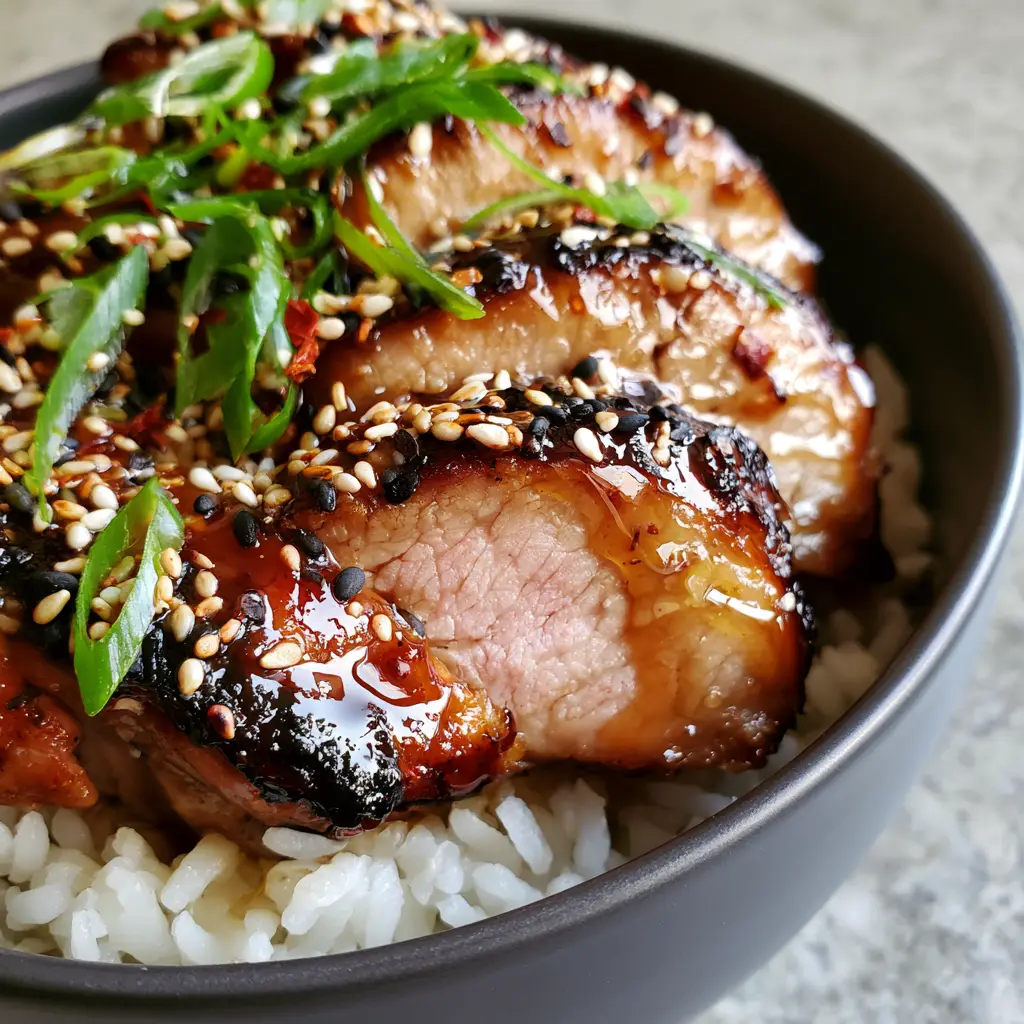
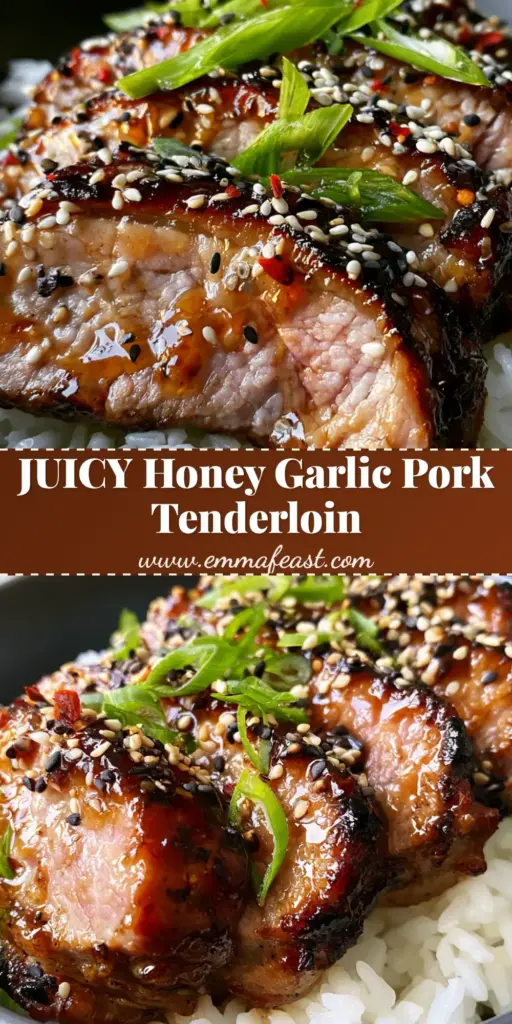
Imagine succulent pork medallions with a moist pink center and deeply caramelized, dark amber edges. Each slice is shingled over a bed of fluffy jasmine rice and draped in a thick, translucent honey garlic glaze that catches the light beautifully.
Whether you are hosting a small dinner party or simply want to elevate your weeknight rotation, this Asian Pork Tenderloin delivers a visual and sensory experience that is truly second to none. Let’s dive into the science of the sear and the secrets behind that glistening sauce.
Why This Honey Garlic Pork Tenderloin Is a Game Changer
- The Maillard Reaction: We use high-heat searing to create caramelized edges that provide a smoky contrast to the sweet honey glaze.
- Perfect Internal Texture: By monitoring the temperature closely, we ensure a moist pink center that remains incredibly juicy.
- Textural Contrast: The crunch of toasted white and black sesame seeds against the soft, individual grains of steamed jasmine rice creates a professional mouthfeel.
- Aesthetic Excellence: The vibrant green scallions cut on a sharp bias and the tiny red chili flakes provide a pop of color that makes this dish a centerpiece.
The Essential Flavor Pantry for Asian Pork Tenderloin
To achieve the visual and flavor profile described in our blueprint, we need a mix of high-quality proteins, aromatics, and pantry staples. Each ingredient serves a specific culinary purpose to ensure the final dish is balanced and structurally sound.
Pork Tenderloin: 1.5 lbs (680g) of lean, silver-skin removed pork. This cut is prized for its tenderness and ability to cook quickly while maintaining a succulent interior.
Honey: 1/2 cup (120ml) of high-quality liquid honey. This is the foundation of our glaze, providing the viscosity and the sugars necessary for that glistening, translucent finish.
Garlic: 4-5 cloves (20g) of fresh minced garlic. Freshness is key here; pre-minced jarred garlic won’t provide the same aromatic punch or visual texture in the sauce.
Soy Sauce: 1/4 cup (60ml) of low-sodium soy sauce. This adds the necessary salinity and the deep amber hue to the “caramelized edges” of the pork medallions.
Rice Vinegar: 2 tbsp (30ml) to provide a sharp acidic backbone. This cuts through the sweetness of the honey and balances the richness of the meat.
Cornstarch: 1 tsp (3g) mixed with a splash of water. This is our “invisible” structural ingredient that ensures the glaze is thick enough to drape over the pork rather than running off.
Jasmine Rice: 1.5 cups (300g) of long-grain jasmine rice. Rinsing this rice until the water runs clear is essential for achieving those fluffy, individual grains seen in the macro photography.
Garnish Trio: 1 tbsp (9g) toasted white and black sesame seeds, 2 scallions (15g) cut on a sharp bias, and 1/2 tsp (1g) dried red chili flakes for a hint of heat.
Must-Have Tools for the Professional Home Cook
To recreate the dark amber edges and the perfectly cooked center, your equipment choice matters. Using the right tools will help you achieve the “macro smartphone photo” quality at home.
Cast Iron Skillet: A heavy-bottomed skillet is non-negotiable for getting that deep, even sear. It retains heat better than stainless steel, which is vital when adding cold meat to the pan.
Digital Meat Thermometer: This is the only way to guarantee a “moist pink center.” We are looking for an internal temperature of 145°F (63°C) after resting.
Sharp Chef’s Knife: Essential for slicing the scallions on a sharp bias and cutting the pork into uniform medallions without tearing the meat.
The Culinary Blueprint: Step-by-Step Mastery
Preparing the Perfect Jasmine Rice Foundation
Start by rinsing your jasmine rice in a fine-mesh sieve. This removes excess surface starch, preventing the grains from becoming gummy or clumping together.
In a medium pot, combine the rice with 2.25 cups (530ml) of water and a pinch of salt. Bring to a boil, then reduce to the lowest heat setting, cover tightly, and simmer for 15 minutes. Let it sit, covered, for 5 minutes before fluffing with a fork.
Searing the Pork for Maximum Caramelization
Pat the pork tenderloin completely dry with paper towels. Season generously with salt and pepper. Heat 2 tbsp (30ml) of neutral oil in your skillet over medium-high heat until it begins to shimmer.
Place the whole tenderloin in the pan. Sear for 3-4 minutes per side until a deep golden-brown crust forms. If you enjoy this method of preparation, you might also love our creamy pork medallions for a more decadent weekend dinner.
Developing the Glistening Honey Garlic Glaze
Once the pork is seared, remove it from the pan and let it rest. In the same pan, reduce heat to medium and add the minced garlic, sautéing for 30 seconds until fragrant but not burnt.
Whisk in the honey, soy sauce, and rice vinegar. Bring the mixture to a simmer. In a small bowl, mix your cornstarch with a tablespoon of water and whisk it into the pan. The sauce will quickly transform into a thick, translucent, glistening glaze.
The Final Assembly: Slicing and Plating
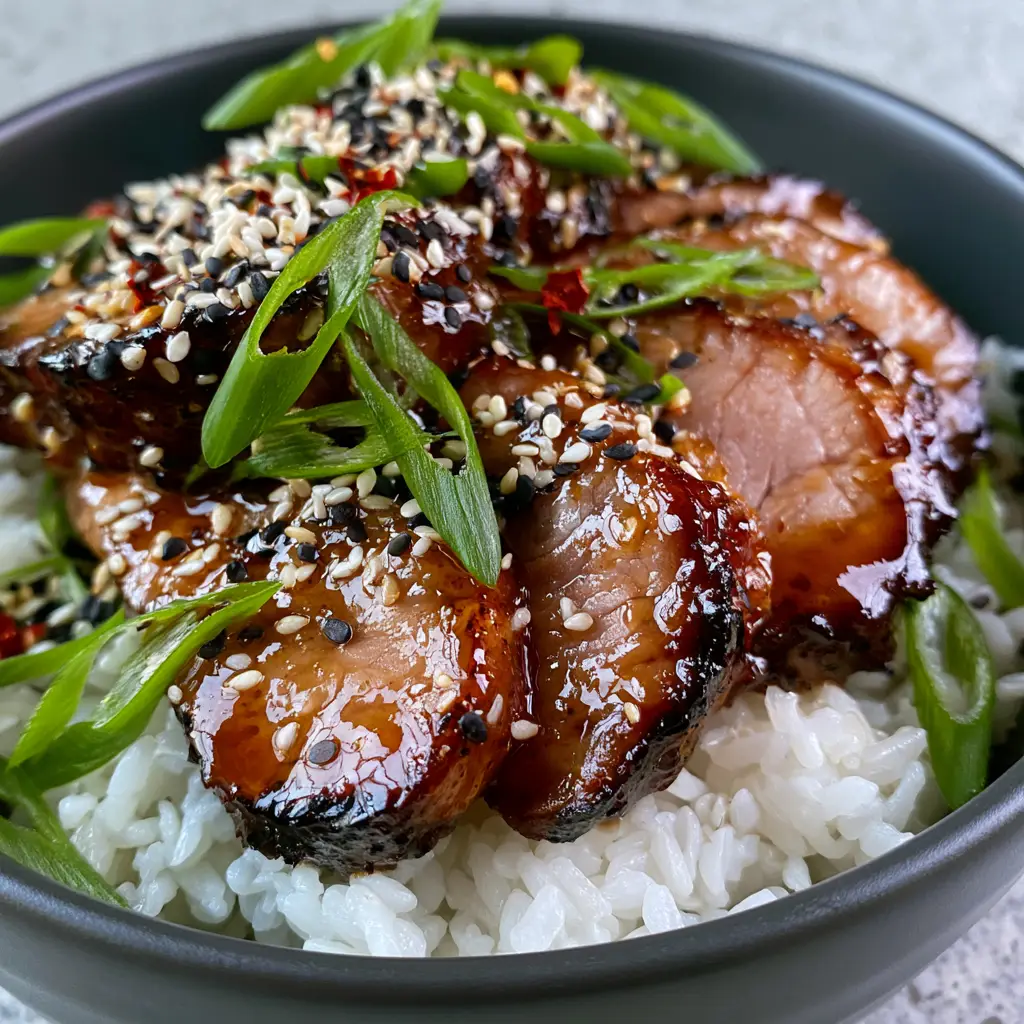
Slice the rested pork into 1-inch (2.5cm) medallions. You should see a beautiful, moist pink center. Toss the medallions back into the glaze, turning to coat every edge in that sticky, dark amber sauce.
To plate, create a mound of fluffy jasmine rice in a matte charcoal bowl. Shingle the pork medallions over the rice, ensuring the “glistening sauce” is visible. Heavily garnish with the sesame seeds, bias-cut scallions, and red chili flakes.
Expert Tips for the Perfect Asian Pork Tenderloin
- The Rest is Critical: Never slice the pork immediately after searing. Let it rest for at least 5-8 minutes to allow the juices to redistribute, ensuring the meat stays moist.
- Control the Heat: If the honey begins to smell like it is burning, immediately add a tablespoon of water to the pan to drop the temperature.
- Bias Cutting: When slicing scallions, hold your knife at a 45-degree angle. This increases surface area, making the garnish look more professional and vibrant.
- Rinse the Rice: If you skip the rinsing step, your rice will be sticky rather than the individual grains seen in our visual guide.
Storage and Reheating Advice
This Asian Pork Tenderloin is best enjoyed fresh, but leftovers can be stored in an airtight container in the refrigerator for up to 3 days. When reheating, do so gently in a skillet over low heat with a splash of water to loosen the glaze.
Avoid the microwave if possible, as it can toughen the pork and turn the moist pink center into a grey, overcooked texture. This recipe does not freeze well once assembled with the rice, as the rice texture degrades upon thawing.
What to Pair with This Savory Delight
While this dish is a complete meal on its own, you can expand your menu by adding side dishes that complement the umami profile. Try serving this alongside our crispy potato side dishes for a fusion twist.
If you prefer more vegetables, the marry me melting cabbage provides a buttery texture that pairs beautifully with the honey garlic sauce. For those who enjoy a bit more heat and complexity in their pork dishes, our Korean pot roast is another fantastic option to explore.
Frequently Asked Questions
Pork loin is a much larger, tougher cut. While you can use it, you would need to adjust cooking times significantly. Tenderloin is preferred for this recipe because it is lean and cooks perfectly in under 20 minutes.
Use a cast iron skillet and ensure the pan is shimmering hot before adding the meat. Patting the pork dry with paper towels before seasoning is essential to prevent steaming and encourage browning.
The key is the cornstarch slurry. Mix 1 teaspoon of cornstarch with 1 tablespoon of cold water and whisk it into the simmering sauce. Allow it to bubble for 30-60 seconds to reach peak thickness.
Yes, according to the USDA, pork is safe to consume at an internal temperature of 145°F (63°C) followed by a three-minute rest. This results in a moist, slightly pink center that is much juicier than overcooked pork.
Jasmine rice is ideal due to its floral aroma and slightly sticky but distinct grain structure. Always rinse the rice before cooking to ensure it remains fluffy and doesn’t clump.
The Ultimate Asian Pork Tenderloin Recipe
Asian Pork Tenderloin with a Glistening Honey Garlic Glaze
Ingredients
Equipment
Method
- Rinse 1.5 cups (300g) jasmine rice. Combine with 2.25 cups (530ml) water and salt. Simmer covered for 15 minutes, then rest for 5 minutes.
- Heat oil in a cast iron skillet. Sear the whole pork tenderloin for 3-4 minutes per side until dark amber edges form and internal temp reaches 145°F (63°C). Remove and rest.
- In the same pan, sauté garlic, then add honey, soy sauce, and vinegar. Stir in cornstarch slurry until the sauce is thick and glistening.
- Slice pork into medallions. Toss in the glaze. Shingle over rice and garnish heavily with sesame seeds, scallions, and chili flakes.
Notes
Rinsing the rice is the only way to get individual, non-sticky grains.
Closing & Call to Action
The beauty of this Asian Pork Tenderloin lies in its simplicity and its striking visual appeal. By focusing on the temperature of the meat and the thickness of the glaze, you can create a masterpiece in your own kitchen. If you enjoyed this recipe, please leave a comment below and let us know how it turned out!
Don’t forget to follow us on Pinterest for more culinary inspiration and high-RPM recipes. Share your recreations with us; we love seeing your glistening pork medallions!