There is a specific kind of culinary magic that happens when a humble beef chuck roast meets the slow, steady heat of a braise infused with East Asian aromatics. This Korean Pot Roast is not just a meal; it is a masterclass in texture and depth, delivering a glistening, dark mahogany finish that looks as incredible as it tastes. If you are tired of the same old Sunday dinner, this recipe bridges the gap between classic comfort and bold, umami-forward flavors.
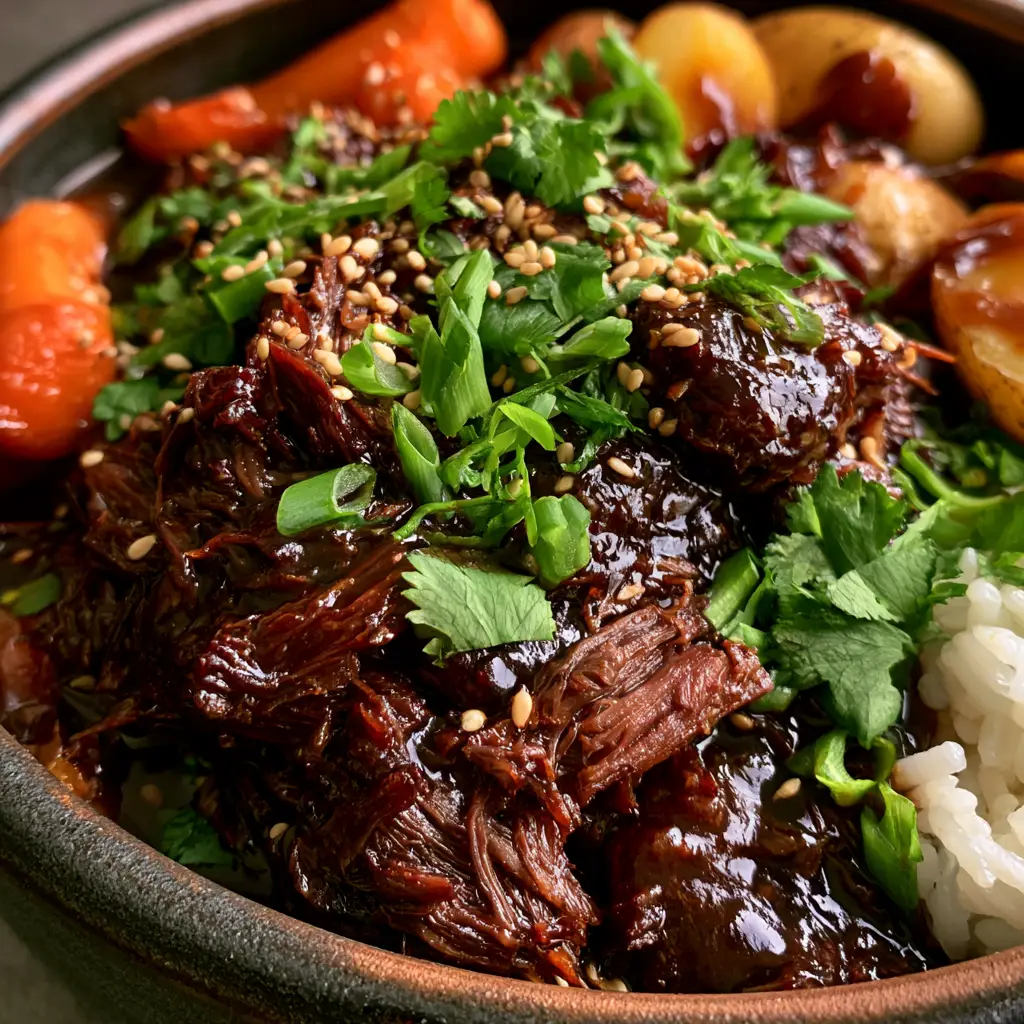
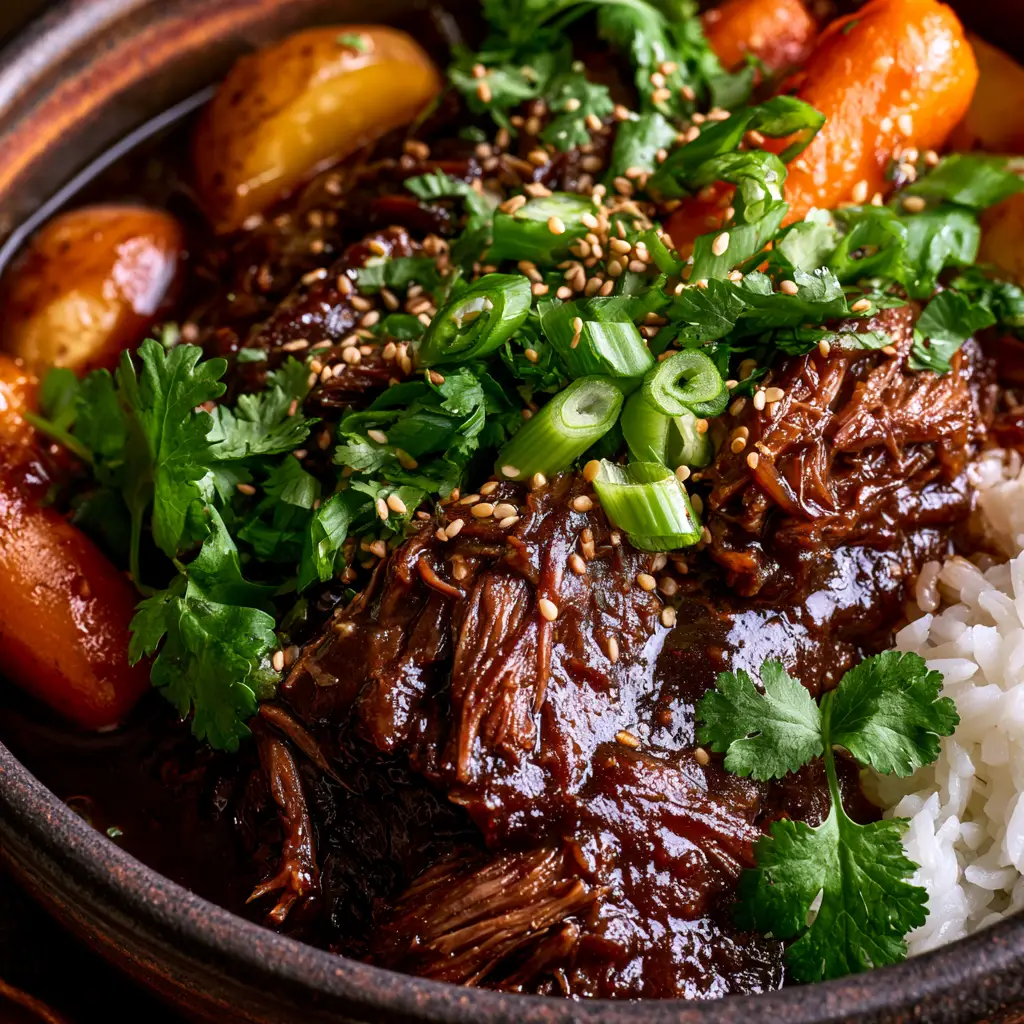
Imagine pulling a heavy ceramic pot from the oven to reveal beef so tender it practically shreds itself under the weight of a fork. The muscle fibers are completely saturated with a thick, viscous soy and ginger glaze that catches the light like polished wood. Surrounded by tender baby carrots and soft fingerling potatoes, this dish is a vibrant centerpiece that demands a place at your table.
Why You Will Crave This Umami-Rich Braised Beef
- Unmatched Texture: The chuck roast undergoes a low-and-slow transformation, breaking down tough collagen into succulent, melt-in-your-mouth shredded beef.
- Viscous Mahogany Glaze: Unlike thin broths, this sauce is reduced until it reaches a thick, syrupy consistency that clings to every fiber of the meat.
- Vibrant Visual Contrast: The deep, dark tones of the beef are offset by bright green bias-cut scallions, fresh cilantro sprigs, and the stark white of fluffy jasmine rice.
- Layered Aromatics: Freshly grated ginger and garlic provide a sharp, fragrant backbone that cuts through the richness of the beef fat.
The Anatomy of a Perfect Korean Pot Roast: Ingredients
3-4 lbs (1.4-1.8kg) Beef Chuck Roast: This is the ideal cut for slow cooking due to its high fat and connective tissue content. As it braises, the fat renders, keeping the meat moist while the collagen turns into gelatin for a silky mouthfeel.
1 cup (240ml) Soy Sauce: Use a high-quality naturally brewed soy sauce for the best depth. This provides the essential salt and the foundation for that signature mahogany color.
1/2 cup (100g) Brown Sugar: The molasses in the sugar helps create the “viscous” texture in the glaze. It balances the salt of the soy and aids in the caramelization process during the final reduction.
3 tbsp (45g) Fresh Ginger, Grated: Ginger is the high-note of this dish. It adds a subtle heat and a refreshing aromatic quality that defines the “Korean” profile of this roast.
6 cloves Garlic, Minced: Garlic acts as a savory anchor. It mellows significantly during the long cook time, infusing the entire pot with a nutty, sweet aroma.
1 lb (450g) Fingerling Potatoes, Halved: These waxy potatoes hold their shape beautifully during the braise. They soak up the dark sauce without turning into mush, unlike starchy russets.
1/2 lb (225g) Baby Carrots: Glazed baby carrots provide a natural sweetness and a pop of orange color. They are the perfect size for even cooking alongside the beef.
2 cups (475ml) Beef Bone Broth: This provides the liquid base for the braise. Using bone broth adds extra body to the sauce compared to standard water or thin stock.
Toasted White Sesame Seeds & Scallions: These are the essential finishing touches. The seeds add a nutty crunch, while the scallions provide a sharp, fresh bite to finish the plate.
Essential Tools for Achieving Visual Perfection
To achieve the “glistening” and “tender” results seen in our visual blueprint, a heavy-bottomed Dutch oven is your best friend. The thick walls ensure even heat distribution, preventing the sugar-heavy sauce from scorching at the bottom of the pot. A microplane is also vital for grating the ginger into a fine paste, ensuring the flavor is distributed evenly throughout the glaze.
You will also want a sharp chef’s knife for those precise, bias-cut scallions. These diagonal cuts create more surface area, making the green garnish look professional and “chef-y” on top of the dark mahogany beef. Finally, a large serving bowl—ideally a rustic dark ceramic—will make the colors of the cilantro and carrots truly pop.
The Step-By-Step Journey to Fork-Tender Perfection
1. Searing for Maximum Maillard Reaction
Pat your beef roast completely dry with paper towels. Season generously with salt and pepper on all sides. Heat 2 tbsp (30ml) of high-smoke point oil in your Dutch oven over medium-high heat. Sear the beef for 5-7 minutes per side until a deep, dark brown crust forms. This crust is the foundation of the roast’s final flavor and color.
2. Building the Aromatic Foundation
Remove the beef and set it aside on a plate. Lower the heat to medium and add your minced garlic and grated ginger. Sauté for 60 seconds until fragrant but not burnt. Deglaze the pan with a splash of beef broth, scraping up all the brown bits (the fond) from the bottom of the pot.
3. The Low and Slow Braise
Stir in the soy sauce, brown sugar, and remaining beef broth. Return the beef to the pot; the liquid should come about halfway up the sides of the meat. Cover with a tight-fitting lid and transfer to a preheated 325°F (165°C) oven. Braise for 2.5 hours, flipping the meat once halfway through.
4. Glazing the Root Vegetables
After 2.5 hours, carefully nestle the halved fingerling potatoes and baby carrots into the liquid around the beef. Cover and return to the oven for another 45-60 minutes. You are looking for the beef to be “shreddable” and the vegetables to be tender when pierced with a knife.
5. Reducing the Viscous Mahogany Sauce
Remove the beef and vegetables from the pot and tent them with foil to keep warm. Place the Dutch oven on the stovetop over medium-high heat. Simmer the braising liquid vigorously for 10-15 minutes. Watch for the bubbles to get larger and slower; this indicates the sauce is thickening into a glossy glaze.
6. The Final Assembly and Garnish
Shred the beef into large, chunky muscle fibers using two forks. Toss the meat back into the reduced glaze until it is thoroughly coated and glistening. Serve in a dark ceramic bowl, surrounding the beef with the carrots and potatoes. Top with a heavy dusting of sesame seeds, bias-cut scallions, and fresh cilantro sprigs.
Expert Tips for a Professional Result
- The Resting Rule: Never shred the beef immediately out of the oven. Let it rest in the liquid for 15 minutes to allow the fibers to relax and reabsorb the juices.
- Degreasing the Sauce: If you notice too much oil on top of your glaze, use a wide spoon to skim the fat off before reducing the sauce. This ensures the mahogany finish is “glossy” rather than “greasy.”
- Don’t Rush the Sear: The color of your final pot roast depends on that initial sear. If the meat is grey, the sauce will look muddy. Aim for a “coffee-bean” brown crust.
- Freshness Matters: Use fresh ginger over powdered. The moisture in fresh ginger reacts with the soy sauce to create a much more complex flavor profile.
Maximizing Your Meal Prep and Storage
This Korean Pot Roast actually tastes better the next day as the flavors have more time to penetrate the meat. Store leftovers in an airtight container for up to 4 days in the refrigerator. When reheating, add a splash of water or broth to help loosen the glaze, as it will thicken significantly when cold.
If you want to freeze this dish, shred the beef and store it directly in the sauce. This prevents freezer burn and keeps the meat succulent. It will stay fresh for up to 3 months. Thaw overnight in the fridge before reheating gently on the stovetop.
What to Serve with Your Korean Braised Beef
While this recipe includes fingerling potatoes, it is traditionally served over a bed of steaming jasmine rice to soak up that incredible glaze. If you are looking for more variety, these savory potato side dishes can offer a different texture profile to the meal. For those who enjoy a bit of heat, serving this alongside spicier appetizers can create a fun fusion feast.
If you are planning a larger dinner party, consider starting with cold stuffed mini peppers as a refreshing palate cleanser before the rich beef. For dessert, something light and citrusy like lemon cheesecake tarts provides the perfect acidic balance to the salty-sweet Korean flavors.
Frequently Asked Questions about Korean Pot Roast
Yes! Sear the meat in a pan first, then cook on low for 8 hours or high for 4-5 hours. You must still reduce the sauce in a saucepan at the end to achieve the thick, mahogany glaze.
While ground ginger works in a pinch (use 1 tsp), fresh ginger provides a brighter, more pungent flavor and better texture that is essential for an authentic-tasting glaze.
The mahogany color comes from the Maillard reaction during the sear and the reduction of the soy sauce and brown sugar. Reducing the liquid after braising is the key to that ‘viscous’ look.
If it’s still tough, it simply needs more time. Connective tissue needs sustained low heat to melt. Put it back in for 30-minute increments until it shreds easily with a fork.
Beef chuck roast is the gold standard. It contains the perfect balance of fat and connective tissue that breaks down during a slow braise, resulting in that signature tender, shredded texture.
The Ultimate Korean Pot Roast Recipe
Korean Pot Roast with a Glossy Mahogany Soy-Ginger Glaze
Ingredients
Equipment
Method
- Pat beef dry and season. Sear in Dutch oven over medium-high heat until deep mahogany crust forms on all sides.
- Remove beef. Sauté ginger and garlic for 60 seconds, then deglaze with a splash of broth.
- Add soy sauce, sugar, and broth. Return beef to pot. Cover and braise at 325°F (165°C) for 2.5 hours.
- Add potatoes and carrots. Braise for 45-60 more minutes until beef is shreddable.
- Remove meat and veg. Reduce liquid on stovetop until thick and viscous. Toss shredded beef in the glaze.
Notes
If the sauce is too thin, a cornstarch slurry can be used for extra thickness.
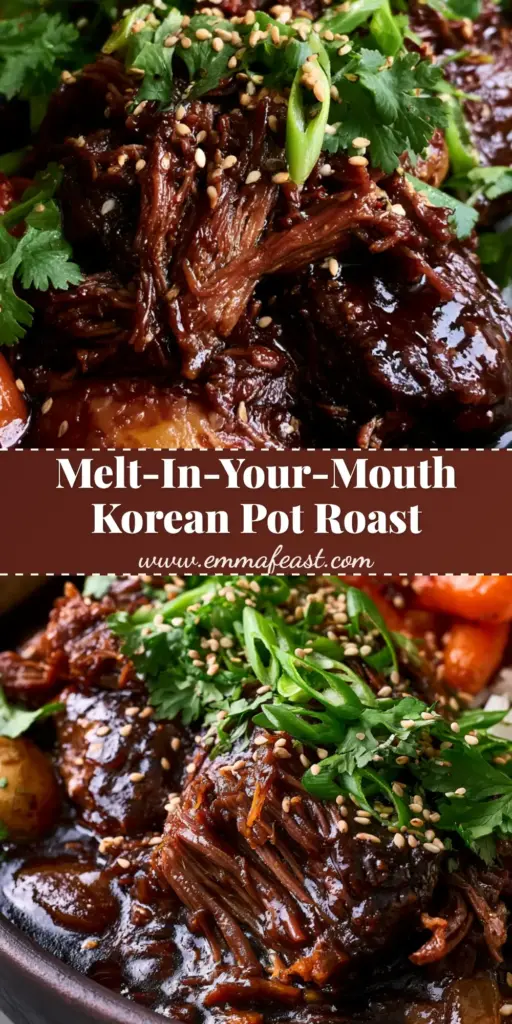
Bringing this Korean Pot Roast to your table is about more than just a recipe; it’s about creating a sensory experience. From the sound of the initial sear to the vibrant colors of the final garnish, every step is designed to impress. The combination of the deep mahogany glaze and the tender shredded beef makes it a standout dish for any occasion.
We would love to see how your roast turns out! Did you get that perfect glossy finish? Leave a comment below and let us know your favorite part of the dish. Don’t forget to save this recipe to your “Dinner Ideas” board on Pinterest so you can find it whenever the craving for umami hits!