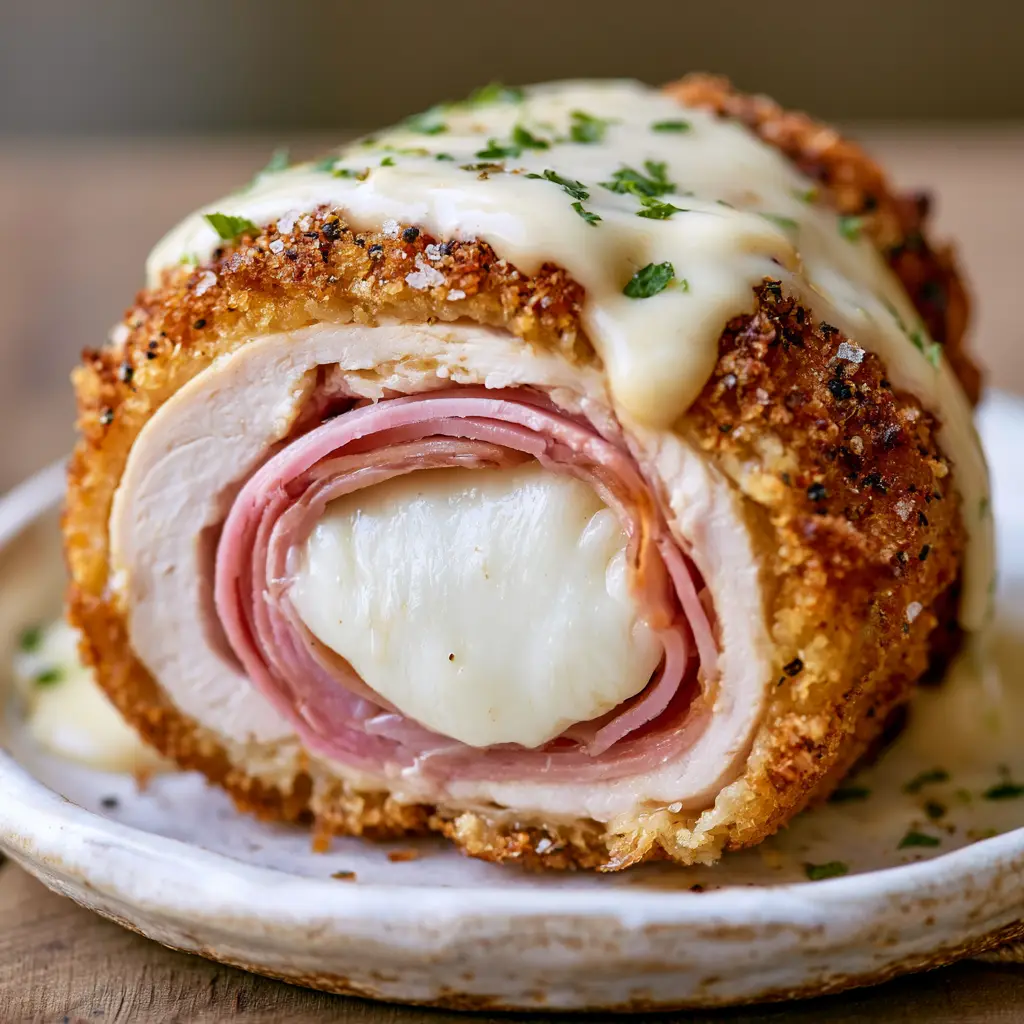
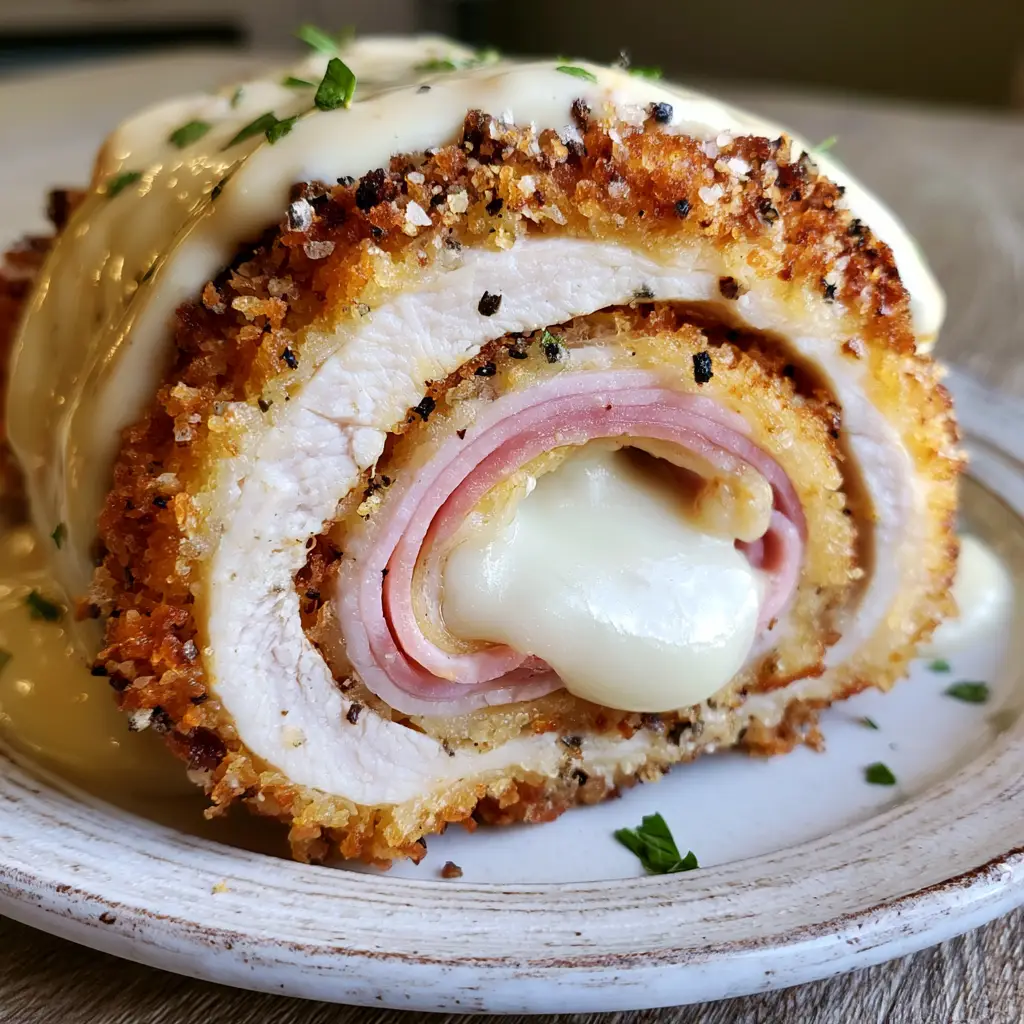
There is nothing quite like the first cut into a perfectly executed Chicken Cordon Bleu recipe. The audible crunch of a golden panko crust gives way to tender poultry, revealing a tight, savory spiral of deli ham and a molten core of Swiss cheese.
This dish is a masterclass in textures, balancing the saltiness of the cured meat with the creamy, velvety cascade of a garlic-infused white sauce. Every element, from the visible grains of sea salt to the flecks of fresh parsley, is designed for maximum culinary impact.
Whether you are hosting a dinner party or craving a high-end comfort meal, this guide ensures your chicken stays juicy while the cheese remains beautifully contained. Let’s dive into the science of the perfect roll and the secret to that hyper-realistic, handheld-photo-worthy finish.
Why This Chicken Cordon Bleu Recipe Is a Cut Above the Rest
- The Forensic Crunch: We use a specific panko-breading technique that ensures a thick, golden-brown crispy crust that resonates with every bite.
- The Molten Center: Our method focuses on a “tight spiral” technique, ensuring the Swiss cheese stays gooey and thick inside the meat rather than leaking onto the pan.
- Garlic Cream Elegance: Unlike thin gravies, our ivory-colored garlic white sauce is velvety and glistening, providing a heavy pour that coats the chicken perfectly.
- Visual Precision: We incorporate cracked black pepper and coarse sea salt directly into the finishing stages for a stunning, professional aesthetic.
The Secret Ingredients for the Ultimate Golden Panko Crust
To achieve the result seen in high-end food photography, every ingredient serves a dual purpose: flavor and structural integrity. Using high-quality components is the first step toward a restaurant-quality result.
Boneless Skinless Chicken Breasts: You will need 4 large breasts (approx. 1.5 lbs / 680g). These act as the canvas for our ham and cheese spiral, requiring even pounding for consistent cooking.
Thin-Sliced Deli Ham: Use 8 slices (approx. 200g) of high-quality, savory deli ham. Slicing it thin allows for a tighter, more professional-looking spiral inside the chicken breast.
Swiss Cheese: You need 4 thick slices or 1 cup (115g) of shredded Swiss. Swiss provides that iconic “molten” look while maintaining a slightly nutty flavor profile that complements the poultry.
Panko Breadcrumbs: 2 cups (120g) of Japanese-style panko are essential for the thick, crispy texture. Regular breadcrumbs simply won’t provide the same visual “grains” or crunch.
All-Purpose Flour: 1/2 cup (64g) is used for the initial dredge. This creates a dry surface for the egg wash to cling to, preventing the breading from sliding off.
Large Eggs: 2 eggs, beaten, act as the culinary glue. This binder is what holds our golden-brown breading to the chicken during the searing process.
Unsalted Butter & Olive Oil: Use 2 tbsp (30g) of each for pan-searing. The oil prevents burning, while the butter provides the rich, golden hue and flavor characteristic of French cuisine.
Foundational Seasonings: You must have coarse sea salt and freshly cracked black pepper. These are visible in the final dish and provide the essential flavor pops that balance the creamy sauce.
Creamy Garlic White Sauce: This requires 2 cups (480ml) heavy cream, 3 cloves of minced garlic, and 1/2 cup (50g) grated Parmesan. This creates the ivory-colored, velvety finish that cascades over the chicken.
Fresh Parsley: One small bunch, finely chopped. These tiny flecks of bright green provide the necessary color contrast against the white sauce and golden chicken.
Essentials for Your Kitchen Arsenal
Achieving a professional cross-section requires more than just good ingredients; you need the right tools to manipulate the proteins effectively. If you enjoy precision cooking, you might also find success with our classic steak sandwich which requires similar attention to meat preparation.
Meat Mallet: Essential for pounding the chicken to an even 1/4 inch (6mm) thickness. This ensures the chicken cooks at the same rate as the cheese melts.
Plastic Wrap: Used to cover the chicken during pounding to prevent tearing and to help roll the chicken into a tight, uniform cylinder.
Toothpicks or Kitchen Twine: Vital for securing the roll. Without these, the “molten” cheese core will likely escape during the cooking process.
Cast Iron Skillet or Heavy-Bottomed Pan: A heavy pan provides even heat distribution, which is the secret to that perfectly uniform golden-brown breading.
A Masterclass in Rolling Your Chicken Cordon Bleu
1. Preparing the Poultry Canvas
Start by butterfly-cutting your chicken breasts. Place them between two sheets of plastic wrap and use the flat side of a meat mallet to pound them to an even thickness of 1/4 inch (6mm).
Season the inside of the chicken lightly with sea salt and cracked black pepper. This ensures that the flavor is layered from the inside out, not just on the surface.
2. The Tight Spiral Technique
Lay two slices of deli ham over the chicken, followed by a generous portion of Swiss cheese. Leave a small border around the edges to help seal the chicken.
Carefully roll the chicken into a tight cylinder, starting from the smaller end. Use plastic wrap to help tension the roll, then secure the seam with 2-3 toothpicks or kitchen twine.
3. The Three-Stage Breading Station
Set up three shallow bowls: one with flour, one with beaten eggs, and one with panko breadcrumbs mixed with extra black pepper and sea salt. Dredge each roll in flour, dip in egg, and press firmly into the panko.
Ensure the panko coating is thick and even. For a result like the one in our crunchy mozzarella sticks, you want to make sure there are no bare spots where cheese could leak out.
4. Searing for Visual Perfection
Heat your oil and butter over medium heat. Once the butter is foaming, add the chicken rolls. Sear for 3-4 minutes per side until a deep golden-brown crust forms.
Listen for a consistent sizzle; if the pan is too quiet, your breading will absorb oil and become soggy. If it’s too loud, the crust will burn before the chicken is cooked through.
5. Finishing in the Oven
Transfer the skillet to a preheated oven at 375°F (190°C). Bake for 12-15 minutes or until the internal temperature reaches 165°F (74°C).
The chicken should feel firm to the touch, and you may see a tiny hint of molten cheese starting to peek out, indicating the core is perfectly melted.
6. Crafting the Glistening Garlic Sauce
While the chicken rests, simmer heavy cream and minced garlic in a small saucepan. Whisk in Parmesan until the sauce is velvety and thick enough to coat the back of a spoon.
Season with a pinch of sea salt. This sauce should be ivory-colored and glistening, ready to cascade over the crispy crust.
Expert Tips for Visual and Flavor Success
- Chill Before Cooking: After rolling and breading, let the chicken rest in the fridge for 30 minutes. This helps the shape set and prevents the cheese from escaping too early.
- Double-Dredge the Ends: If you are worried about the Swiss cheese leaking, dip the ends of the chicken rolls into the egg and panko a second time to create a “plug.”
- The Resting Rule: Always let the chicken rest for 5-10 minutes before slicing. This allows the juices to redistribute and the cheese to firm up slightly for that perfect cross-section.
- Oil Temperature: Use an instant-read thermometer for the oil. It should be around 350°F (175°C) before the chicken hits the pan to ensure an immediate crisp.
Storage, Reheating, and Freezing Advice
This Chicken Cordon Bleu recipe is best served fresh for maximum crunch, but it can be stored. Place leftovers in an airtight container in the refrigerator for up to 3 days.
To reheat, avoid the microwave, as it will make the panko crust soggy. Instead, use an oven or air fryer at 350°F (175°C) for 10 minutes until the cheese is molten again.
You can freeze the breaded, uncooked rolls for up to 2 months. Thaw them completely in the refrigerator before following the searing and baking instructions.
What to Serve With This Culinary Masterpiece
Because this dish is rich and creamy, it pairs beautifully with light, acidic sides or hearty grains. You might consider a side of aromatic coconut rice to balance the savory garlic sauce.
For a lighter option, a crisp cucumber salad or roasted asparagus works wonders. If you are looking for a more casual pairing, these rolls also go well alongside crispy pizza chips for a fun texture contrast.
If you’re planning a full weekend of cooking, you could even serve these as a main course after a light lunch of refreshing cucumber sandwiches.
Frequently Asked Questions
While you can bake it, searing it in a skillet first is essential to achieve that specific golden-brown panko crust and forensic crunch seen in professional photography.
The secret is a combination of pounding the chicken thin for a tight roll, chilling the rolls before cooking, and ensuring the breading is thick enough to act as a seal.
Simmer the cream slowly and whisk in the Parmesan cheese off the heat to prevent the sauce from breaking or becoming grainy.
Swiss is traditional because of its melting properties, but Gruyere or Emmental are excellent substitutes that provide a similar molten texture and nutty flavor.
A high-quality, thin-sliced deli ham like Black Forest or Honey Ham works best because it rolls easily without creating bulk.
The Final Chicken Cordon Bleu Recipe Card
Chicken Cordon Bleu Recipe: The Ultimate Guide to Crispy, Molten Perfection
Ingredients
Equipment
Method
- Pound chicken breasts to 1/4 inch thickness using a meat mallet and plastic wrap.
- Layer ham and Swiss cheese on chicken, roll tightly into a spiral, and secure with toothpicks.
- Dredge in flour, egg wash, and then panko breadcrumbs seasoned with sea salt and cracked pepper.
- Sear in a hot skillet until golden brown, then bake at 375°F (190°C) for 15 minutes.
Notes
Use high-quality panko for the best visual grain texture.

Closing & Call to Action
Mastering this Chicken Cordon Bleu recipe is a milestone for any home cook. The combination of the crispy panko, savory ham, and that iconic molten Swiss core creates a dining experience that is as visually stunning as it is delicious.
If you enjoyed this recipe, please leave a comment below and let us know how your “tight spiral” turned out! Don’t forget to sign up for our newsletter for more forensic culinary guides.
Love this look? Pin this recipe to your favorite board on Pinterest so you can find it whenever you need a “wow” factor dinner!