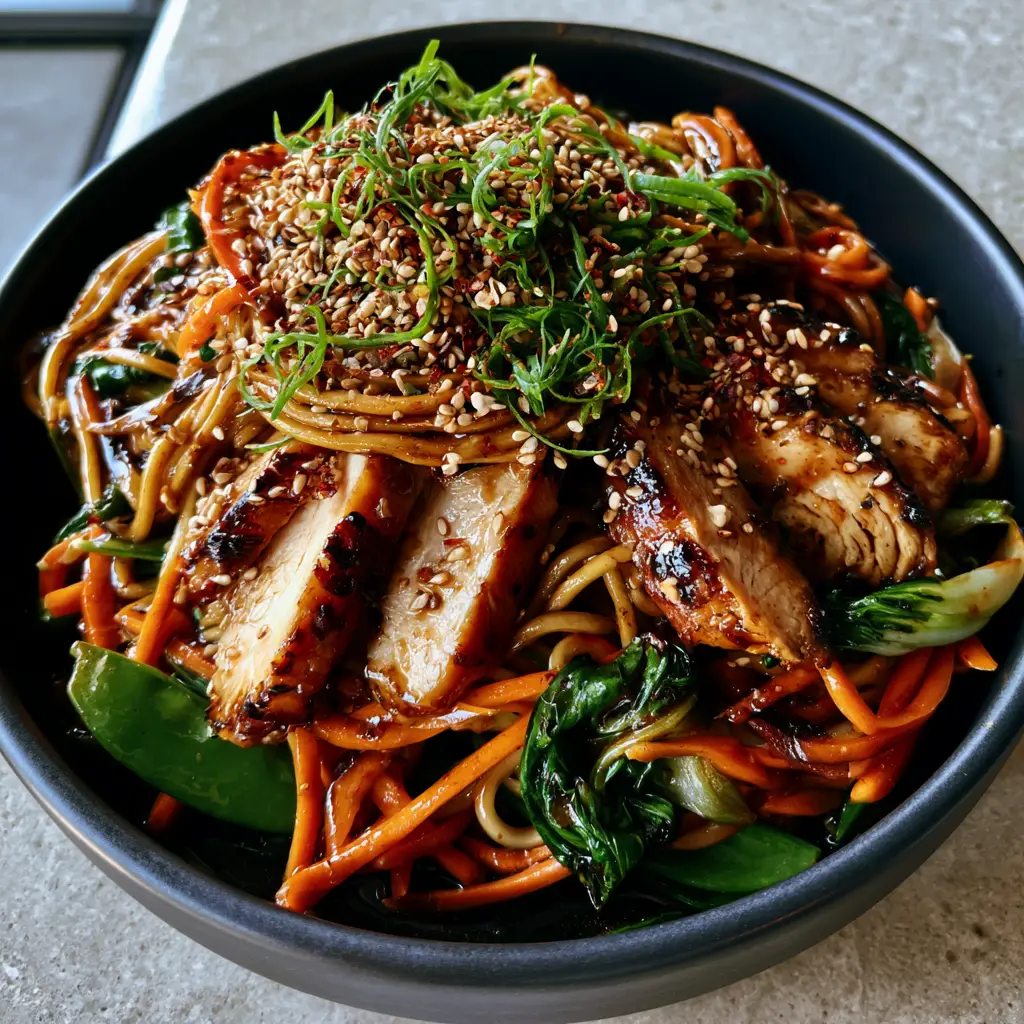
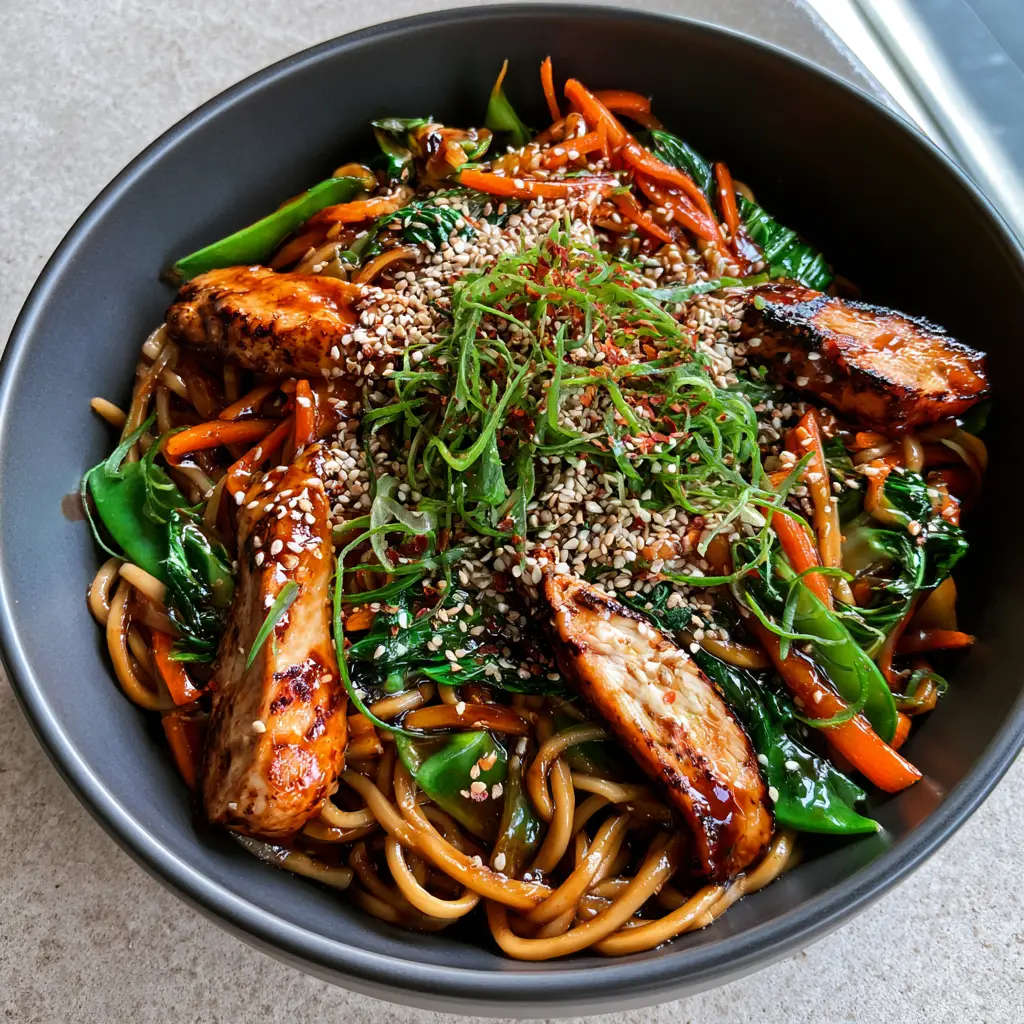
There is something inherently captivating about a mound of steaming, glossy noodles coated in a rich, dark umami glaze. When you see those thick slices of seared, golden-brown chicken breast resting atop a bed of vibrant vegetables, you know you aren’t just looking at a meal; you are looking at a culinary masterpiece. This Chicken Lo Mein is designed to satisfy every sensory craving, from the aromatic scent of fresh ginger to the visual pop of emerald green bok choy.
Achieving that authentic restaurant-quality finish at home requires more than just tossing ingredients in a pan. It is about the forensic attention to detail—the way the julienned carrots provide a tender-crisp snap and how the toasted white sesame seeds offer a nutty contrast to the deep soy-ginger sauce. This recipe brings the professional kitchen into your home, ensuring a high-shine, reflective quality to your sauce that looks as good as it tastes.
Whether you are looking for a quick weeknight dinner or a show-stopping weekend feast, this Chicken Lo Mein hits all the marks. It is a balanced, structurally sound dish that prioritizes fresh ingredients and traditional techniques. Get ready to ditch the delivery menus for good.
Why This Chicken Lo Mein Recipe Outshines Your Favorite Takeout Spot
- Forensic Visual Accuracy: Every component, from the green onion curls to the red pepper flakes, is chosen to create a stunning, macro-photo-ready plate.
- Professional Searing Technique: We focus on achieving visible grill marks and a golden crust on the chicken breast to lock in moisture and flavor.
- The “High-Shine” Glaze: A scientifically balanced sauce that uses specific thickeners to ensure it clings to every wheat noodle with a reflective, glossy finish.
- Tender-Crisp Vegetable Medley: No soggy veggies here; we use high-heat stir-frying to keep the sugar snap peas and julienned carrots vibrant and crisp.
The Anatomy of a Perfect Umami Glaze and Essential Ingredients
To achieve the dark, reflective sauce seen in the visual blueprint, we must balance salt, sugar, and aromatics. The foundation of our Chicken Lo Mein is a dark soy-ginger glaze that provides both color and depth. We use a combination of dark soy sauce for that rich mahogany hue and light soy sauce for the necessary salinity.
1 lb (450g) Chicken Breast: Sliced into thick, uniform strips to ensure even searing and a tender interior. The protein provides the heart of the dish, absorbing the ginger and garlic notes.
12 oz (340g) Fresh Wheat Lo Mein Noodles: These provide the perfect “chew” and surface area for the sauce to cling to. If you can’t find fresh, dried wheat noodles work, but fresh is preferred for that authentic bounce.
2 tbsp (30ml) Dark Soy Sauce: This is the secret to the “dark” aspect of the glaze, offering a less salty but more intense color and molasses-like undertone.
1 tbsp (15ml) Fresh Ginger, Minced: Ginger provides a sharp, spicy aromatic lift that cuts through the richness of the soy and sesame oil.
2 cups (150g) Baby Bok Choy: Sliced lengthwise to maintain the integrity of the emerald leaves and the crunch of the white stalks. This is a staple for authentic texture.
1 cup (100g) Sugar Snap Peas: These are added last to ensure they retain their bright green color and “snap” when bitten.
Foundational Invisible Ingredients: You will also need 2 tbsp (30ml) of high-smoke point oil (like canola or peanut oil) for searing, 1 tsp (5g) of cornstarch for the sauce’s reflective shine, and a pinch of kosher salt to sweat the vegetables.
Essential Equipment for Stir-Fry Success
To achieve the “Wok Hei” or “breath of the wok” flavor, equipment matters. A carbon steel wok is ideal because it conducts heat rapidly and develops a non-stick surface over time. However, if you are cooking on a standard stovetop, a large, heavy-bottomed cast iron or stainless steel skillet will also yield excellent results for your Chicken Lo Mein.
You will also need a sharp chef’s knife or a mandoline to achieve the precise julienned carrots required for the visual blueprint. A set of long kitchen tongs is indispensable for tossing the noodles through the glaze without breaking them. Finally, have a small bowl and whisk ready to emulsify the sauce before it hits the hot pan.
Mastering the Sear: Step-by-Step Instructions
Preparing the Golden Chicken and Noodle Base
Begin by bringing a large pot of water to a boil. Cook the 12 oz (340g) of wheat lo mein noodles according to package instructions, but aim for “al dente”—about 1 minute less than suggested. Drain and immediately toss with 1 tsp (5ml) of toasted sesame oil to prevent sticking.
Pat the chicken breast strips completely dry with paper towels. Season lightly with salt. Heat 1 tbsp (15ml) of oil in your wok over high heat until it just begins to smoke. Add the chicken in a single layer, leaving space between pieces. Sear for 2-3 minutes without moving them until a deep golden-brown crust and visible grill marks form. Flip and cook for another 2 minutes, then remove and set aside.
Stir-Frying the Vibrant Vegetable Medley
In the same wok, add another 1 tbsp (15ml) of oil. Toss in the julienned carrots and baby bok choy stalks. Stir-fry for 2 minutes over high heat. You are looking for the bok choy leaves to turn emerald green while the stalks remain firm. If you enjoy this flavor profile, you might also love our classic chicken and broccoli for a similar veggie-forward experience.
Add the sugar snap peas, minced ginger, and 3 cloves of minced garlic. Sauté for only 30-45 seconds. The goal is to release the aromatics without browning the garlic. The snap peas should look bright and glossy, reflecting the heat of the pan.
The Final Glaze and Noodle Toss
Whisk together the dark soy sauce, 1/4 cup (60ml) chicken broth, 1 tsp (5g) cornstarch, and 1 tsp (5g) brown sugar. Pour this mixture into the center of the wok. It will bubble and thicken almost instantly. This is the moment the “high-shine” quality emerges as the starch gelatinizes.
Return the golden chicken to the wok along with the cooked noodles. Use your tongs to lift and fold the noodles, ensuring every strand is coated in the dark, umami glaze. Toss for 1-2 minutes until everything is steaming and the sauce has reached a reflective, syrupy consistency.
Expert Tips for the Perfect Takeout Texture
- The Ice Bath Trick: To get those perfect “fresh green onion curls,” slice the green onions very thinly and drop them into a bowl of ice water for 5 minutes. They will curl up tightly for a professional garnish.
- Dry the Protein: Moisture is the enemy of a good sear. If your chicken is wet, it will steam instead of developing that golden-brown crust.
- Noodle Timing: Always undercook your noodles slightly during the boiling phase. They will finish cooking and absorb the sauce once they hit the wok.
- Mise en Place: Stir-frying happens fast. Have all your vegetables julienned and your sauce whisked before you turn on the heat.
Storage, Reheating, and Meal Prep Advice
This Chicken Lo Mein stores beautifully in an airtight container in the refrigerator for up to 3 days. Because wheat noodles absorb liquid over time, you may find the sauce is less “glossy” the next day. To remedy this, add 1 tbsp (15ml) of water or chicken broth before reheating.
For reheating, a quick toss in a hot skillet is better than the microwave. It helps re-emulsify the fats in the sauce and keeps the vegetables from becoming too soft. We do not recommend freezing this dish, as the texture of the bok choy and snap peas will degrade significantly upon thawing.
Creative Pairings and Serving Suggestions
To round out your Asian-inspired feast, serve this Chicken Lo Mein alongside a light cucumber salad or crispy spring rolls. If you are hosting a larger dinner, it pairs excellently with other favorites like crispy chinese honey chicken or even a side of spicy honey chicken tenders for those who love a bit of heat.
For a complete weeknight rotation, consider alternating this dish with other easy chicken dinner ideas to keep your menu fresh and exciting. A crisp lager or a jasmine green tea helps cleanse the palate between bites of the rich, savory noodles.
Frequently Asked Questions
Yes, chicken thighs are a great substitute and are often more forgiving. They contain more fat, which helps them stay moist under high heat, though you may need to sear them slightly longer to render the fat.
The ‘high-shine’ finish is achieved by using a cornstarch slurry. When the starch hit the hot pan, it gelatinizes, creating a thick, translucent coating that reflects light and clings to the noodles.
If dark soy sauce is unavailable, you can use regular soy sauce mixed with a teaspoon of molasses or brown sugar. This mimics the color and slight sweetness, though the flavor won’t be quite as deep.
The main difference lies in the preparation of the noodles. Lo Mein uses boiled noodles that are tossed with sauce at the end, resulting in a soft, glossy texture. Chow Mein noodles are typically fried until crisp before being combined with other ingredients.
Mushy noodles are usually the result of overboiling. Always cook your wheat noodles 1-2 minutes less than the package instructions, as they will continue to soften once tossed in the hot wok with the sauce.
The Ultimate Chicken Lo Mein Recipe Card
Chicken Lo Mein: The Ultimate Better-Than-Takeout Recipe with a High-Shine Glaze
Ingredients
Equipment
Method
- Cook wheat noodles in boiling water until al dente. Drain and toss with sesame oil.
- In a small bowl, whisk dark soy sauce, broth, cornstarch, and sugar until smooth.
- Heat oil in wok. Sear chicken strips until golden-brown grill marks appear. Remove from pan.
- Sauté carrots, bok choy, and snap peas until tender-crisp and emerald green.
- Add noodles and chicken back to the wok. Pour in sauce and toss until a reflective, high-shine glaze forms.
Notes
Use an ice bath for the green onion curls to achieve a professional visual garnish.
Closing & Call to Action
Mastering Chicken Lo Mein is a milestone for any home cook. The combination of the high-shine glaze, the perfectly seared chicken, and the crisp snap of the vegetables creates a dining experience that rivals the best bistros. If you enjoyed this recipe, please leave a comment and a star rating below! Don’t forget to follow me on Pinterest and share your creations by tagging Emma Feast.