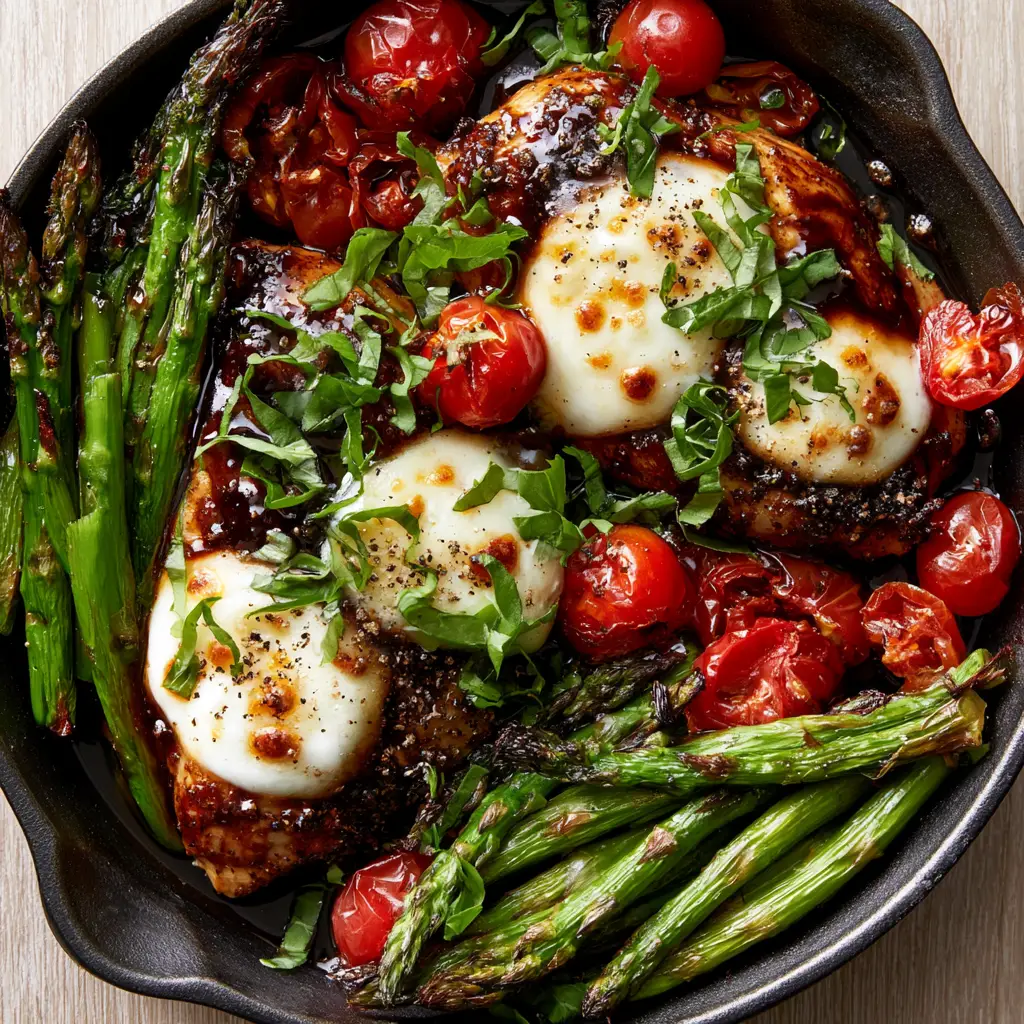
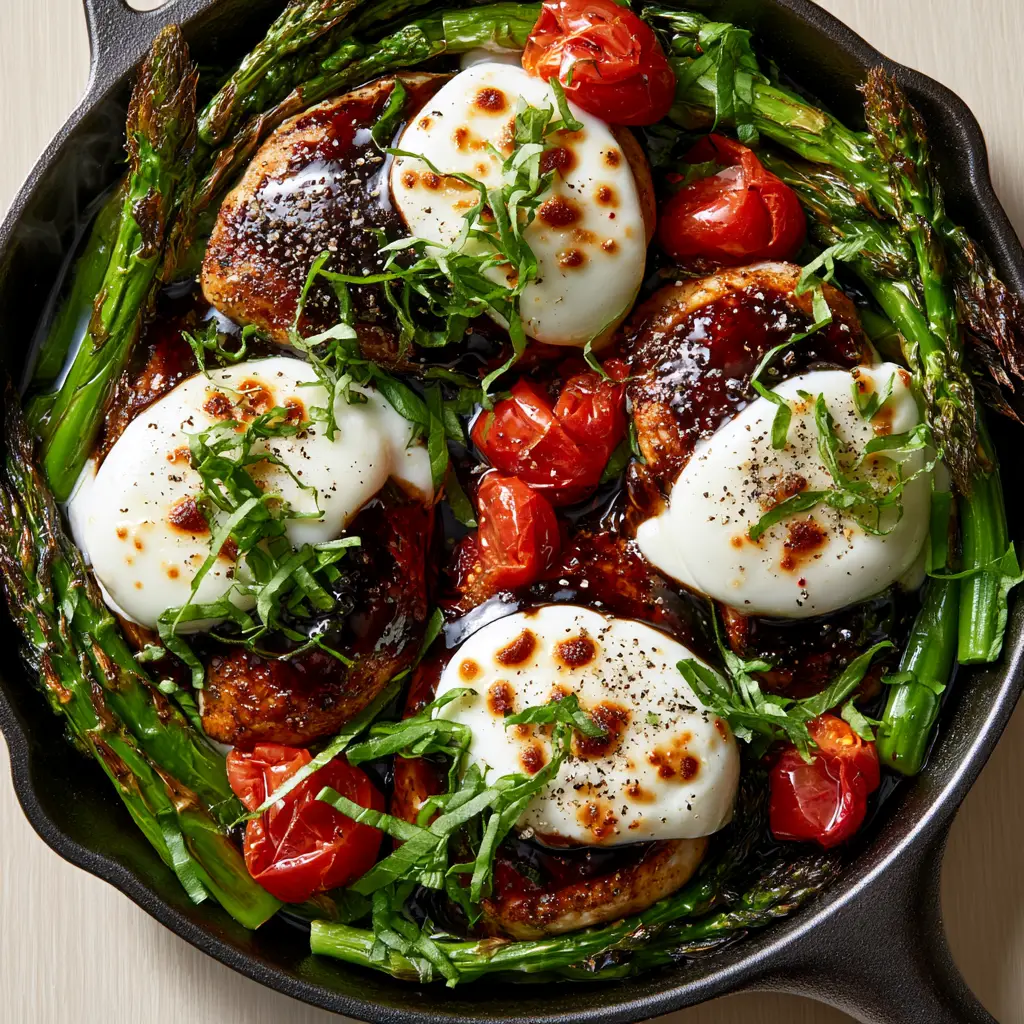
Imagine a single black cast iron skillet arriving at your table, radiating heat and filled with the most succulent, pan-seared chicken breasts you have ever laid eyes on. Each piece of poultry is draped in a thick, glossy, dark mahogany balsamic glaze that shimmers under the light, promising a perfect balance of tang and sweetness. This One Pan Balsamic Chicken isn’t just a meal; it is a visual and culinary masterpiece designed to bring restaurant-quality elegance to your weeknight routine.
The beauty of this dish lies in its contrasting textures and vibrant colors. From the milky white mozzarella medallions featuring tiny golden-brown toasted spots to the bright red cherry tomatoes that have blistered and burst to release their sweet juices, every element is a feast for the senses. As you bring the skillet to the table, the faint scent of fresh basil chiffonade and the earthy aroma of charred asparagus spears fill the air, signaling that dinner is served.
Whether you are looking for vibrant summer dinner ideas or a sophisticated way to elevate your protein game, this recipe delivers on every front. It is a high-protein, vegetable-forward dish that requires minimal cleanup but offers maximum flavor impact, making it the ultimate addition to your culinary repertoire.
Why This Skillet Masterpiece Wins Every Time
- Glossy Mahogany Finish: The balsamic reduction creates a professional-grade glaze that clings to the chicken, providing a deep, complex sweetness that cuts through the richness of the cheese.
- Textural Harmony: You get the crunch of charred asparagus tips, the pop of bursting tomatoes, and the creamy pull of melted mozzarella in every single bite.
- One-Pan Efficiency: By utilizing a cast iron foundation, we build layers of flavor through deglazing and searing without ever needing to wash a second pot.
- Sensory Delight: The visual appeal of the vibrant green basil against the dark glaze makes this a “smartphone-photo-ready” meal that tastes even better than it looks.
The Flavor Foundation: Essential Ingredients for Mahogany Glaze
Chicken Breasts: We use 1.5 lbs (680g) of boneless, skinless chicken breasts. To ensure they stay juicy, we look for even thickness, which allows for a uniform sear and prevents the edges from drying out before the center is cooked.
Balsamic Vinegar of Modena: 1/2 cup (120ml) of high-quality balsamic is the soul of this dish. Its acidity provides the necessary “bite,” while its natural sugars caramelize into that iconic mahogany glaze during the reduction phase.
Fresh Mozzarella Medallions: 8 oz (225g) of fresh mozzarella, sliced into rounds, provides the bubbling, creamy topping. The high moisture content of fresh mozzarella ensures a superior “melt” compared to processed shredded varieties.
Cherry Tomatoes: 2 cups (300g) of red cherry tomatoes are essential. As they hit the hot skillet, their skins blister, creating a natural sauce that mingles with the balsamic reduction for added depth.
Asparagus Spears: 1 lb (450g) of fresh asparagus, trimmed, adds a necessary earthy crunch. The high-heat sear in the skillet chars the tips, providing a smoky undertone that complements the sweet glaze.
Fresh Basil: A large handful of fresh basil leaves, sliced into a delicate chiffonade, adds a bright, peppery finish. The heat from the chicken slightly wilts the basil, releasing its aromatic oils just before serving.
Foundational Invisibles: To achieve this result, you will need 2 tbsp (30ml) of avocado oil for high-heat searing, 1 tbsp (14g) of unsalted butter for a glossy emulsion, and plenty of coarse cracked black pepper and kosher salt to heighten every flavor profile.
Culinary Tools for the Perfect Cast Iron Sear
To replicate the deep mahogany crust seen in our visuals, a 12-inch (30cm) cast iron skillet is non-negotiable. Cast iron retains heat better than stainless steel or non-stick, allowing the chicken to develop a Maillard-reaction crust without overcooking the interior. The heavy bottom also ensures the balsamic vinegar reduces evenly without scorching.
You will also need a pair of heavy-duty kitchen tongs for flipping the chicken and tossing the asparagus, and a sharp chef’s knife to create that perfect basil chiffonade. A meat thermometer is highly recommended to ensure the chicken reaches an internal temperature of 165°F (74°C) without losing its moisture.
Step-by-Step: From Raw Sizzle to Glossy Perfection
1. Preparing the Protein and Skillet
Pat the chicken breasts dry with paper towels; moisture is the enemy of a good sear. Season both sides generously with kosher salt and cracked black pepper. Heat your cast iron skillet over medium-high heat and add 2 tbsp (30ml) of avocado oil. Wait until the oil is shimmering and just starting to faintly smoke before adding the chicken.
2. The Art of the Golden-Brown Sear
Place the chicken in the skillet. Do not move it for at least 4-5 minutes. You are looking for a deep, golden-brown crust to form. Flip the chicken and sear the other side for 3 minutes. The chicken won’t be fully cooked yet, but the “foundation of flavor” is now set in the pan.
3. Blistering the Vegetables
Push the chicken to the sides of the skillet and add the asparagus spears and cherry tomatoes to the center. Let them sit undisturbed for 2 minutes until the tomatoes begin to pop and the asparagus tips become charred and crispy. The sight of the bursting red juices mingling with the chicken drippings is your cue that the pan is ready for the glaze.
4. Reducing the Mahogany Glaze
Pour 1/2 cup (120ml) of balsamic vinegar and 1 tbsp (15ml) of honey into the skillet. Using your tongs, scrape the bottom of the pan to release all the “fond” (the brown bits). The liquid will bubble vigorously. Allow it to simmer for 3-5 minutes until it reduces by half and transforms into a thick, glossy, mahogany-colored syrup that coats the back of a spoon.
5. The Mozzarella Melt and Final Finish
Place the mozzarella medallions on top of each chicken breast. If your skillet is oven-safe, pop it under the broiler for 2 minutes until the cheese is bubbling with tiny golden-brown toasted spots. Alternatively, cover the skillet with a lid for 2 minutes to melt the cheese using residual steam. Finish with a light dusting of cracked black pepper and a generous scatter of fresh basil chiffonade.
Expert Tips for Success
- Room Temperature Meat: Take your chicken out of the fridge 15 minutes before cooking. Cold meat causes the skillet temperature to drop, which prevents that iconic dark sear.
- Don’t Crowd the Pan: If your skillet is small, sear the chicken in batches. Crowding causes the meat to steam rather than sear, resulting in grey chicken instead of mahogany perfection.
- The Glaze Consistency: If your glaze becomes too thick or “tacky,” whisk in 1 tbsp (15ml) of water or chicken broth to loosen it back to a glossy pourable state.
- Basil Timing: Only add the basil at the very last second. Basil turns black and loses its flavor if exposed to high heat for too long.
Symphonic Pairings: What to Serve Alongside
This One Pan Balsamic Chicken is a complete meal on its own, but it pairs beautifully with starches that can soak up the extra glaze. A side of bright lemon chicken pasta (minus the chicken) works wonderfully to balance the sweetness of the balsamic. If you’re looking for something lighter, serve it over a bed of quinoa or alongside a crisp arugula salad.
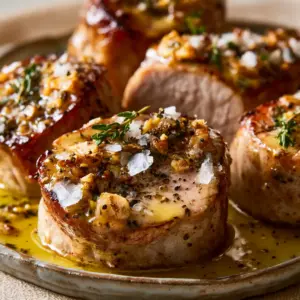
If you enjoy the hearty, pan-seared nature of this dish, you might also love our juicy herb pork tenderloin, which utilizes similar high-heat techniques. For a total flavor pivot, consider serving this after a starter of mediterranean baked feta eggs for a complete Mediterranean-themed dinner party.
Preserving the Sizzle: Storage and Reheating
This dish is best enjoyed fresh when the cheese is at its stretchiest, but leftovers are delicious for lunch. Store in an airtight container for up to 3 days. To reheat, we recommend using the oven at 350°F (175°C) covered with foil to prevent the chicken from drying out. Avoid the microwave if possible, as it can make the mozzarella rubbery and the asparagus mushy.
Common Questions About This One-Pan Wonder
Absolutely! Chicken thighs are very forgiving and will stay even juicier. Simply increase the searing time by 2-3 minutes per side to ensure they are cooked through.
While a stainless steel pan works, cast iron is preferred for its superior heat retention, which is critical for creating the deep sear on the chicken and the char on the vegetables.
The secret is the reduction time and the addition of a small amount of honey or brown sugar. Simmer the balsamic vinegar until it reduces by half, ensuring it coats the back of a spoon with a thick, syrupy consistency.
Asparagus cooks very quickly. Ensure your skillet is at medium-high heat so the asparagus chars on the outside before the inside becomes too soft. Add them late in the process to maintain their snap.
Look for a Balsamic Vinegar of Modena. It has a natural sweetness and thickness that reduces into a superior glaze compared to thinner, cheaper wine vinegars.
The Ultimate Skillet Dinner is Ready
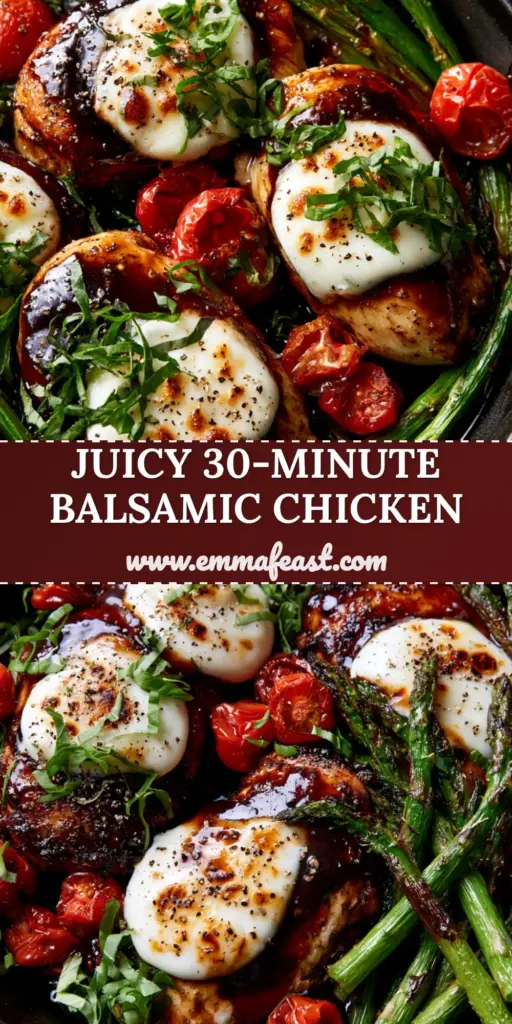
One Pan Balsamic Chicken with Blistered Tomatoes and Bubbling Mozzarella
Ingredients
Equipment
Method
- Heat oil in the cast iron skillet over medium-high heat. Season chicken and sear for 5 minutes per side until a mahogany crust forms.
- Add asparagus and cherry tomatoes to the skillet. Cook for 3-4 minutes until tomatoes burst and asparagus tips are charred.
- Pour in balsamic vinegar and honey. Scape the pan and simmer for 3-5 minutes until the sauce is thick and glossy.
- Place mozzarella on chicken. Broil or cover for 2 minutes until cheese is bubbling and has golden spots.
Notes
Use a meat thermometer to avoid overcooking the poultry.
Bring the Bistro Home
This One Pan Balsamic Chicken is the perfect example of how simple, high-quality ingredients can be transformed into a gourmet meal with the right techniques. From the snap of the charred asparagus to the rich, mahogany depths of the balsamic glaze, it is a dish that commands attention. We hope this becomes a staple in your kitchen!
If you made this recipe, we want to hear about it! Please leave a comment below and tell us how your glaze turned out. Don’t forget to share your creations and follow us on Pinterest for more culinary inspiration.