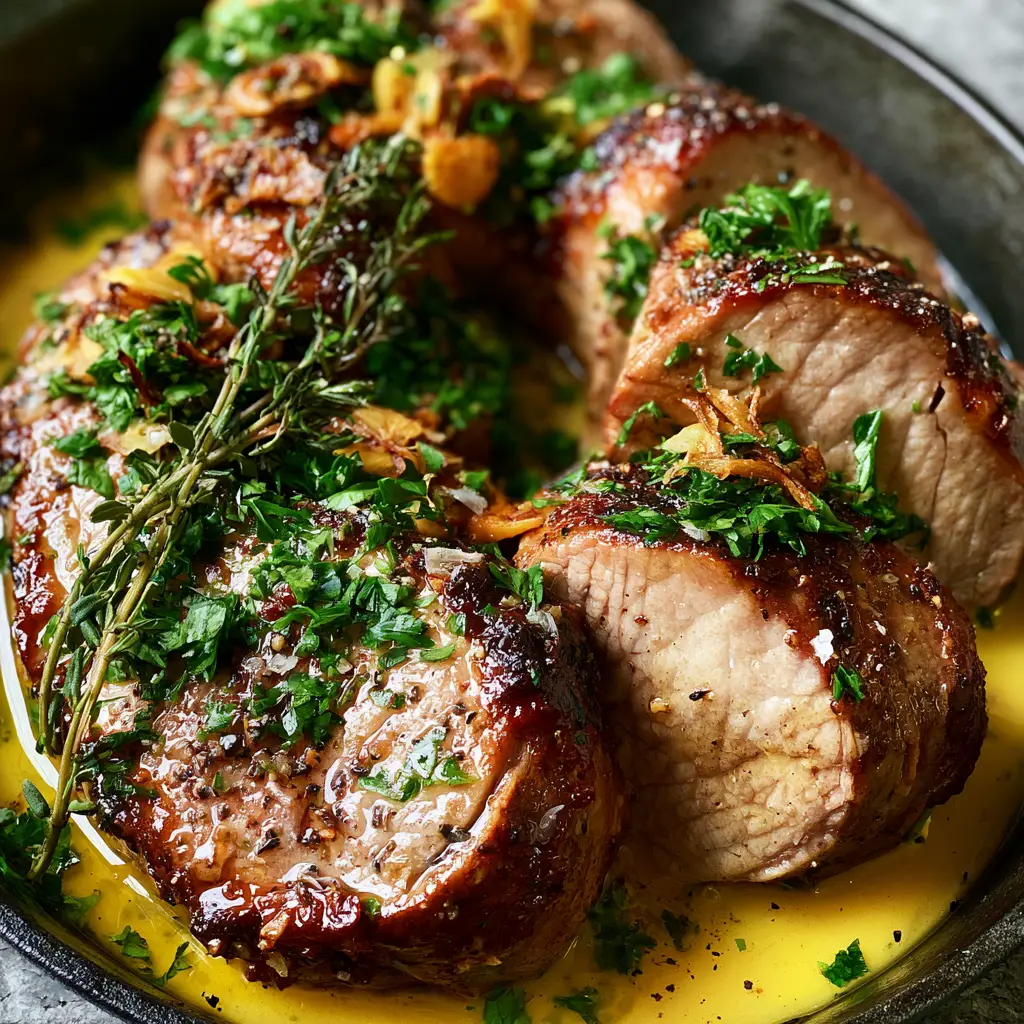
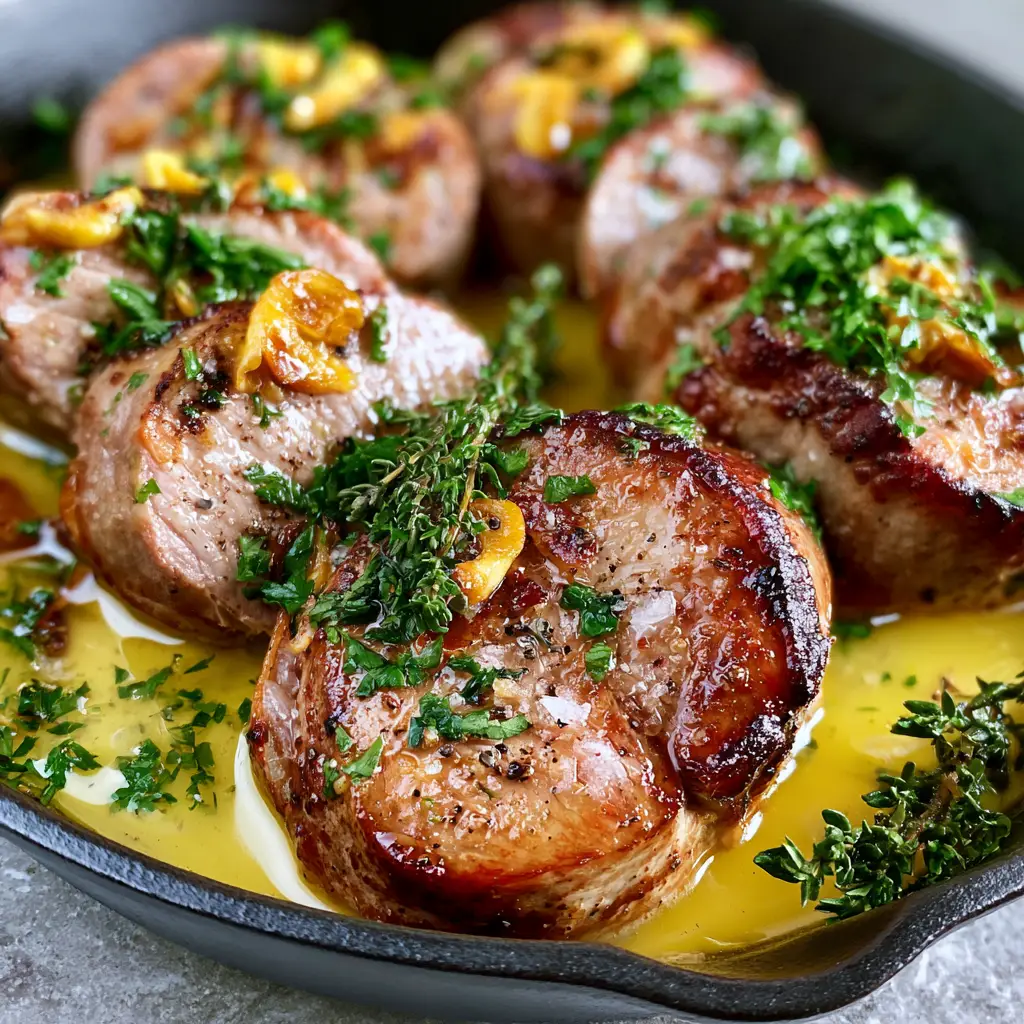
There is nothing quite like the sight of a perfectly seared herb pork tenderloin resting in a dark cast iron skillet, its surface glistening with a rich, golden-yellow garlic butter sauce. If you have ever struggled with dry, flavorless pork, this recipe is the ultimate culinary correction. We are focusing on a high-heat sear that creates a deeply browned outer crust while maintaining a succulent, moist, and slightly pink center that practically melts on the tongue.
The magic of this dish lies in the aromatic bridge between fresh thyme sprigs and sautéed garlic slivers. As the butter melts and pools around the medallions, it picks up the oils from the herbs and the toasted sweetness of the garlic, creating a shimmering pan sauce that rivals any high-end steakhouse. Whether you are looking for a sophisticated centerpiece or a quick weeknight upgrade, this herb pork tenderloin delivers on every sensory promise.
Why You’ll Fall for These Succulent Garlic Herb Medallions
- Visual Masterpiece: The contrast between the vibrant green chopped parsley, the toasted golden garlic slivers, and the dark cast iron creates a restaurant-quality presentation right at your table.
- Texture Contrast: You get a definitive “crunch” from the hard sear and flaky sea salt, followed immediately by the tender, juicy interior of the pork.
- Deep Flavor Profile: By using whole thyme sprigs and cracked black pepper, we infuse the fat with earthy, peppery notes that penetrate the meat fibers during the basting process.
- Scientific Precision: This recipe utilizes the Maillard reaction to its fullest potential, ensuring every medallion is packed with savory complexity.
The Anatomy of a Perfect Herb Pork Tenderloin: Essential Ingredients
To achieve the result shown in our visual guide, every ingredient plays a specific role in both the flavor and the final aesthetic. Here is what you will need to gather for your herb pork tenderloin.
Pork Tenderloin (approx. 1.5 lbs / 680g): This lean, delicate muscle is the star of the show; look for a deep pink color and ensure it is trimmed of any silver skin for maximum tenderness.
Unsalted Butter (4 tbsp / 57g): Butter provides the rich, shimmering base for our sauce; using unsalted allows you to control the final seasoning perfectly with your flaky sea salt.
Garlic Cloves (4-5 large): We are slicing these into thin slivers rather than mincing; this allows the garlic to toast to a golden brown without burning, providing a beautiful visual garnish.
Fresh Thyme (6-8 whole sprigs): Whole sprigs are essential for infusing the butter sauce with a woody, citrus-like aroma that defines a classic herb pork tenderloin.
Fresh Parsley (1/4 cup / 10g, chopped): This adds a burst of vibrant green color and a fresh, grassy finish that cuts through the richness of the butter.
High-Smoke Point Oil (2 tbsp / 30ml): Use avocado or grapeseed oil for the initial sear; these oils can handle the high heat of the cast iron without smoking or breaking down.
Cracked Black Pepper & Flaky Sea Salt: Large specks of pepper provide a pungent bite, while flaky salt adds a delicate crunch and enhances the natural juices of the meat.
The Best Tools for a Professional Cast Iron Sear
To replicate the authentic textures of our high-end food photography, your choice of equipment is just as vital as your ingredients. A seasoned 12-inch (30cm) cast iron skillet is the non-negotiable hero here because of its incredible heat retention and ability to create a uniform crust.
You will also need a pair of heavy-duty kitchen tongs to flip the medallions without piercing the meat, which would allow precious juices to escape. Finally, an instant-read meat thermometer is your insurance policy against overcooking, ensuring you hit that perfect slightly pink internal temperature every time.
Master the Sear: How to Cook Herb Pork Tenderloin Step-by-Step
Follow these steps closely to ensure your herb pork tenderloin looks and tastes exactly like the succulent, glistening dish described in our blueprint.
Step 1: Preparation and Temperature Tempering
Remove your pork tenderloin from the refrigerator at least 20 minutes before cooking. Cold meat hits a hot pan and causes the fibers to tighten instantly, leading to a tough result.
Slice the tenderloin into thick medallions, approximately 1.5 inches (4cm) thick. Pat each medallion extremely dry with paper towels; moisture is the enemy of a good sear, as it creates steam instead of a crust.
Step 2: The Hard Sear
Place your cast iron skillet over medium-high heat until the oil begins to shimmer and a faint wisp of smoke appears. Carefully place the medallions into the pan, ensuring they do not touch.
Leave them undisturbed for 3-4 minutes. You are looking for a “deeply browned, seared outer crust” as seen in our images. Flip once and sear the other side for an additional 2-3 minutes.
Step 3: The Garlic Butter Basting (The Arrosée Technique)
Reduce the heat to medium and add the unsalted butter, whole thyme sprigs, and the slivered garlic to the skillet. As the butter melts and begins to foam, it will turn a beautiful golden-yellow.
Tilt the pan slightly so the butter pools at the bottom with the aromatics. Use a large spoon to continuously pour the hot, flavored butter over the pork medallions for the final 2 minutes of cooking.
Step 4: Monitoring Sensory Cues
Listen for the butter’s sizzle—it should be active but not popping violently. Watch the garlic slivers; they should transition from white to a toasted golden-yellow, matching the shimmering sauce in the skillet.
Check the internal temperature. For a moist, slightly pink center, remove the pork from the heat when it reaches 140°F (60°C). The temperature will rise to 145°F (63C°) as it rests.
Pro Secrets for Moist and Flavorful Medallions
- The Resting Rule: Never slice or serve the pork immediately. Allow it to rest in the warm skillet (off the heat) for 5 minutes to let the juices redistribute through the meat fibers.
- Slivered vs. Mined: By using slivers of garlic, you achieve a mellow, nutty flavor and a stunning visual garnish that won’t turn bitter like tiny minced bits often do.
- Dry Brining: If you have time, salt the medallions 30 minutes before cooking. This draws moisture out, then pulls the seasoned liquid back in, seasoning the meat to the core.
- Deglaze if Needed: If your pan becomes too dry, a splash of white wine or chicken stock before adding the butter can help lift the “fond” (browned bits) for an even richer sauce.
Maintaining Freshness: Storage and Reheating Guidelines
If you find yourself with leftover herb pork tenderloin, store it in an airtight container in the refrigerator for up to 3 days. To maintain that succulent texture, avoid the microwave, which can turn pork rubbery.
Instead, reheat the medallions in a skillet over low heat with a teaspoon of water and a small pat of butter. Cover the pan with a lid to create a gentle steaming environment that revives the glistening moisture of the original dish.
Perfect Pairings: What to Serve with Herb Pork Tenderloin
This dish is incredibly versatile and fits perfectly into several meal plans. If you are browsing for more inspiration, check out our collection of pork recipes for various flavor profiles. For a lighter, Mediterranean twist, you might enjoy this pork piccata which uses similar citrus and herb notes.
During the warmer months, this tenderloin makes for one of our favorite summer dinner ideas because it cooks so quickly and doesn’t require a hot oven. If you prefer a more traditional sauce, these pork medallions in onion gravy offer a comforting alternative to the garlic butter finish.
Common Questions About Searing Pork Medallions
While dried herbs work for flavor, they won’t provide the same visual appeal or aromatic profile in the butter sauce. If using dried, use 1/3 the amount and add them earlier.
The key is to pat the meat extremely dry with paper towels and use a preheated cast iron skillet with a high-smoke point oil. Do not move the meat for the first 3-4 minutes.
Yes! The USDA updated guidelines state that pork is safe to eat at an internal temperature of 145°F (63°C), which typically results in a slightly pink, succulent center.
Slice across the grain into 1.5-inch thick medallions. This shortens the muscle fibers, ensuring every bite of your herb pork tenderloin is as tender as possible.
Slivered garlic is less likely to burn during the high-heat basting process. It toasts into ‘garlic chips’ that provide a sweet, nutty flavor and a beautiful garnish.
The Ultimate Herb Pork Tenderloin Experience
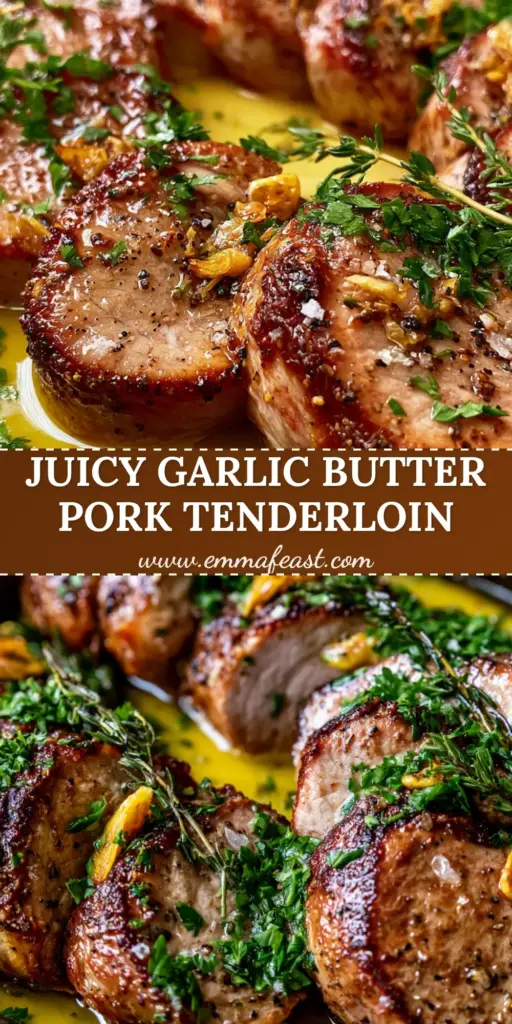
Herb Pork Tenderloin with Golden Garlic Butter and Sautéed Slivers
Ingredients
Equipment
Method
- Remove pork from fridge 20 minutes before cooking. Slice into 1.5-inch thick medallions and pat extremely dry with paper towels.
- Generously season both sides of the medallions with cracked black pepper and kosher salt.
- Heat oil in cast iron skillet over medium-high heat until shimmering. Sear medallions for 3-4 minutes per side until a deep golden-brown crust forms.
- Reduce heat to medium. Add butter, thyme sprigs, and garlic slivers. Spoon the foaming golden butter over the pork for 2 minutes until internal temp reaches 140°F (60°C).
- Remove from heat and let rest for 5 minutes. Garnish with fresh parsley and flaky sea salt before serving from the skillet.
Notes
Carry-over cooking will raise the temperature by 5 degrees while resting.
Closing & Call to Action
Mastering the herb pork tenderloin is a gateway to becoming a more confident home cook. The combination of a cast iron sear and a luxurious garlic butter baste creates a meal that is both visually stunning and deeply satisfying. We hope this guide helps you achieve that perfect, glistening finish every time you step into the kitchen.
If you enjoyed this recipe, please leave a comment below and share your results! Don’t forget to follow emma_feast_official on Pinterest for more culinary inspiration and high-end food photography. Sign up for our newsletter to receive the latest recipes delivered straight to your inbox!