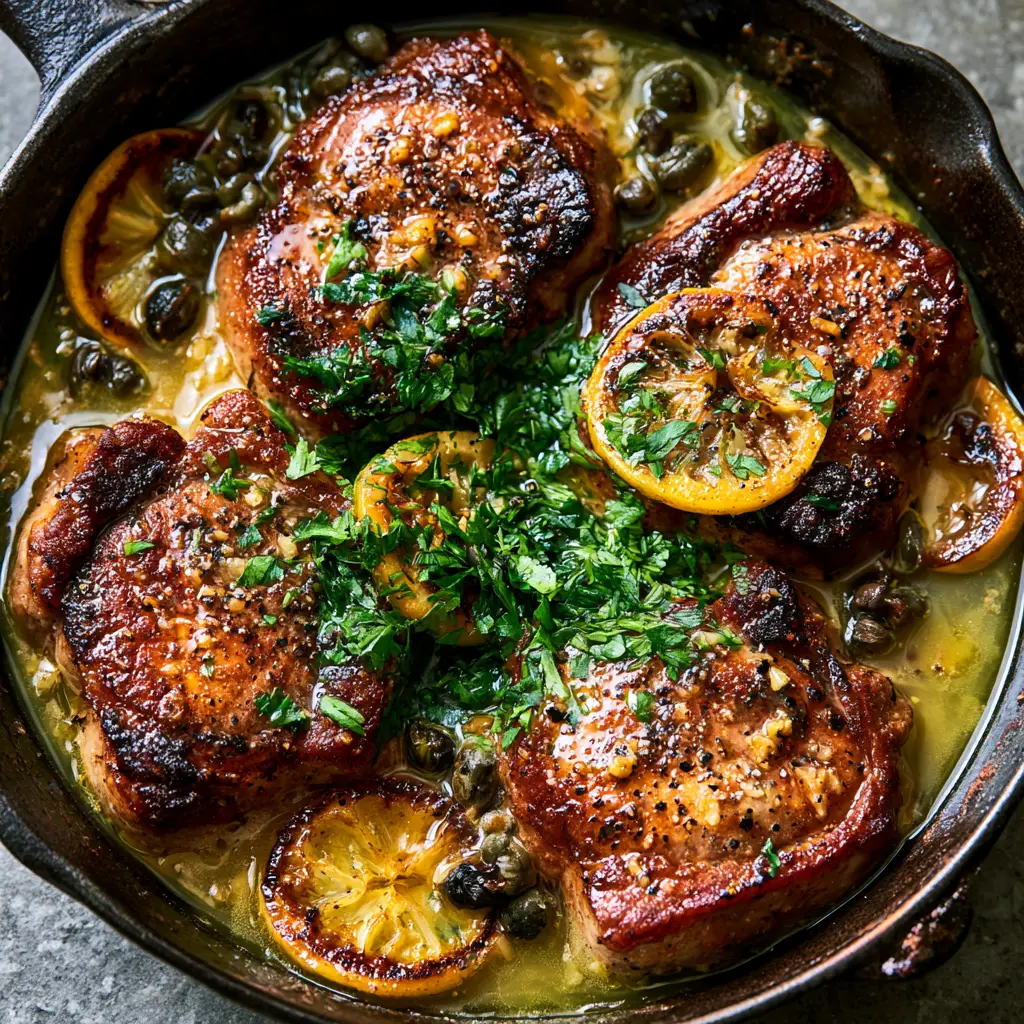
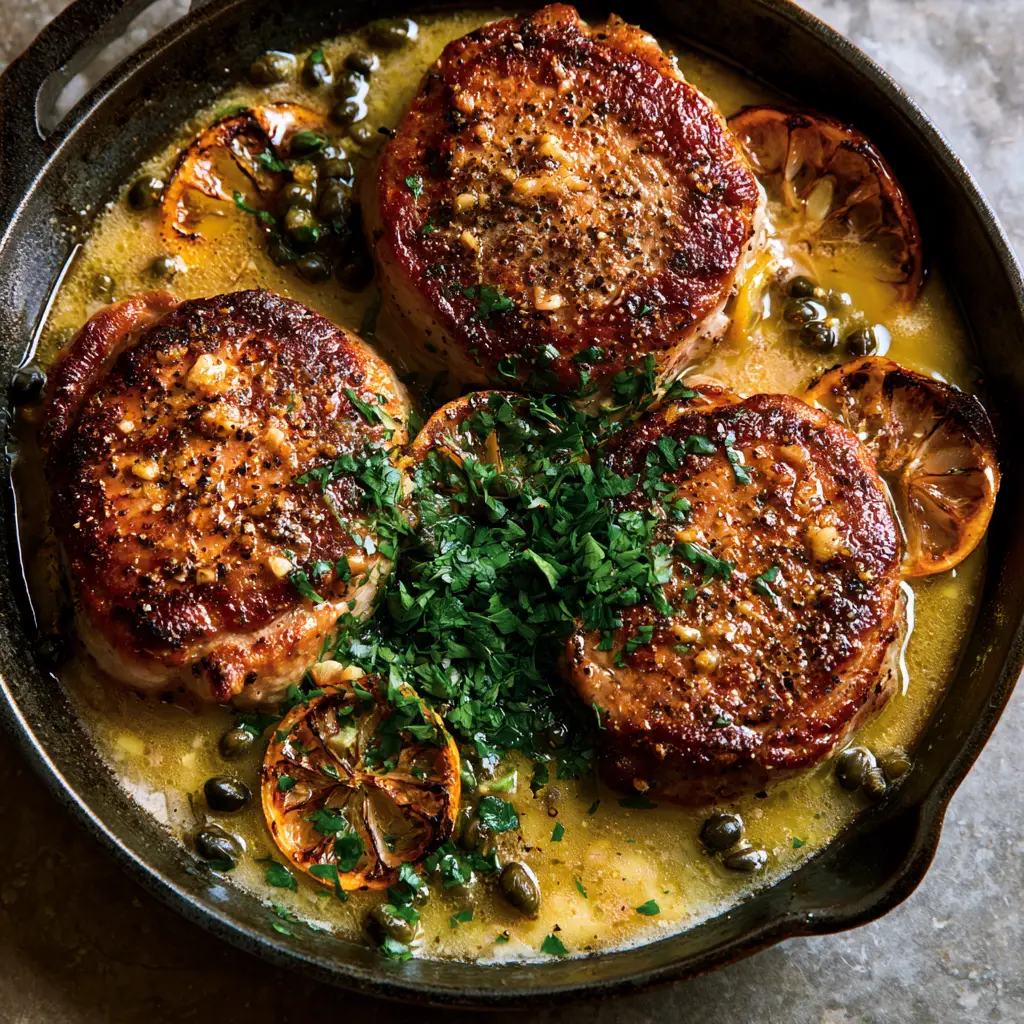
There is something undeniably magnetic about a rustic black cast iron skillet filled with Pork Piccata. This isn’t just a meal; it is a sensory experience defined by the high-contrast visuals of deep golden-brown seared crusts against a shimmering, translucent lemon-butter sauce. If you have been searching for a dinner that balances bright acidity with rich, savory depth, this restaurant-quality masterpiece is your answer.
Imagine four thick, juicy pork medallions, each boasting a crust flecked with cracked black pepper and toasted minced garlic. The sauce is glossy and rich, flooded with dark green, brine-soaked whole capers and thin lemon wheels that have been caramelized to perfection. This dish captures the essence of sophisticated home cooking with a shallow depth of field that makes the meat look incredibly tender and the sauce look wet and inviting.
The Visual and Culinary Appeal of This Skillet Masterpiece
- Textural Harmony: The contrast between the crisp, seared exterior of the pork and the silky, emulsified butter sauce creates a professional mouthfeel.
- Vibrant Aromatics: Freshly chopped flat-leaf parsley and sautéed garlic provide a fragrance that fills the kitchen, signaling a high-end dining experience.
- Balanced Acidity: The brine-soaked capers and charred lemon slices cut through the richness of the pork, ensuring every bite is bright and refreshing.
- Skillet Efficiency: Using a cast iron pan ensures even heat distribution, which is the secret to achieving that “Forensic Visual Accuracy” of a deep brown sear without overcooking the center.
The Flavor Foundation: Essential Ingredients for Pork Piccata
To achieve the exact look of our visual blueprint, we need a combination of visible stars and “invisible” foundational elements. Each ingredient serves a specific scientific purpose in the pan.
Pork Tenderloin: 1.5 lbs (680g) of pork tenderloin, sliced into thick medallions. This lean protein is the perfect canvas for a quick sear, ensuring the meat remains “thick and juicy” as described in our smartphone-style visual reference.
All-Purpose Flour: 1/2 cup (60g) for dredging. This is an invisible essential; it creates the “golden-brown crust” by facilitating the Maillard reaction and helps thicken the shimmering sauce into a glossy glaze.
Kosher Salt and Cracked Black Pepper: 1 tsp (6g) salt and 1 tbsp (6g) coarse pepper. The pepper must be visible on the surface of the medallions to match our high-angle visual prompt.
Unsalted Butter: 4 tbsp (56g), divided. High-quality butter provides the richness and the “shimmering” quality of the sauce when properly emulsified with the lemon juice.
Extra Virgin Olive Oil: 2 tbsp (30ml). Combining oil with butter allows for a higher smoke point, ensuring we get a deep sear without burning the dairy solids.
Fresh Garlic: 4 cloves (20g), minced. These will become the “minced sautéed garlic” flecks that cling to the meat, adding a pungent, savory depth.
Capers: 3 tbsp (45g) whole, brine-soaked capers. Do not chop them; we want those dark green pops of color scattered throughout the skillet for visual texture.
Chicken Stock: 1/2 cup (120ml). This provides the liquid volume needed to deglaze the skillet and create the “wet” look of the sauce.
Fresh Lemons: 2 large lemons. One will be sliced into thin wheels for charring, and the other will be juiced (approx. 3 tbsp (45ml)) to provide the signature Piccata tang.
Flat-Leaf Parsley: 1/4 cup (15g), freshly chopped. This is our “heavy garnish,” providing a vibrant green contrast to the neutral grey stone countertop aesthetic.
Precision Tools for a Professional Finish
To replicate the rustic, high-quality handheld photo style, your choice of equipment is paramount. A 12-inch rustic black cast iron skillet is non-negotiable. The heat retention of cast iron is what creates the caramelized edges on the lemon wheels and the deep sear on the pork. You will also need a sharp chef’s knife for mincing the garlic and a pair of stainless steel tongs to flip the medallions without piercing the meat and losing those precious juices.
Mastering the Pan-Sear: Step-by-Step Instructions
Phase 1: Preparing the Medallions
Slice your pork tenderloin into 1.5-inch (4cm) thick medallions. Using the heel of your hand or a meat mallet, gently press them down to an even 1-inch (2.5cm) thickness. This ensures they cook evenly and maintain that “juicy” look. Season both sides generously with salt and the cracked black pepper. Dredge each piece in flour, shaking off the excess so only a thin, translucent coating remains.
Phase 2: Achieving the Deep Golden-Brown Crust
Place your cast iron skillet over medium-high heat. Add 1 tbsp (15ml) of oil and 1 tbsp (14g) of butter. Once the butter is foaming and slightly brown, add the medallions. Visual Cue: You should hear a vigorous sizzle immediately. Do not move the meat for 3-4 minutes. Look for a deep golden-brown perimeter before flipping. Sear the other side for 3 minutes, then remove the pork to a warm plate.
Phase 3: Charring the Lemons and Aromatics
In the same skillet, add your thin lemon wheels in a single layer. Let them sit undisturbed for 1-2 minutes until the edges are caramelized and charred. Remove the lemons and set them aside. Lower the heat to medium and add the minced garlic and whole capers. Sauté for 60 seconds until the garlic is fragrant and the capers begin to “bloom” in the fat.
Phase 4: Constructing the Shimmering Sauce
Pour in the chicken stock and lemon juice. Use a wooden spoon to scrape up all the “fond” (the brown bits) from the bottom of the skillet. This is where the flavor lives! Let the liquid reduce by half. Whisk in the remaining 3 tbsp (42g) of cold butter one tablespoon at a time. This creates an emulsion, resulting in the “glossy and rich” sauce seen in our high-angle shot.
Phase 5: The Final Assembly
Slide the pork medallions back into the shimmering sauce. Add the charred lemon slices back to the skillet, tucking them between the meat. Spoon the sauce over the pork to make it look “wet” and glistening. Turn off the heat and scatter the vibrant, freshly chopped flat-leaf parsley over the top. Serve immediately in the skillet for that authentic rustic presentation.
Expert Tips for Success
- Cold Butter Secret: Always use cold butter when finishing the sauce. Adding cold fat to a hot liquid creates a stable emulsion that looks “shimmering” rather than greasy.
- Don’t Crowd the Pan: If your skillet isn’t large enough, sear the pork in two batches. Overcrowding drops the pan temperature, leading to steaming rather than searing.
- The Carryover Cook: Pork is safe and most tender at an internal temperature of 145°F (63°C). Pull it at 140°F (60°C), as the heat of the sauce will finish the cooking process.
- Freshness Matters: Use bottled lemon juice as a last resort only. The oils from the fresh lemon zest and the bright acidity of real juice are essential for this tender pork recipe.
Storage, Reheating, and Freezing
Pork Piccata is best enjoyed fresh from the skillet to maintain the integrity of the lemon butter emulsion. However, leftovers can be stored in an airtight container in the refrigerator for up to 3 days. To reheat, place the medallions and sauce in a small pan over low heat, adding a splash of water or stock to loosen the sauce. Avoid the microwave, as it can toughen the meat. Freezing is not recommended, as the butter sauce may break upon thawing.
What to Serve With This Skillet Sensation
To complement the bright acidity of the Piccata, serve this over a bed of al dente linguine or angel hair pasta. The pasta acts as a sponge for the shimmering sauce. If you prefer a lower-carb option, these medallions pair beautifully with roasted asparagus or a light arugula salad. For those who enjoy a variety of pork preparations, this dish is a sophisticated alternative to a pork parmigiana or a rustic pork medallions in gravy. If you have leftover tenderloin, you might also enjoy experimenting with a herb pork tenderloin or even ginger lime pork for a different flavor profile.
Frequently Asked Questions
Capers are a signature element of Piccata, providing the essential briny, salty punch that balances the richness of the butter sauce. Whole, brine-soaked capers are best.
Yes, you can use boneless pork chops, but ensure they are pounded to an even thickness of about 1/2 to 1 inch to ensure they cook quickly and remain juicy.
The secret is emulsification. Whisk in cold butter cubes one at a time into the reduced lemon-stock liquid over medium-low heat until the sauce is glossy and thick.
Cast iron provides superior heat retention, which is essential for creating the dark, caramelized edges on the lemon wheels and the deep golden-brown crust on the pork.
The Ultimate Pork Piccata Recipe Card
Pork Piccata with Shimmering Lemon Butter Sauce and Charred Lemons
Ingredients
Equipment
Method
- Slice pork into medallions, season with salt and cracked pepper, and dredge lightly in flour.
- Heat oil and 1 tbsp butter in cast iron. Sear pork for 3-4 minutes per side until deep golden-brown.
- Char lemon wheels in the pan drippings until edges are caramelized.
- Deglaze with stock and lemon juice, reduce, then whisk in remaining cold butter to create a shimmering glaze.
Notes
Use cold butter for the sauce to prevent splitting.
Share Your Culinary Success!
This Pork Piccata is a testament to how simple ingredients can create a visually stunning and delicious meal when handled with professional technique. Whether you are hosting a dinner party or treating your family to a weekday feast, this dish never fails to impress. We would love to see your results! Please leave a comment below with your experience, or share your skillet photos to Pinterest to inspire other home cooks. Happy cooking!