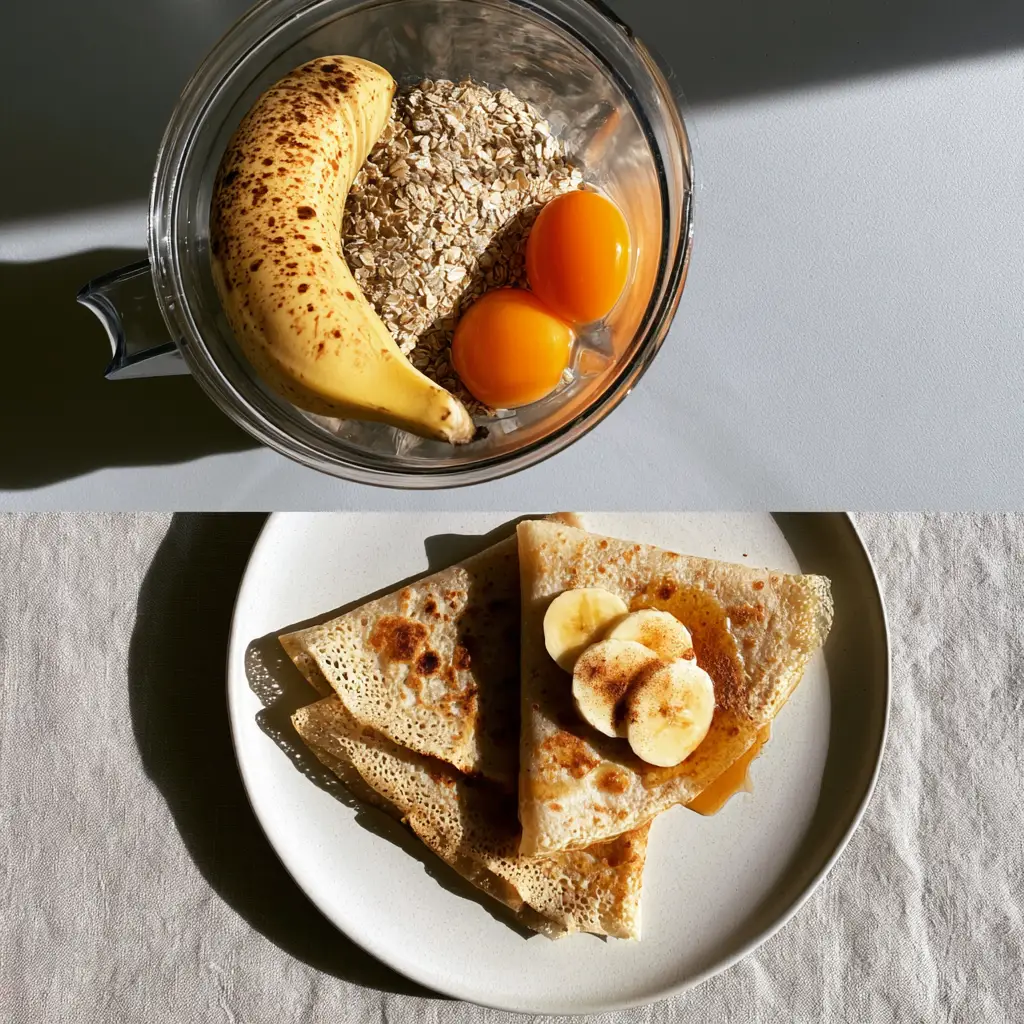
Imagine a sun-drenched morning where the light hits a light grey linen cloth just right, illuminating a stack of paper-thin, golden-brown Blender banana oat crepes. These aren’t your typical heavy pancakes; they are delicate, lacy, and boast the natural sweetness of a perfectly ripe speckled banana. Using a high-speed blender to transform raw rolled oats into a silky batter, this recipe bridges the gap between sophisticated French technique and modern nutritional efficiency.
The beauty of the Blender banana oat crepes lies in their visual and textural contrast. From the bright orange yolks that give the batter its signature sunset hue to the subtle toasted brown spots earned in a hot skillet, every element is designed for sensory delight. Whether you are hosting a refined brunch or seeking a wholesome weekday luxury, these crepes deliver a professional-grade result with minimal cleanup.
Why You Will Love These Naturally Sweetened Crepes
- Exquisite Texture: The combination of pulverized oats and fresh banana creates a batter that produces incredibly thin crepes with delicate, toasted lacy edges.
- Effortless Preparation: By using a high-speed blender, you eliminate the need for manual whisking and ensure a perfectly smooth, lump-free consistency every time.
- Visually Stunning: The contrast of the matte white ceramic plate against the amber maple syrup drizzle and fresh banana slices makes this a masterpiece of food photography.
- Wholesome Foundation: Utilizing raw rolled oats and bright orange egg yolks provides a nutrient-dense alternative to traditional refined flour crepes without sacrificing flavor.
The Anatomy of a Perfect Banana Oat Batter
To achieve the specific visual results described in our blueprint, every ingredient serves a dual purpose: structural integrity and aesthetic appeal. We are not just making breakfast; we are engineering a culinary experience.
1 cup (90g) Raw Rolled Oats: These provide the earthy base and fiber. In the blender, they transform into a fine flour that gives the crepes their unique, slightly nutty flavor profile.
1 Large (120g) Ripe Speckled Banana: The “speckled” part is non-negotiable. As bananas ripen, starches convert to sugars, providing the natural sweetness and moisture required for a tender crumb.
2 Large (100g) Eggs with Bright Orange Yolks: The deep color of the yolks is a sign of high-quality, often pasture-raised eggs. These yolks are responsible for the rich golden-brown hue of the finished crepes.
1/2 cup (120ml) Whole Milk (or Oat Milk): This liquid component adjusts the viscosity of the batter. A thin batter is the secret to those paper-thin, foldable triangles.
1 tsp (5ml) Vanilla Extract: An invisible but essential aromatic that enhances the natural sweetness of the banana and cinnamon.
1/2 tsp (1g) Ground Cinnamon: This provides the “cinnamon dust” look mentioned in our visual prompt and adds a warm, spicy undertone to every bite.
1/4 tsp (1.5g) Fine Sea Salt: Salt is the ultimate flavor amplifier. It balances the sweetness of the maple syrup and brings out the complexity of the oats.
1 tbsp (14g) Unsalted Butter (for the pan): This is the medium that creates the “subtle toasted brown spots” and the lacy texture as the batter hits the hot surface.
Essential Tools for Crepe Mastery
To recreate the high-angle split-screen visual, you will need a high-speed blender capable of pulverizing oats into a fine powder. A standard blender works, but you may need to blend for an additional 30 seconds to avoid a gritty texture.
A 10-inch (25cm) non-stick skillet or a dedicated crepe pan is vital for achieving the “paper-thin” requirement. You will also need a thin silicone spatula to gently lift those toasted lace edges without tearing the delicate structure.
The Art of Blending and Resting the Batter
Step 1: The High-Speed Blending Process
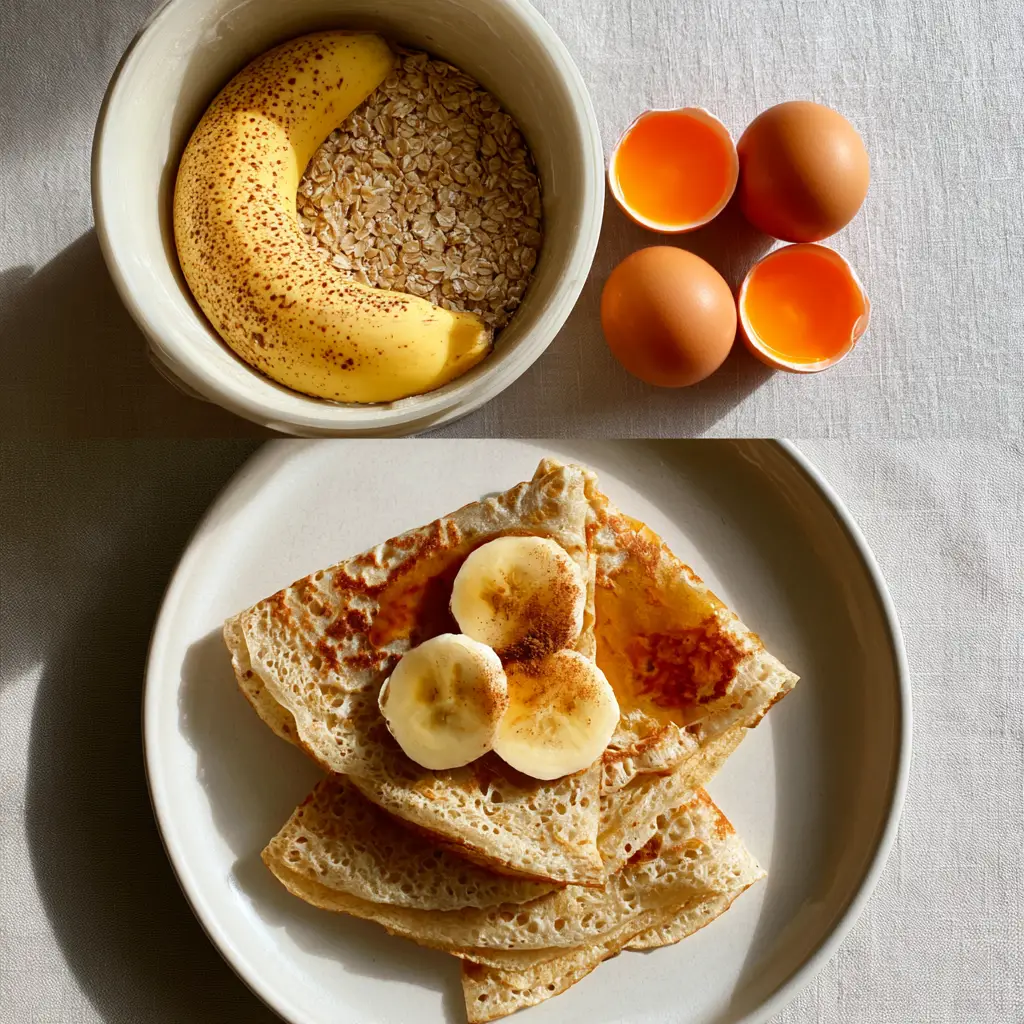
Place the peeled speckled banana, raw rolled oats, and the two eggs with bright orange yolks into the blender jar. Add the milk, vanilla, cinnamon, and salt. Secure the lid tightly.
Start the blender on low speed and gradually increase to high. Process for 45-60 seconds until the mixture is completely homogenous and you see small bubbles forming on the surface. This aeration contributes to the light, lacy texture.
Step 2: The Critical Batter Rest
Pour the batter into a bowl and let it rest for at least 10 minutes. During this time, the oat particles hydrate, thickening the batter slightly. This step is the difference between a crepe that falls apart and one that is “delicately folded into triangles.”
Transforming Liquid Batter into Golden Crepes
Mastering the Skillet Swirl
Heat your non-stick skillet over medium-high heat. Add a tiny knob of butter and swirl it to coat the bottom. The butter should sizzle but not smoke; this heat level is what creates the toasted brown spots.
Lift the pan off the heat and pour about 1/4 cup (60ml) of batter into the center. Immediately tilt and rotate the pan in a circular motion so the batter spreads to the very edges in a thin, even layer.
Visual Cues for the Perfect Flip
Place the pan back on the heat. Within 60-90 seconds, you will see the “toasted lace edges” begin to pull away from the sides of the pan. The surface will change from shiny to matte.
Slide your spatula under the edge and gently flip. Cook the second side for only 20-30 seconds. It should have those characteristic golden-brown spots while remaining soft enough to fold.
Folding and Dressing for a Professional Presentation
To achieve the look of the matte white ceramic plate in our blueprint, fold each crepe in half, then in half again to form a triangle. Stack three crepes on top of each other, slightly overlapping.
Slice a fresh banana into thin circular rounds and place three of them elegantly on the top crepe. Drizzle the amber maple syrup slowly, allowing it to glisten on the surface and pool slightly in the folds. Finish with a microscopic pinch of ground cinnamon dust for that final gourmet touch.
Expert Tips for Success
- The “Test Crepe” Rule: The first crepe is almost always a sacrificial lamb. Use it to gauge the heat of your pan and the thickness of your batter. If the batter is too thick to swirl, whisk in a tablespoon of milk.
- Temperature Control: If your crepes are browning too fast without setting, lower the heat. The “toasted lace” requires a steady, moderate heat to develop without burning the delicate oat sugars.
- Wiping the Pan: Between crepes, use a paper towel to wipe out any browned butter bits to ensure each new crepe has a clean, golden appearance.
- Oat Selection: Stick to raw rolled oats (old-fashioned). Steel-cut oats will remain too gritty, and quick oats can lead to a gummy texture.
Flavor Pairings and Serving Suggestions
While these Blender banana oat crepes are a meal unto themselves, they pair beautifully with other breakfast staples. For a high-protein spread, serve them alongside cottage cheese sticks or a savory apple cinnamon cottage cheese bake.
If you are planning a weekend brunch extravaganza, consider offering a variety of textures by including banana bread waffles or oat flour waffles. For a refreshing contrast to the warm crepes, a side of strawberry cheesecake overnight oats provides a cool, creamy element to the plate.
Frequently Asked Questions
Yes, provided you use certified gluten-free rolled oats. The recipe naturally contains no wheat flour.
Yes, you can store the batter in the fridge overnight. However, it will thicken significantly. Just whisk in a tablespoon or two of milk before cooking to restore the thin consistency.
No, steel-cut oats are too hard and will result in a gritty, unpleasant texture even after blending. Stick to raw rolled oats for a silky-smooth batter.
A standard blender works, but you should blend the dry oats alone first to create a flour, then add the wet ingredients to ensure the smoothest texture possible.
This usually happens if the pan isn’t hot enough or if you haven’t allowed the batter to rest for 10 minutes. The resting time allows the oat starches to hydrate and create structural stability.
The Ultimate Blender Banana Oat Crepe Recipe
Blender Banana Oat Crepes with Lacy Golden Edges
Ingredients
Equipment
Method
- Combine oats, banana, eggs, milk, vanilla, cinnamon, and salt in a high-speed blender. Process on high for 60 seconds until smooth.
- Let the batter rest for 10 minutes to allow the oats to hydrate and thicken naturally.
- Heat a non-stick skillet over medium-high heat and lightly grease with butter.
- Pour 1/4 cup of batter and immediately swirl to cover the bottom of the pan in a thin layer.
- Cook until the edges are lacy and toasted (about 90 seconds), then flip and cook for 30 seconds more.
- Fold crepes into triangles and stack on a matte white plate.
- Top with banana slices, a drizzle of maple syrup, and a pinch of cinnamon.
Notes
If the batter thickens too much while resting, add a splash of milk to maintain a pourable consistency.
Closing Thoughts on Morning Elegance
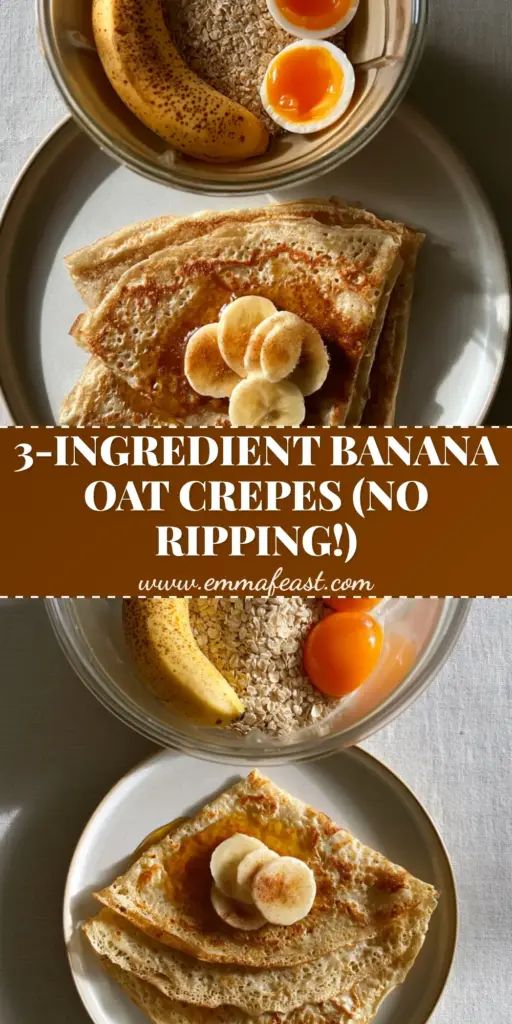
The Blender banana oat crepes prove that healthy eating can be visually spectacular and culinarily sophisticated. By following the sensory cues of toasted lace and golden spots, you can transform humble oats and bananas into a five-star breakfast. We would love to see your creations! Share your results and tag us, or save this recipe to your breakfast board on Pinterest to ensure you always have these lacy delights at your fingertips.