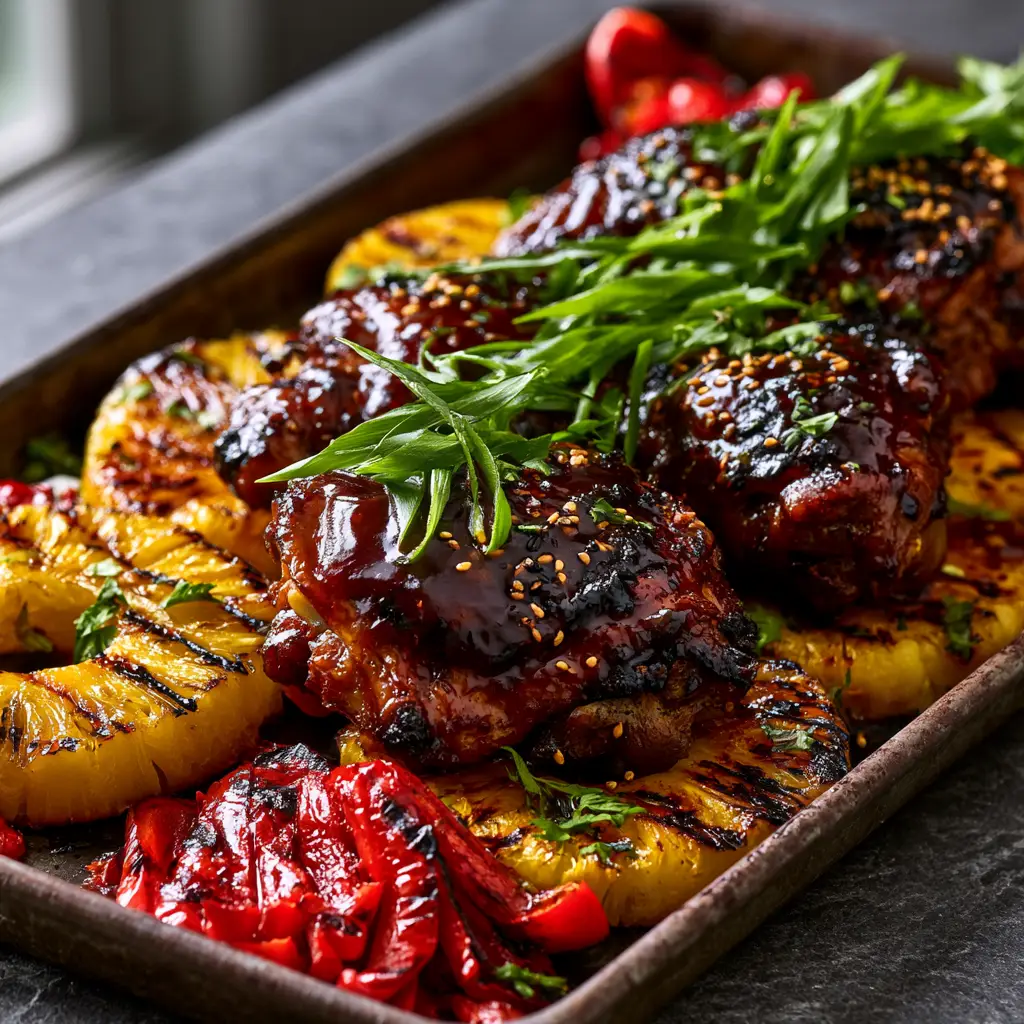
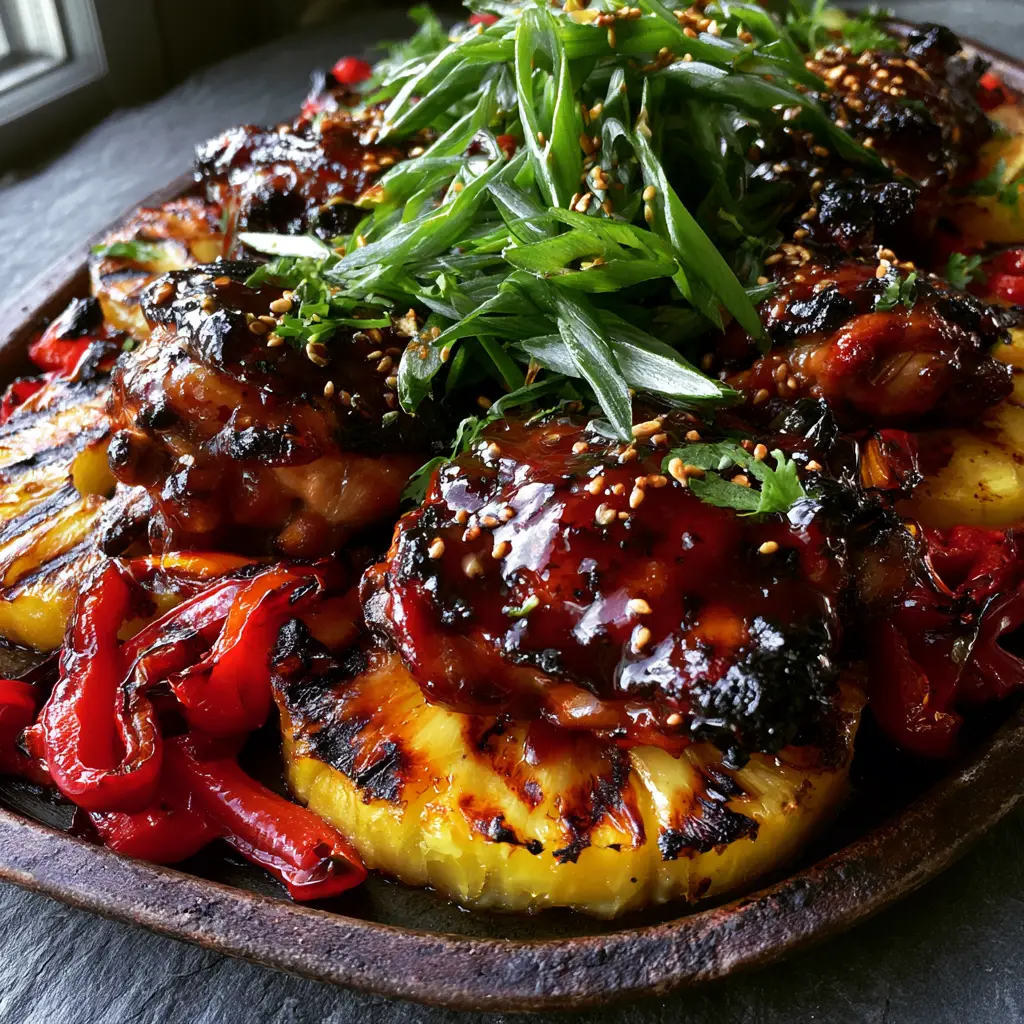
There is a specific visual magic that happens when high-heat roasting meets a traditional island marinade. This Hawaiian Huli Huli Chicken isn’t just a meal; it is a sensory experience defined by a thick, glossy, sticky mahogany-colored glaze that clings to crispy chicken skin. Every bite offers a balance of salty shoyu, sweet pineapple, and the deep, earthy undertones of ginger and garlic, all brought to life on a single dark, seasoned sheet pan.
Inspired by the roadside rotisseries of Oahu, this version adapts the “huli-huli” (meaning “turn-turn”) method for the modern home kitchen. We achieve that iconic charred edge and blistered texture using a high-temperature roasting technique that transforms simple red bell peppers and red onions into caramelized gems. Whether you are looking for a weeknight escape or a vibrant addition to your meal prep, this recipe delivers professional results with the ease of a tray bake.
Why You Will Crave This Sticky Mahogany Sheet Pan Feast
- Structural Perfection: By using bone-in, skin-on chicken thighs, we ensure the meat stays incredibly juicy while the skin acts as a canvas for the heavy, mahogany-colored lacquer.
- Visual Contrast: The vibrant red of the blistered bell peppers and the golden-charred rings of pineapple provide a stunning color palette against the dark, rustic sheet pan.
- Layered Aromatics: The combination of bias-cut green onions, toasted sesame seeds, and fresh cilantro flakes adds layers of texture and a “pop” of freshness that cuts through the rich sauce.
- Effortless Caramelization: We utilize the natural sugars in the pineapple juice and brown sugar to create those sought-after charred edges without the need for an outdoor grill.
The Anatomy of an Authentic Hawaiian Huli Huli Chicken Glaze
To achieve the visual and flavor profile described in our blueprint, every ingredient in the marinade serves a scientific purpose. The shoyu (soy sauce) provides the amino acids necessary for the Maillard reaction, while the pineapple juice contains bromelain, which lightly tenderizes the chicken fibers before cooking.
Bone-In, Skin-On Chicken Thighs (approx. 2.5 lbs / 1.1kg): Skin is non-negotiable here; it provides the fat necessary to keep the meat moist and the surface area required for the glaze to adhere and caramelize into that mahogany finish.
Unsweetened Pineapple Juice (1 cup / 240ml): This is the acidic base that provides the tropical high notes and the sugars that will eventually reduce into a thick, glossy syrup.
Soy Sauce or Shoyu (1/2 cup / 120ml): This provides the deep savory backbone and the dark pigment essential for the “mahogany” visual result.
Light Brown Sugar (1/2 cup / 100g): Sugar is the catalyst for the sticky texture; it lowers the evaporation point of the sauce, allowing it to thicken rapidly in the oven’s heat.
Ketchup (1/4 cup / 60ml): While it may seem modern, ketchup adds tomato solids and vinegar, contributing to the “glossy” sheen and a hint of tang.
Fresh Ginger (2 tbsp / 12g, grated): The spicy, pungent heat of fresh ginger cuts through the sugar and provides an aromatic lift that dried ginger cannot replicate.
Fresh Garlic (4 cloves, minced): Garlic solids become toasted during the roasting process, adding tiny bits of texture to the sticky coating.
Sesame Oil (1 tbsp / 15ml): A foundational “invisible” ingredient that adds a nutty aroma and helps the heat distribute evenly across the chicken skin.
Red Bell Peppers (2 large, sliced into strips): These are essential for the “blistered” visual; their high water content allows them to soften while the skin chars under the broiler.
Red Onion (1 large, cut into thick wedges): When roasted, red onions lose their bite and become sweet and caramelized, providing a soft, jammy contrast to the crispy chicken.
Fresh Pineapple (1 small, sliced into 1/2-inch (1.25cm) rings): Thick rings are vital so they can withstand the heat and develop those golden grill marks without falling apart.
Essential Tools for Sheet Pan Success
To replicate the handheld smartphone photo aesthetic, you need a dark, seasoned sheet pan. A dark pan absorbs more heat than a shiny aluminum one, which is the secret to getting those deeply charred edges on the vegetables and pineapple. You will also need a small saucepan to reduce the reserved marinade into a thick lacquer and a pastry brush for layering the sauce during the final stages of cooking.
Mastering the Hawaiian Huli Huli Chicken Technique
Step 1: The Deep Flavor Infusion
In a large bowl, whisk together the pineapple juice, soy sauce, brown sugar, ketchup, ginger, garlic, and sesame oil. Place your chicken thighs in a gallon-sized bag and pour in half of the mixture, reserving the other half for the glaze. Let the chicken marinate for at least 4 hours, or ideally overnight, to allow the flavors to penetrate the bone.
Step 2: Preparing the Sheet Pan Landscape
Preheat your oven to 400°F (200°C). Arrange the marinated chicken thighs on your dark seasoned sheet pan, skin-side up. Nestle the thick pineapple rings, red bell pepper strips, and red onion wedges around the chicken. Lightly drizzle the vegetables with a neutral oil and a pinch of salt (approx. 1/2 tsp / 3g) to encourage blistering.
Step 3: The Initial Roast and Reduction
Slide the pan into the oven and roast for 25 minutes. While the chicken cooks, take the reserved marinade and place it in a small saucepan over medium-high heat. Bring it to a boil, then reduce the heat and simmer for 8-10 minutes until it has thickened into a viscous, mahogany-colored glaze that coats the back of a spoon. This reduction is the key to the “thick, glossy, sticky” texture.
Step 4: The Glazing and Charring Ritual
Remove the pan from the oven. Using a pastry brush, liberally coat the chicken and the pineapple rings with the reduced glaze. Increase the oven temperature to 425°F (220°C) or turn on the broiler. Return the pan to the oven for another 8-12 minutes. Watch for the visual cues: the chicken skin should be bubbling and dark mahogany, and the bell peppers should show distinct black blister marks.
Step 5: The Final Flourish
Once the chicken reaches an internal temperature of 165°F (74°C), remove it from the oven. Let it rest for 5 minutes; this allows the glaze to “set” and become even stickier. Garnish heavily with bias-cut green onions (sliced on a sharp 45-degree angle), a light dusting of toasted sesame seeds, and tiny flecks of fresh cilantro for that professional, vibrant finish.
Expert Tips for the Ultimate Sticky Finish
- Pat the Skin Dry: Before marinating, pat the chicken skin with paper towels. Even though it goes into a liquid marinade, starting with dry skin helps the fats render more effectively during the roast.
- Don’t Crowd the Pan: If the chicken and vegetables are too close, they will steam rather than roast. Use two pans if necessary to ensure the peppers get those charred edges.
- The Broiler is Your Friend: If your glaze isn’t looking dark enough, a 2-minute blast under the broiler will instantly transform the sugars into a mahogany lacquer.
- Use Fresh Pineapple: Canned pineapple is often too soft and will disintegrate. Fresh rings hold their shape and provide the “thick, juicy” texture seen in the visual blueprint.
Elevating Your Hawaiian Huli Huli Chicken Experience
While this sheet pan meal is a powerhouse on its own, pairing it with the right sides can turn it into a full island feast. Serve the chicken over a bed of fluffy jasmine rice to soak up any extra sticky sauce. For a lighter approach, these lettuce wraps offer inspiration for using the leftovers in a fresh, crunchy format.
If you are planning a larger gathering, consider adding other protein options like salt and pepper pork or even a side of chicken teriyaki noodles to round out the menu. For dessert, nothing beats the classic appeal of bakery-style chocolate chip cookies to end the meal on a high note.
Frequently Asked Questions
You can, but thighs are highly recommended. Bone-in, skin-on thighs stay juicy at the high temperatures required to char the pineapple and peppers, whereas breasts may dry out.
Place the peppers in the hottest parts of the pan (usually the edges) and ensure they are not crowded. A dark sheet pan also absorbs more heat, which helps create those specific charred black spots.
The key is to roast at high heat (400°F+) and apply the reduced glaze only in the final stages of cooking. This allows the fat in the skin to render before the sugars in the glaze start to lacquer.
Shoyu is a Japanese-style soy sauce that is slightly sweeter. You can substitute regular soy sauce, but you may want to add an extra teaspoon of brown sugar to mimic the shoyu flavor profile.
‘Huli’ means ‘turn’ in Hawaiian. Traditionally, the chicken was cooked on a spit and turned constantly. In this recipe, we replicate that even cooking and caramelization using a high-heat sheet pan method.
The Ultimate Sheet Pan Hawaiian Huli Huli Chicken Recipe
Hawaiian Huli Huli Chicken with Charred Pineapple and Blistered Peppers
Ingredients
Equipment
Method
- Whisk pineapple juice, soy sauce, brown sugar, ketchup, ginger, garlic, and sesame oil. Marinate chicken in half the mixture for 4+ hours.
- Preheat oven to 400°F (200°C). Arrange chicken, pineapple, peppers, and onions on a dark seasoned sheet pan. Roast for 25 minutes.
- Simmer the reserved marinade in a saucepan until thickened into a mahogany syrup.
- Brush chicken and pineapple with glaze. Increase heat to 425°F (220°C) and roast for 8-12 minutes until blistered and charred.
- Top with bias-cut green onions, sesame seeds, and cilantro flecks.
Notes
Always rest the chicken for 5 minutes to let the glaze set into a sticky lacquer.
Bring the Spirit of the Islands to Your Table
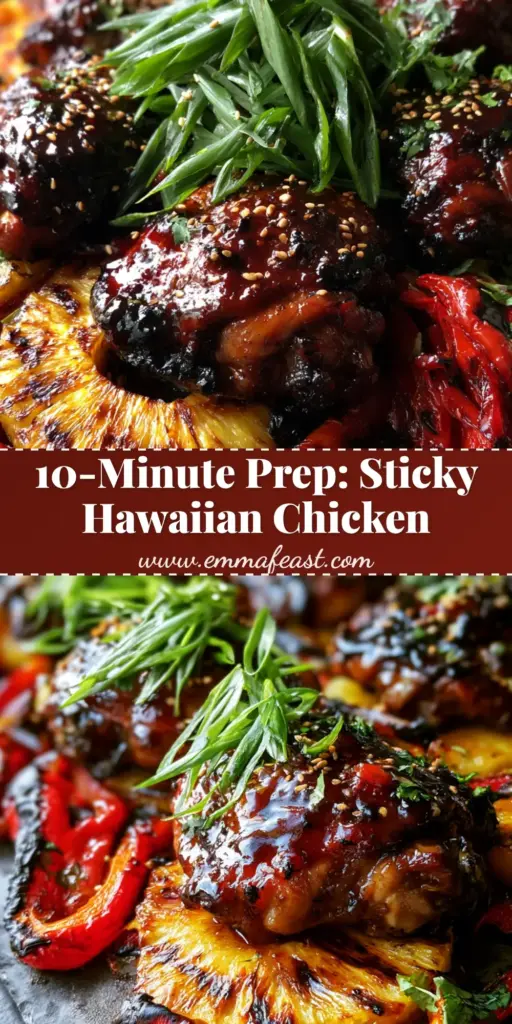
This Hawaiian Huli Huli Chicken is a testament to how simple ingredients, when treated with the right culinary techniques, can produce a visually stunning and flavor-packed meal. The combination of the mahogany glaze, charred fruit, and blistered vegetables creates a balance of sweet, savory, and smoky that is hard to beat. If you enjoyed this tray bake, be sure to check out our other baked chicken recipes for more weeknight inspiration.
Did you make this recipe? We want to see your sticky, glossy results! Leave a comment below, rate the recipe, and don’t forget to share your photos and pin this recipe to Pinterest so you can find it whenever the craving for island flavors strikes!