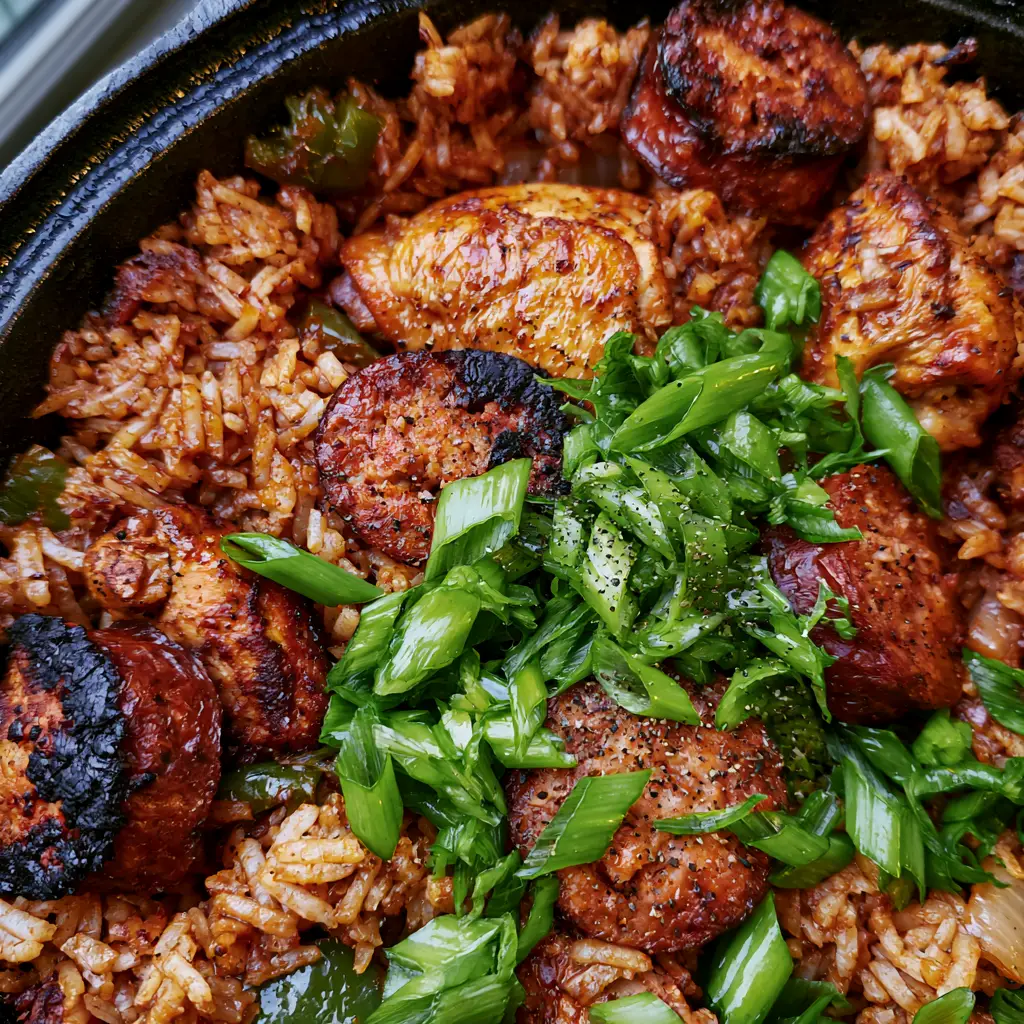
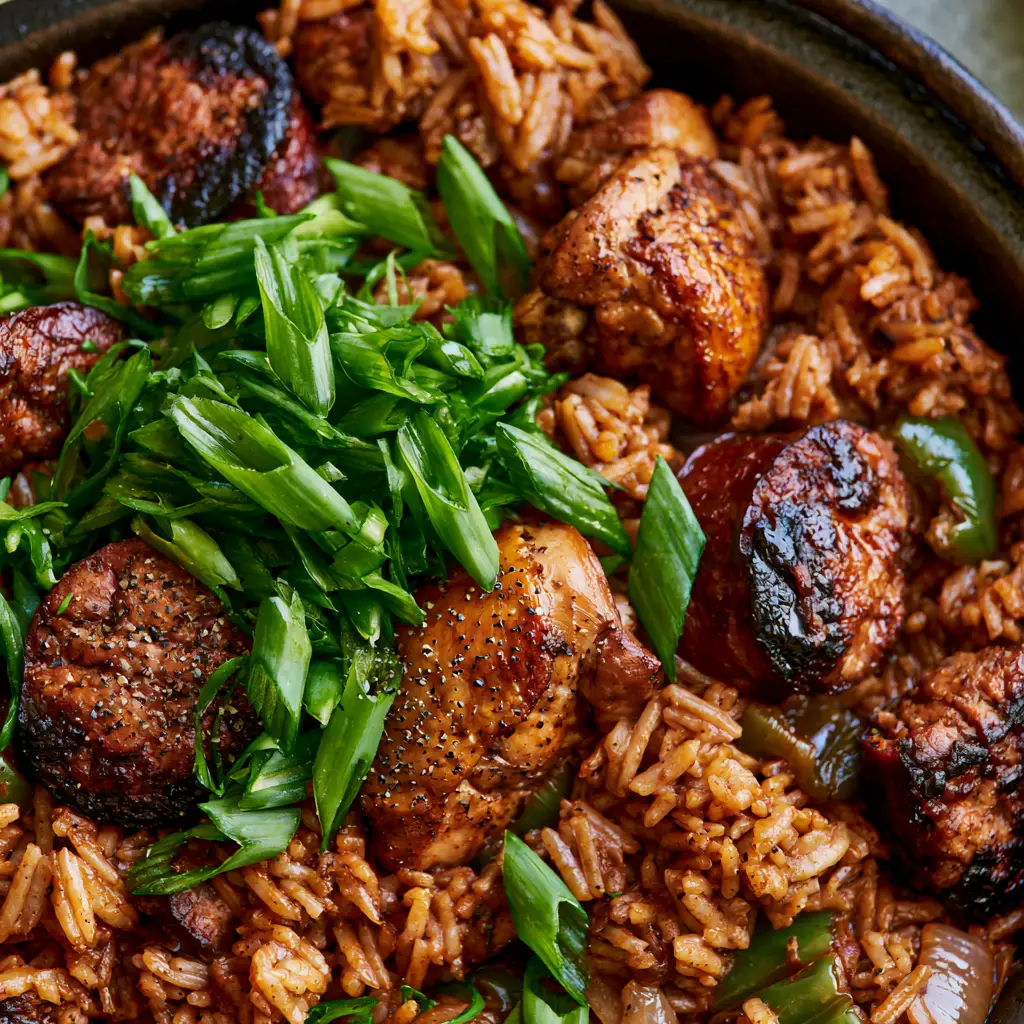
The Jambalaya recipe is more than just a meal; it is a sensory journey into the heart of Louisiana’s culinary heritage. As you lift the heavy lid of a seasoned cast iron pot, a plume of aromatic steam rises, carrying the smoky scent of charred andouille and the earthy perfume of the Cajun “Holy Trinity.” The sight is mesmerizing—perfectly fluffy grains of long-grain rice stained a deep, savory reddish-amber, nestled alongside succulent chunks of golden-brown chicken and spicy sausage rounds.
Achieving the authentic texture described in our visual blueprint requires a balance of high-heat searing and patient simmering. This dish captures the essence of rustic, handheld photography—authentic, glistening with natural moisture, and bursting with vibrant green scallions. Whether you are a seasoned pro or a curious home cook, mastering this one-pot wonder will transform your kitchen into a French Quarter bistro.
Why This Authentic Cajun Jambalaya Recipe Stands Out
- Visual Perfection: Every grain of long-grain rice remains distinct and fluffy, never mushy, thanks to precise liquid-to-rice ratios.
- Maillard Magic: We utilize specific searing techniques to ensure the andouille sausage has those signature dark, caramelized charred edges.
- Complex Color Palette: The rice achieves a stunning reddish-brown hue through a combination of rendered fats, spices, and high-quality stock.
- Texture Contrast: Tender, browned chicken thigh chunks provide a succulent counterpoint to the softened crunch of diced green bell peppers and onions.
The Essential Components for a Deeply Savory Base
To recreate the exact visual and flavor profile of our blueprint, you must start with high-quality ingredients. Each element serves a specific purpose in building the “reddish-amber” profile and the “fluffy grain” texture.
1.5 lbs (680g) Boneless Skinless Chicken Thighs: We use thighs instead of breasts because they remain succulent and golden-brown even after simmering. The higher fat content contributes to the glistening highlights seen in the final dish.
12 oz (340g) Andouille Sausage: This smoked, spiced sausage is non-negotiable for an authentic Jambalaya recipe. Slicing it into thick rounds allows for maximum surface area to develop those dark, caramelized edges during the initial sear.
2 cups (400g) Long-Grain White Rice: Long-grain is essential for “distinct grains.” Short or medium grain rice contains too much starch, which would lead to a sticky texture rather than the fluffy result we are targeting.
The Aromatic Duo: 1 large (200g) onion and 1 large (150g) green bell pepper, both finely diced. These soften into the sauce, providing a foundation of sweetness and earthiness that defines Cajun cooking.
3 cups (720ml) Low-Sodium Chicken Stock: This is the primary hydrating agent. Using stock instead of water ensures the rice is infused with flavor from the inside out.
3 tbsp (45g) Tomato Paste: This is the secret to the “reddish-brown” sauce. It provides the deep amber stain to the rice without making the dish overly “tomatoey” like a Creole version might be.
2 tbsp (30ml) Vegetable Oil: A high-smoke point oil is necessary for the initial sear of the proteins. It helps achieve the charred edges without burning the pot.
The Spice Blend: A combination of smoked paprika, garlic powder, onion powder, dried thyme, and cayenne pepper. This creates the “savory reddish-amber” stain mentioned in our visual prompt.
Finishing Touches: 1/2 cup (25g) freshly sliced green scallions and 1 tsp (2g) cracked black pepper. The bright green garnish provides the necessary color contrast against the dark, rustic pot.
Required Equipment for Professional Results
The most critical tool is a 5-quart (4.7L) rustic black cast iron pot or Dutch oven. The thick walls of the cast iron provide even heat distribution, which is vital for preventing the rice at the bottom from scorching while the grains at the top steam to fluffy perfection.
You will also need a sharp chef’s knife for dicing the vegetables and a sturdy wooden spoon. A wooden spoon is preferred over metal because it allows you to scrape the “fond” (the brown bits) off the bottom of the pot effectively, which is where all the color and flavor reside.
Developing the Flavor: Searing the Proteins
Step 1: Achieving the Caramelized Andouille Edges
Heat the vegetable oil in your cast iron pot over medium-high heat. Once the oil shimmers, add the thick-cut rounds of andouille sausage. The goal here is a forensic match to our blueprint: “dark, caramelized seared edges.”
Let the sausage sit undisturbed for 2-3 minutes per side. You want to hear a vigorous sizzle. Once they are deeply browned and have released their smoky red oil, remove them with a slotted spoon and set aside, leaving the fat in the pot.
Step 2: Searing the Golden-Brown Chicken
In the same pot, add the chicken thigh chunks in a single layer. Season lightly with salt. Sear them until they are succulent and feature a golden-brown crust. Do not worry about cooking them through at this stage; we are focusng on “visual highlights” and flavor development.
Remove the chicken and set it aside with the sausage. The bottom of your pot should now be covered in a rich, dark brown layer of flavor known as the fond.
Building the Aromatic Foundation
Step 3: Softening the Trinity
Lower the heat to medium and add the diced onions and green bell peppers. As they cook, they will release moisture, which helps you scrape up the browned bits from the chicken and sausage. This process naturally dyes the vegetables a deep, savory color.
Cook until the vegetables are translucent and softened, about 5-7 minutes. Add the tomato paste and the spice blend, stirring constantly for 2 minutes. The tomato paste will darken from bright red to a brick-red hue, which is essential for that reddish-amber rice stain.
The Rice Science: Achieving Fluffy, Distinct Grains
Step 4: Toasting the Rice
Add the dry long-grain rice to the pot. Stir it for 2 minutes to coat every grain in the spiced oil and vegetable mixture. Toasting the rice slightly before adding liquid helps preserve the individual grain structure, ensuring the final Jambalaya recipe isn’t mushy.
Step 5: The Simmer and Steam
Return the chicken and sausage (and any accumulated juices) to the pot. Pour in the chicken stock and stir once to combine. Bring the mixture to a rolling boil, then immediately reduce the heat to the lowest possible setting.
Cover the pot with a tight-fitting lid. This is the hardest part: do not lift the lid for 20 minutes. Lifting the lid lets out the steam required to cook the rice evenly and creates the “steaming” visual effect mentioned in our prompt.
The Final Forensic Flourish
Step 6: The Rest and Garnish
After 20 minutes, turn off the heat but leave the lid on for an additional 5 minutes. This allows the residual moisture to be absorbed, resulting in the fluffiest rice grains. Remove the lid and use a fork to gently fluff the rice.
Top the dish with a heavy garnish of vibrant, freshly sliced bright green scallions and a generous sprinkle of cracked black pepper. The contrast between the bright green and the deep reddish-amber rice is what makes this dish a visual masterpiece.
Expert Tips for Success
- Rinse the Rice: Before cooking, rinse your long-grain rice under cold water until the water runs clear. This removes excess surface starch, which is the number one cause of sticky jambalaya.
- Don’t Over-Stir: Once the liquid is in, avoid the urge to stir. Stirring activates starches and will turn your fluffy grains into a porridge-like consistency.
- Check the Seal: If your lid isn’t perfectly tight, place a piece of aluminum foil over the pot before putting the lid on to trap every drop of steam.
- Quality of Stock: Use a rich, dark chicken stock if possible. The darker the stock, the more intense the “amber” color of the final rice.
Storage, Reheating, and Freezing
This Jambalaya recipe actually improves the next day as the spices have more time to meld. Store leftovers in an airtight container in the refrigerator for up to 3 days. To reheat, add a splash of water or stock to a pan to maintain the glistening highlights and heat through on the stovetop.
For freezing, allow the dish to cool completely before transferring to freezer-safe bags. It will stay fresh for up to 3 months. Thaw overnight in the fridge before reheating.
What to Serve With This Cajun Classic
While this is a complete meal on its own, you can elevate the experience with the right sides. If you want something to nibble on while the rice steams, consider a crunchy snack recipe or a few cheddar crackers to keep guests happy.
If you are hosting a larger gathering, this dish pairs beautifully with a creative charcuterie board featuring spicy meats. For those who love a variety of proteins, serving this alongside stuffed Italian sausages provides a great contrast in flavor profiles. If you’re looking for a heavier comfort food weekend, try pairing leftovers with a hearty pot roast for a true feast.
Frequently Asked Questions
You can, but brown rice requires significantly more liquid and a longer cooking time. For the distinct, fluffy texture shown in our guide, long-grain white rice is recommended.
Sear the sausage rounds in a high-heat cast iron pot with a little oil before adding any other ingredients. Let them sit undisturbed for 2-3 minutes to develop a deep crust.
This recipe is a hybrid; it uses the reddish-amber tones typical of Creole cooking (via tomato paste) but focuses on the browned-meat depth and ‘Holy Trinity’ found in Cajun traditions.
The secret is three-fold: rinse the rice to remove excess starch, toast the grains in oil before adding liquid, and never stir the pot once it begins to simmer.
Mushy rice is usually caused by using too much liquid, over-stirring, or using a short-grain rice variety that releases too much starch during cooking.
The Ultimate Chicken and Sausage Jambalaya Recipe
Jambalaya Recipe: The Ultimate One-Pot Cajun Chicken and Sausage Guide
Ingredients
Equipment
Method
- Heat oil in the cast iron pot. Add andouille rounds and sear until edges are dark and caramelized. Remove and set aside.
- Add chicken thighs to the pot. Sear until golden-brown and succulent. Remove and set aside.
- Add onions and bell peppers. Sauté until softened, scraping the bottom of the pot. Stir in tomato paste and spices.
- Add the rice to the pot and stir for 2 minutes to coat in the oils and spices.
- Return meat to the pot. Add chicken stock. Bring to a boil, then cover and reduce to low heat for 20 minutes.
- Turn off heat. Let rest covered for 5 minutes. Fluff with a fork, garnish with scallions and cracked black pepper, and serve.
Notes
Use a heavy cast iron pot to prevent scorching and ensure even steaming.
Closing & Call to Action
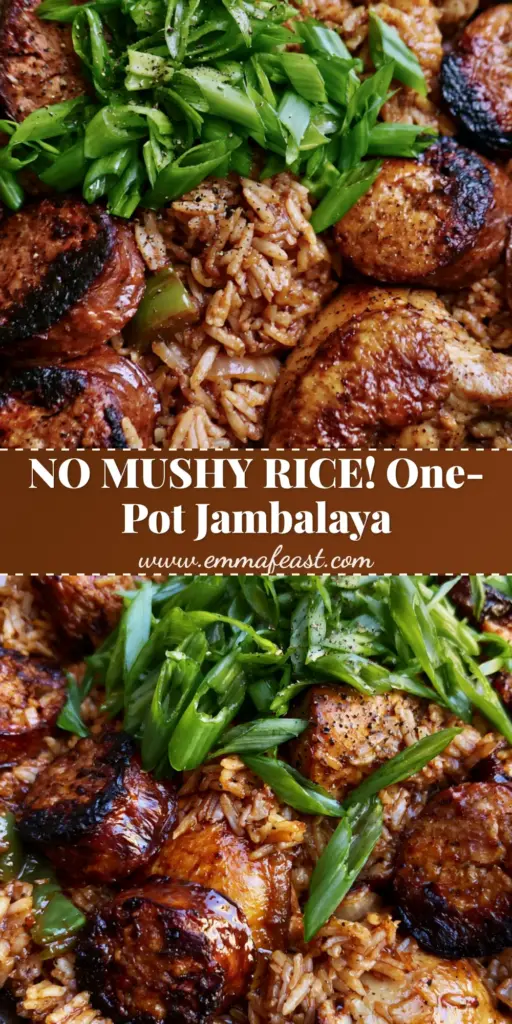
Mastering this Jambalaya recipe brings a piece of Louisiana heritage right to your dining table. The combination of charred andouille, golden chicken, and perfectly fluffy rice creates a meal that is as visually stunning as it is delicious. If you enjoyed this deep dive into Cajun flavors, please leave a comment below and let us know how yours turned out!
Don’t forget to follow us on Pinterest for more authentic recipe guides and food photography tips. Share your creations by tagging us—we love seeing your rustic cast iron masterpieces!