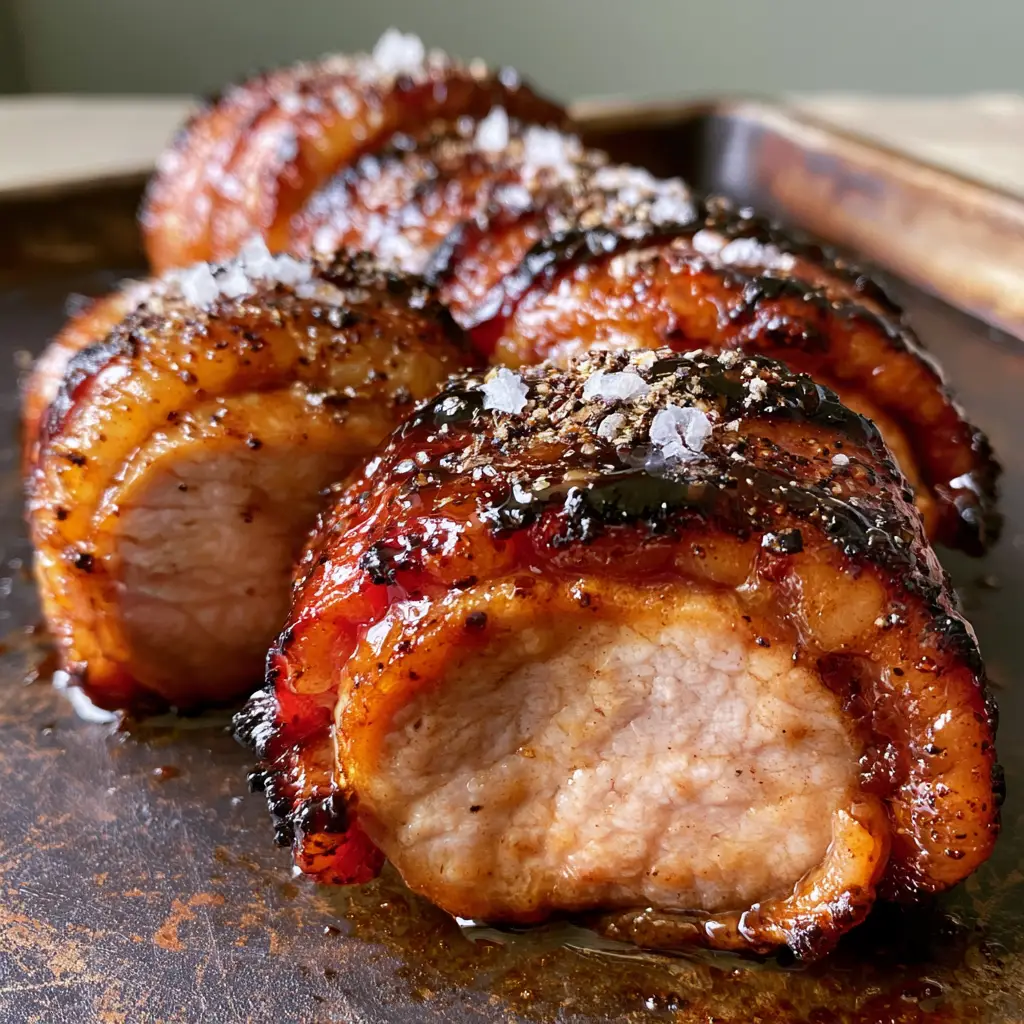
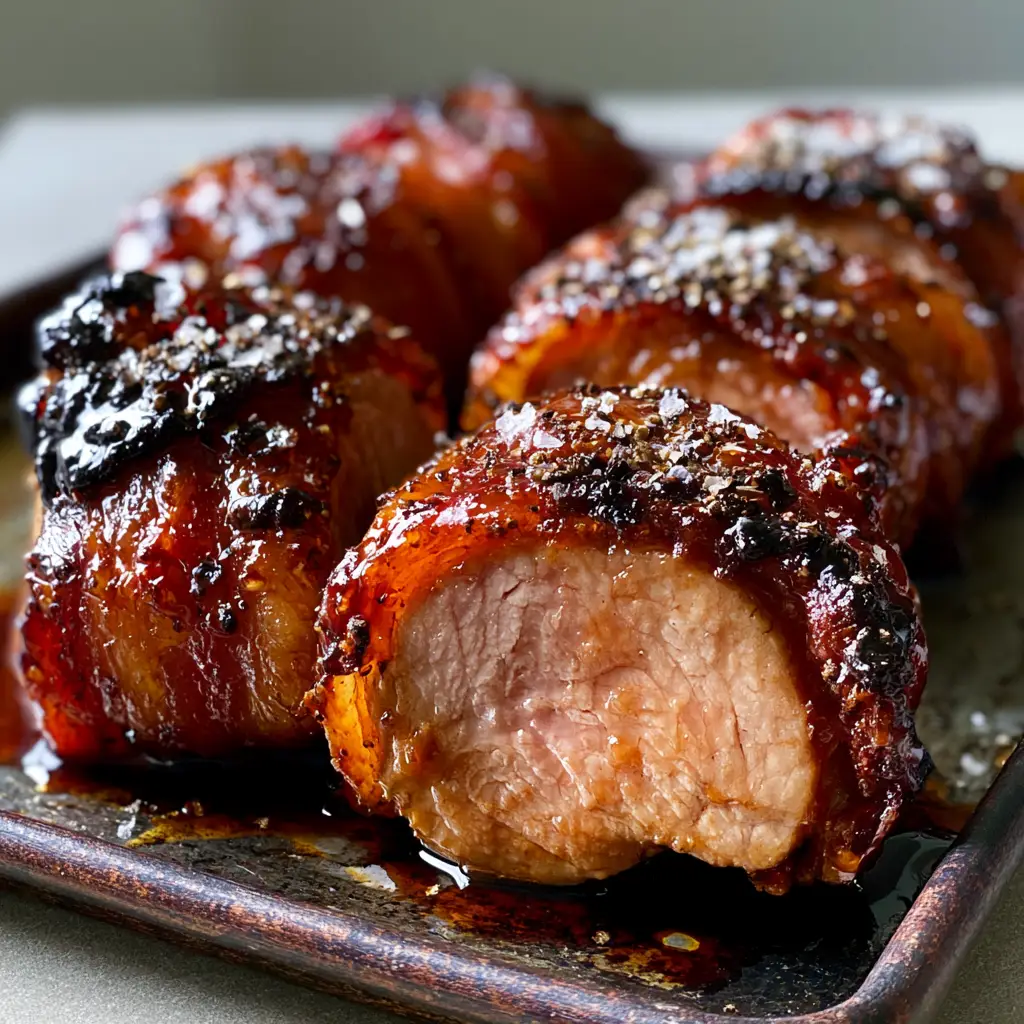
The Bacon Brown Sugar Pork Tenderloin is more than just a meal; it is a masterclass in contrasting textures and flavors. Imagine thick slices of succulent, moist pork, encased in a shroud of crispy, charred bacon that has been basted until it glows.
Every bite delivers the crunch of caramelized sugar and the sharp bite of coarse cracked black pepper. This recipe is designed to produce that signature dark amber, bubbling glaze that you usually only see in high-end gastropubs.
By following this professional method, you will achieve a perfect medium-rare center with a glistening exterior. Let’s dive into how we create this rustic, sheet-pan masterpiece that looks as good as it tastes.
Why This Caramelized Bacon-Wrapped Roast Works
- The Texture Contrast: You get the snap of rendered, charred bacon against the buttery tenderness of a perfectly roasted pork loin.
- The Glaze Science: Using a high-heat finish creates a bubbling, thick dark amber coating that clings to the meat rather than running off.
- Visual Sophistication: Finished with flaky sea salt and coarse pepper, it offers a professional aesthetic that is naturally impressive.
- One-Pan Ease: We utilize a rustic dark metal sheet pan to maximize heat conduction and capture those precious rendered meat juices.
The Secret Ingredients for a Glistening Pork Crust
To achieve the result shown in our visual blueprint, every ingredient serves a specific culinary purpose. We don’t just want sweetness; we want depth and “cling.”
Pork Tenderloin (approx. 1.25 lbs / 565g): This lean muscle is the perfect canvas for rich fats. Look for a uniform shape to ensure the slices are consistent when plated.
Thick-Cut Smoked Bacon (8-10 slices): Thinner bacon will dissolve into the glaze, but thick-cut slices provide that essential “charred” visual and structural integrity. It protects the pork from drying out.
Dark Brown Sugar (1/2 cup / 100g): The higher molasses content in dark brown sugar is what creates that specific “bubbling dark amber” look. It caramelizes at a lower temperature than white sugar, providing a deeper flavor.
Coarse Cracked Black Pepper (1 tbsp / 6g): Do not use fine table pepper here. You need the large, pungent shards of pepper to cut through the heavy sweetness of the glaze.
Flaky Sea Salt (1 tsp / 5g): Added at the very end, these large crystals provide a “pop” of saltiness that balances the sugar and highlights the rendered pork juices.
Garlic Powder and Smoked Paprika (1 tsp each / 3g): These “invisible” ingredients provide a savory backbone to the rub, ensuring the pork doesn’t taste like candy.
Olive Oil (1 tbsp / 15ml): A light coating on the pan helps prevent the sugar from sticking and burning to the metal before the juices release.
Essential Tools for a Professional Roast
Achieving a succulent, slightly pink center requires the right heat distribution. A rustic dark metal sheet pan is superior to glass or ceramic because it absorbs heat quickly, helping to char the bacon underside.
You will also need a digital meat thermometer. Because we are wrapping the meat in bacon, visual cues for doneness can be deceiving. For a moist result, we aim for an internal temperature of 145°F (63°C).
Mastering the Bacon Wrap and Glaze Technique
Preparing the Flavor Foundation
Start by patting your pork tenderloin completely dry with paper towels. Any moisture on the surface will steam the bacon rather than crisping it. Combine your brown sugar, paprika, garlic powder, and half of the cracked pepper in a small bowl.
Massage a small amount of the dry rub directly onto the pork. This ensures that the flavor penetrates the meat and isn’t just sitting on the bacon layer.
The Tight-Wrap Bacon Method
Lay your bacon slices on a cutting board, slightly overlapping each other like shingles. Place the pork at one end and roll it tightly. The tension is key; if the bacon is loose, it will fall away as the meat shrinks during roasting.
Place the wrapped tenderloin seam-side down on your dark metal sheet pan. This uses the weight of the meat to “seal” the bacon in place without needing toothpicks.
The Two-Stage Roasting Process
Preheat your oven to 400°F (200°C). Initially, roast the pork for 15-20 minutes without the glaze. This allows the bacon fat to begin rendering and the edges to start charring.
Remove the pan and generously pack the remaining brown sugar mixture over the top of the bacon. Return to the oven. You are looking for a specific visual cue: the sugar should be bubbling and turning a dark amber color.
Achieving the Succulent Pink Center
Once the internal temperature hits 140°F (60°C), switch your oven to the broiler setting for 2-3 minutes. Watch closely! The goal is to see high-gloss reflections on the glaze and crispy, charred edges on the bacon.
Remove from the heat when the thermometer reads 145°F (63°C). The meat will continue to rise in temperature as it rests, preserving that moist, slightly pink interior.
Expert Tips for the Perfect Pork Slices
- Resting is Non-Negotiable: Allow the meat to rest on the sheet pan for at least 10 minutes. This allows the rendered juices to pull back into the fibers. If you cut too soon, the glaze will slide off and the meat will be dry.
- Manage the Sugar Burn: If you notice the sugar on the pan starting to smoke before the bacon is charred, add 2 tablespoons of water to the pan corners to create a bit of steam.
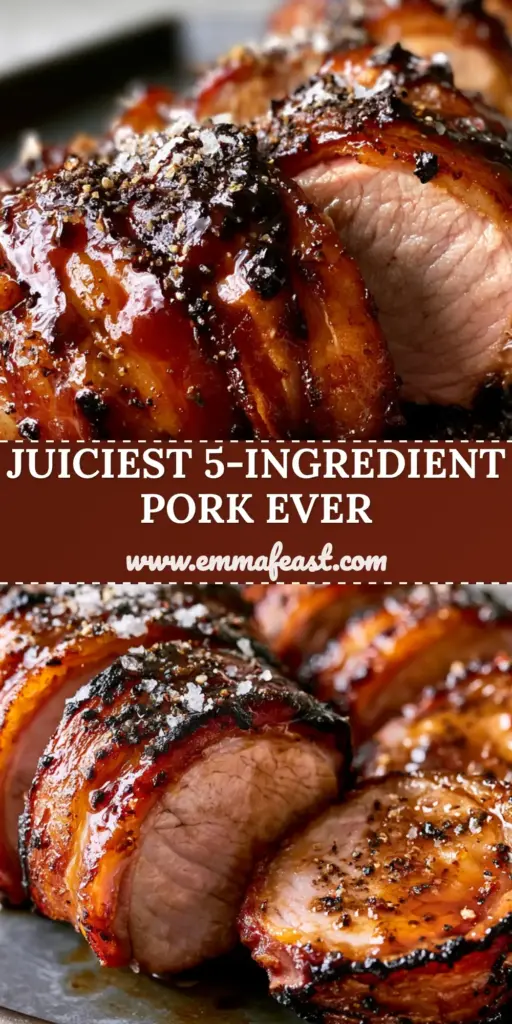
- The “Handheld” Photo Look: To get that macro-photo look, slice the pork into thick 1-inch rounds. This shows off the contrast between the dark exterior and the pale, juicy interior.
- Cracked Pepper Finish: Always add the remaining coarse pepper and flaky sea salt after slicing. It ensures the seasoning hits the palate directly.
Storing and Reheating Your Leftovers
If you have leftover tender pork, store it in an airtight container in the refrigerator for up to 3 days. The glaze will thicken and become somewhat sticky when cold.
To reheat, avoid the microwave as it will make the bacon rubbery. Instead, place slices back on a sheet pan in a 350°F (175°C) oven for 8-10 minutes. This helps re-crisp the bacon and melts the brown sugar back into a glistening state.
What to Serve with Bacon Brown Sugar Pork
This dish is heavy on the sweet and salty scale, so it pairs beautifully with acidic or earthy sides. Consider a light lemon-based side or perhaps a crisp green salad.
If you are looking for more versatile pork recipes, this tenderloin sits perfectly alongside roasted root vegetables or even a serving of savory-sweet pancakes for a brunch-style dinner.
For a lighter summer feel, check out our collection of summer dinner ideas to find a fresh slaw that balances the richness of the bacon fat.
Common Questions About Sweet Glazed Pork
You can, but the glaze will be lighter in color and have less of a molasses-caramel flavor. For that deep amber ‘bubbling’ look, dark brown sugar is superior.
Wrapping the bacon very tightly when raw and allowing the meat to rest for 10 minutes after cooking are the two keys to keeping the bacon attached to the pork.
Use a heavy, dark metal sheet pan and add the sugar only in the last 10-15 minutes of roasting. If juices haven’t released yet, a tablespoon of water in the pan corners can help.
Yes. The USDA recommends an internal temperature of 145°F (63°C) followed by a 3-minute rest, which results in a safe, moist, and slightly pink center.
You likely added the glaze too early or didn’t use the broiler. Roasting for the first 15-20 minutes without the sugar allows the bacon fat to render and crisp up first.
Bacon Brown Sugar Pork Tenderloin Recipe
Bacon Brown Sugar Pork Tenderloin: The Ultimate Sweet and Salty Roast
Ingredients
Equipment
Method
- Preheat your oven to 400°F (200°C). Pat the pork tenderloin dry and rub with a mix of garlic powder, paprika, and half the black pepper.
- Lay bacon slices overlapping on a board. Place pork on one end and roll tightly. Place seam-side down on a dark metal sheet pan.
- Roast for 15-20 minutes until bacon starts to render fat and edges show slight browning.
- Pack the brown sugar over the top. Return to oven for 10 minutes. Broil for the final 2-3 minutes until the glaze is bubbling and dark amber.
- Let the roast rest for 10 minutes. Slice into thick rounds and finish with flaky sea salt and the remaining cracked pepper.
Notes
The dark metal pan is critical for preventing the bacon from becoming soggy on the bottom.
Closing & Call to Action
The Bacon Brown Sugar Pork Tenderloin is a visual and culinary triumph. Between the thick bubbling glaze and the charred bacon, it’s a dish that demands attention. Whether you are cooking for a special occasion or just a high-quality weeknight meal, this recipe delivers on every promise.
Did you achieve that perfect dark amber crust? We’d love to hear about it! Leave a comment below or share your photos with us. Don’t forget to follow our latest creations and save this recipe to your boards on Pinterest.